The workbench
Storing chisels so the edges survive
Most sharpening on a home bench is caused by storage rather than by cutting. A rack, a roll or a slotted tray, and the rule that saves the most steel.
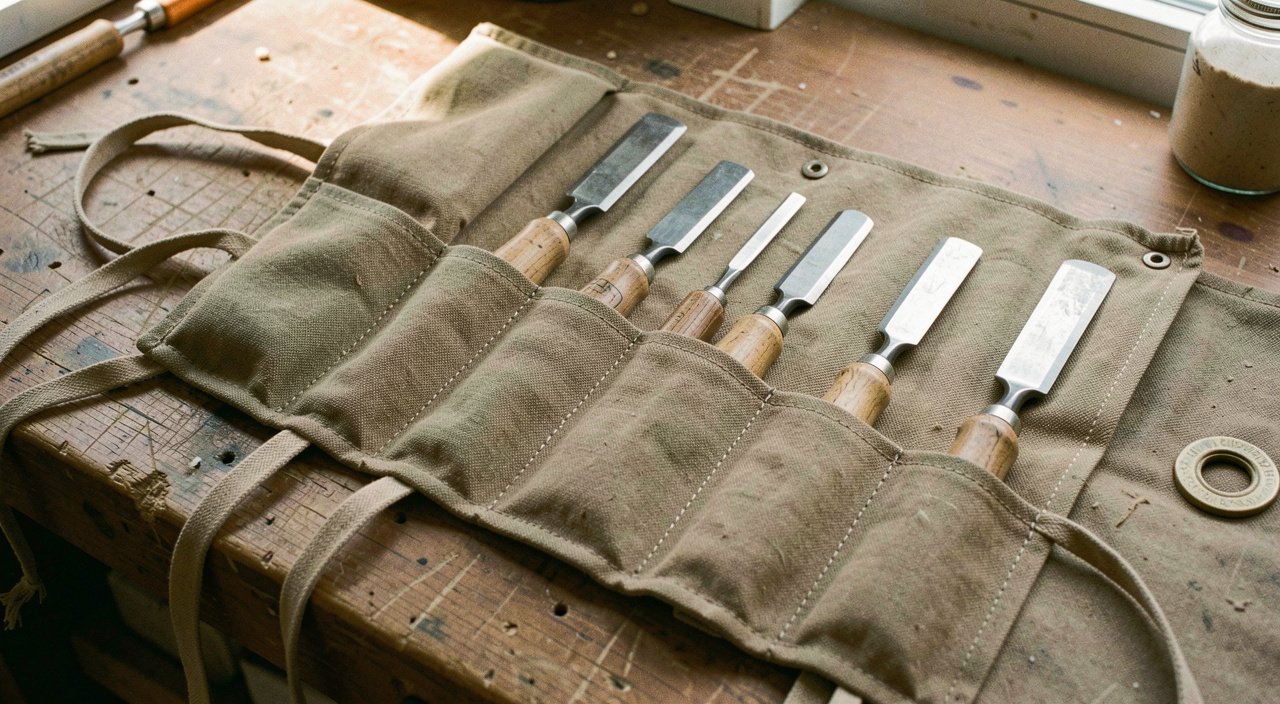
Most of the sharpening done on a home bench is not caused by cutting. It is caused by storage: edges knocking together in a drawer, a chisel laid face down on a gritty bench top, a plane iron rusting through a damp winter in a garage. Ten minutes of sharpening a week, multiplied over a year, is a real cost, and nearly all of it is avoidable with a rack, a roll or a slotted tray.
What actually damages an edge in storage
| Cause | What it does, and how fast |
|---|---|
| Steel touching steel | A chip or a rolled edge in a single knock. The commonest by far |
| Grit on a bench top | Fine scratches on the polished back, and a dulled tip within a week of daily use |
| Damp air | Surface rust in a fortnight in an unheated garage in autumn |
| Acidic timber in contact | Oak and chestnut mark steel where they touch it, especially when damp |
| Sealed plastic cases | Trap moisture against the steel. Worse than an open rack in a dry room |
Those five explain almost everything. Note that two of them are about moisture and one is about the timber the tools are stored in, which rules out the tempting idea of cutting a neat oak block full of slots for a garage bench.
Three arrangements that work
A wall rack above the bench is the best of them for a room that stays dry. Chisels hang handle up in slots cut in a strip of softwood, edges clear of everything, visible and reachable one handed. Cut the slots 2 mm wider than the widest part of each chisel and chamfer the top edges so a tool drops in without being aimed.
A canvas or leather tool roll is the answer for tools that travel and for a damp workshop, because the fabric holds the tools apart and can be dried out. Roll from the narrowest tool towards the widest so the layers do not crush each other, and never roll a tool up wet.
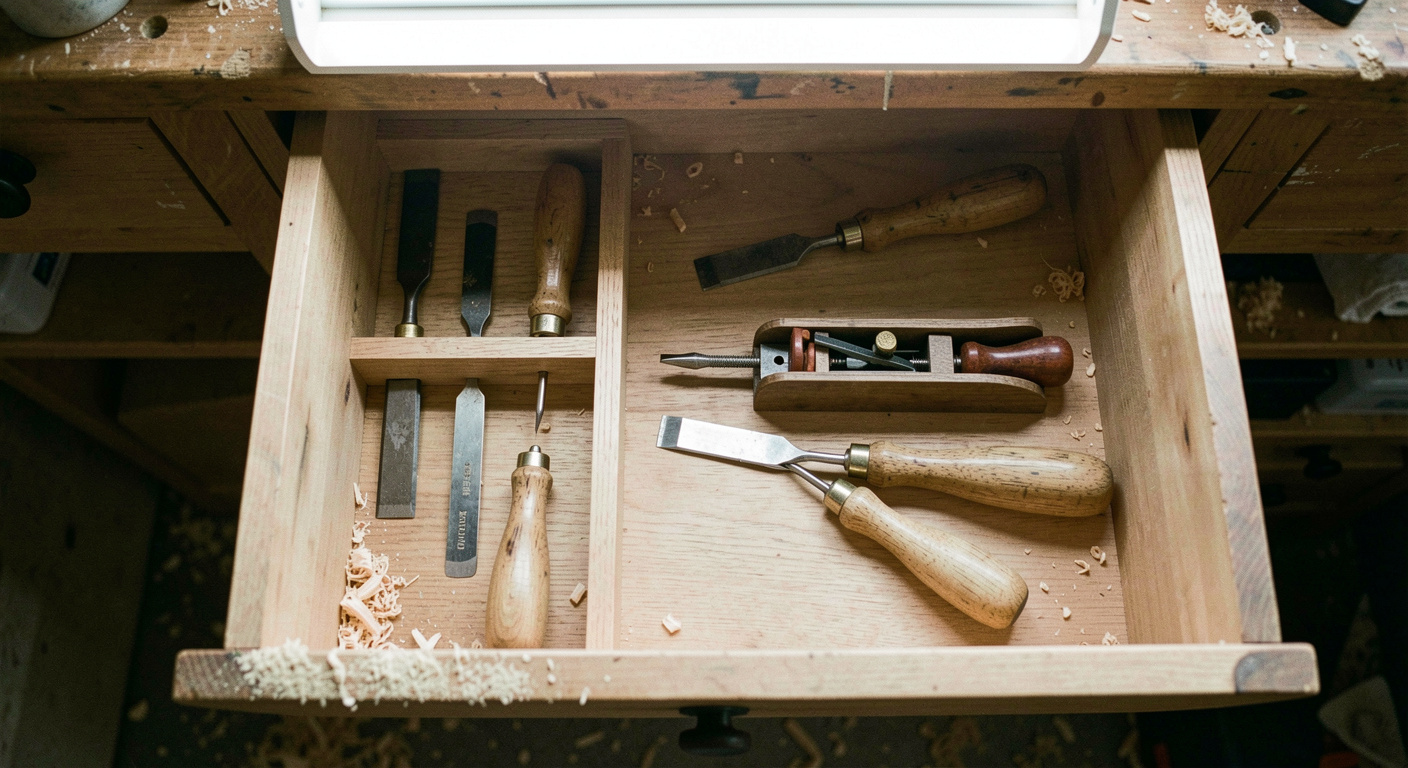
A drawer with a slotted tray is best where dust is the problem, which includes any garage with a car in it. Make the tray from a softwood strip with slots, sitting inside the drawer rather than fixed to it, so it can be lifted out and the drawer cleaned.
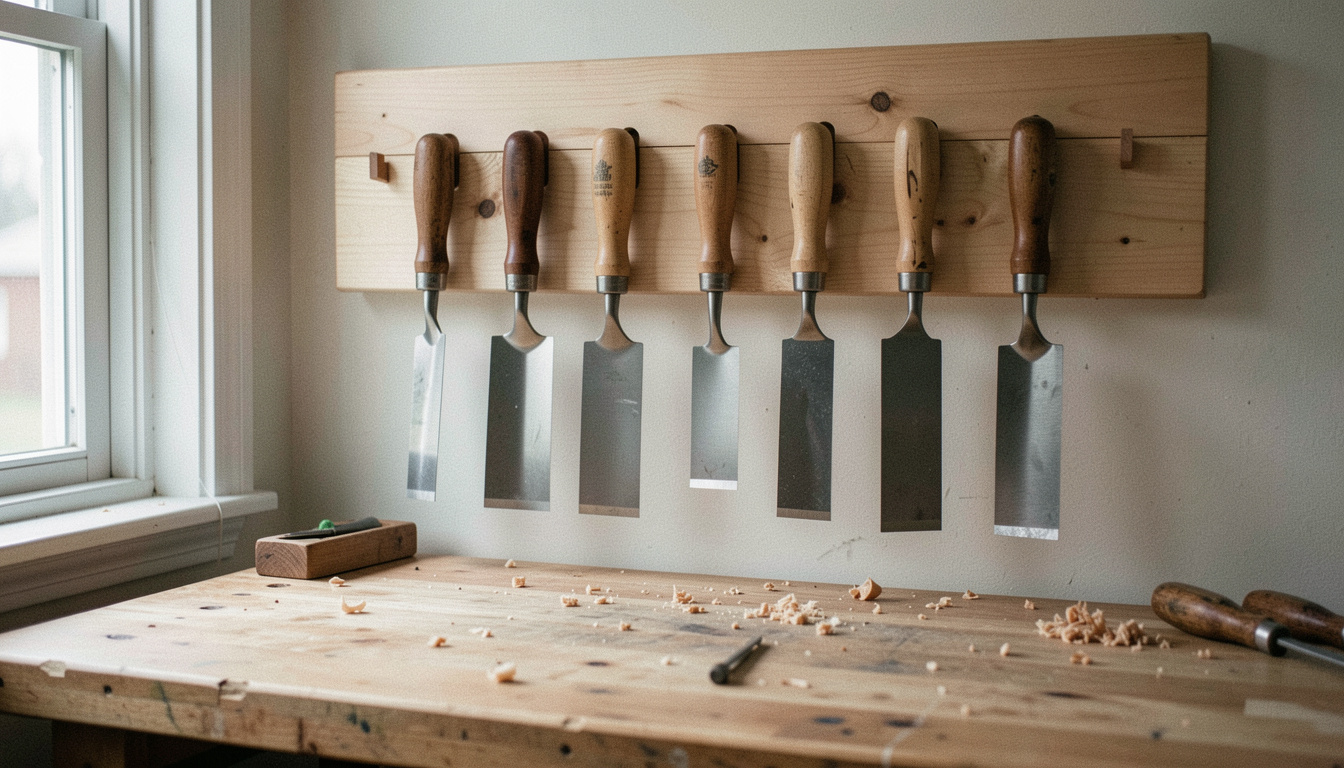
The rule that saves the most steel
No edge tool ever goes into a drawer or a box with another edge tool, unless something keeps them apart. That single habit removes more sharpening from a year than any other change, because the damage from steel meeting steel is a chip rather than a dulling, and a chip means the grinder.
Guards, and which ones are worth it
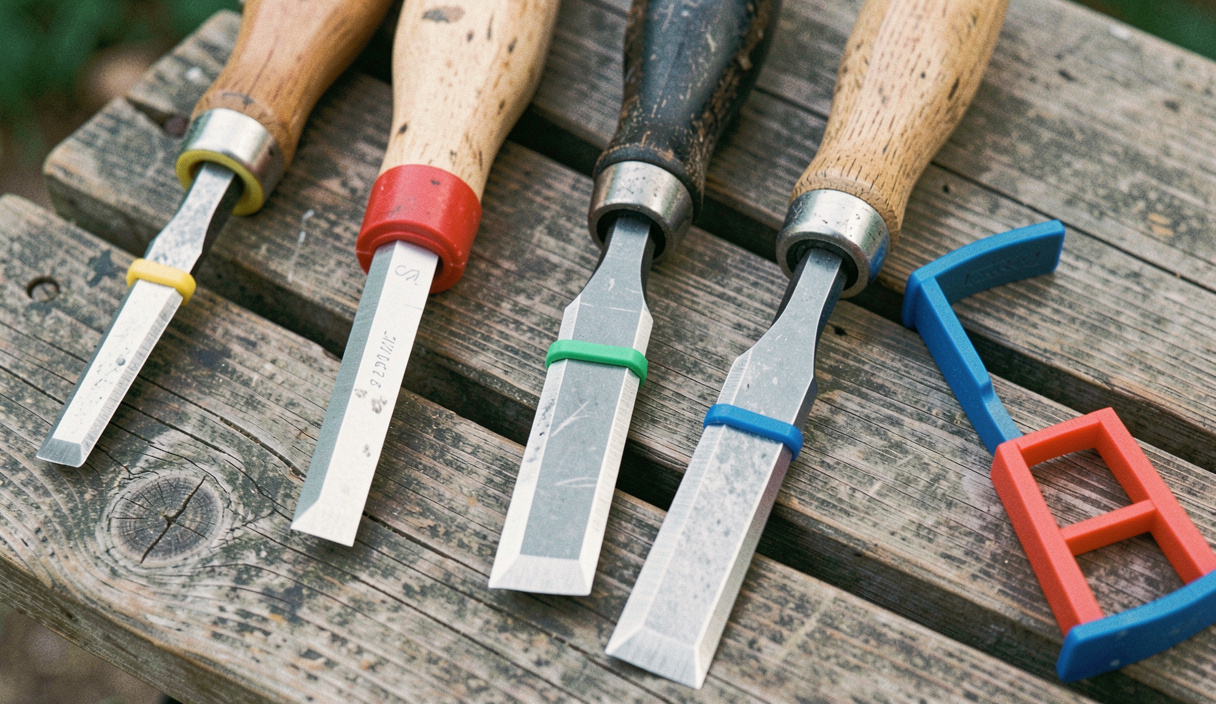
- Slip on plastic guards: excellent for transport, but they hold moisture. Take them off when the tools are stored.
- A folded strip of thick card taped into a sleeve: free, works, and absorbs rather than traps damp.
- Cork blocks with a saw kerf: cheap, grip well, and are the traditional answer for gouges.
- A rag with a smear of oil, wrapped round the blade: the right answer for a plane iron, or for a saw between the long intervals at which it wants filing at home.
Rust, in a garage that is not heated
Rust forms when the temperature of the steel drops below the dew point of the air around it, which happens on the first cold morning after a mild damp spell. A tool that is slightly warmer than the air does not rust; one that is colder collects condensation.
Three things help and none of them is a dehumidifier. First, a wipe with an oily rag at the end of every session, which takes ten seconds for a whole rack of tools. Second, keeping the tools off the outside wall and off the concrete floor, both of which stay cold longest. Third, a light film of paste wax on plane soles and saw plates, buffed off, which resists moisture better than oil and does not transfer to the work.
If rust has already appeared, it comes off with fine wire wool and oil, or with a rubber abrasive block. Deal with it early: rust pits, and a pit in the first 30 mm behind a cutting edge will break through as a notch the next time the tool is sharpened, which is the thing to check when buying an old plane secondhand.
Where the plane goes
A bench plane is stored on its side or on a strip of wood, not flat on the bench, and the iron is retracted before it goes away. Standing a plane on its sole on a bench top puts the edge on whatever grit is lying there, and a retracted iron cannot be nicked by anything. The old habit of laying a plane on its side does the same job and is quicker.
The same reasoning applies to the block plane that gets pushed into a pocket or a drawer twenty times a day, which is one of the small things covered in setting one up properly. And it is the reason the bench itself needs a home for the tools that are in use, not only for the ones that are put away: a bench in a shared garage collects brake dust and grit on every horizontal surface, and a tool left lying on it is being stored badly whether or not it is going to be picked up again in five minutes.
None of this is elaborate. A strip of softwood with six slots in it, screwed to the wall, will halve the sharpening a household bench needs. That is a fair return on twenty minutes and an offcut.
Read next on the bench
The other bench and storage entries are listed in date order in the section index.
Back to The workbench