Skip to the entries
The Repair Bench

Hand tools, materials and repairs that hold.

Section
Hand tools

Section

Hand tools

Planes, hammers, chisels and rules, and the work of getting them into the state their makers intended. Old steel bought secondhand gets the same attention as anything new.

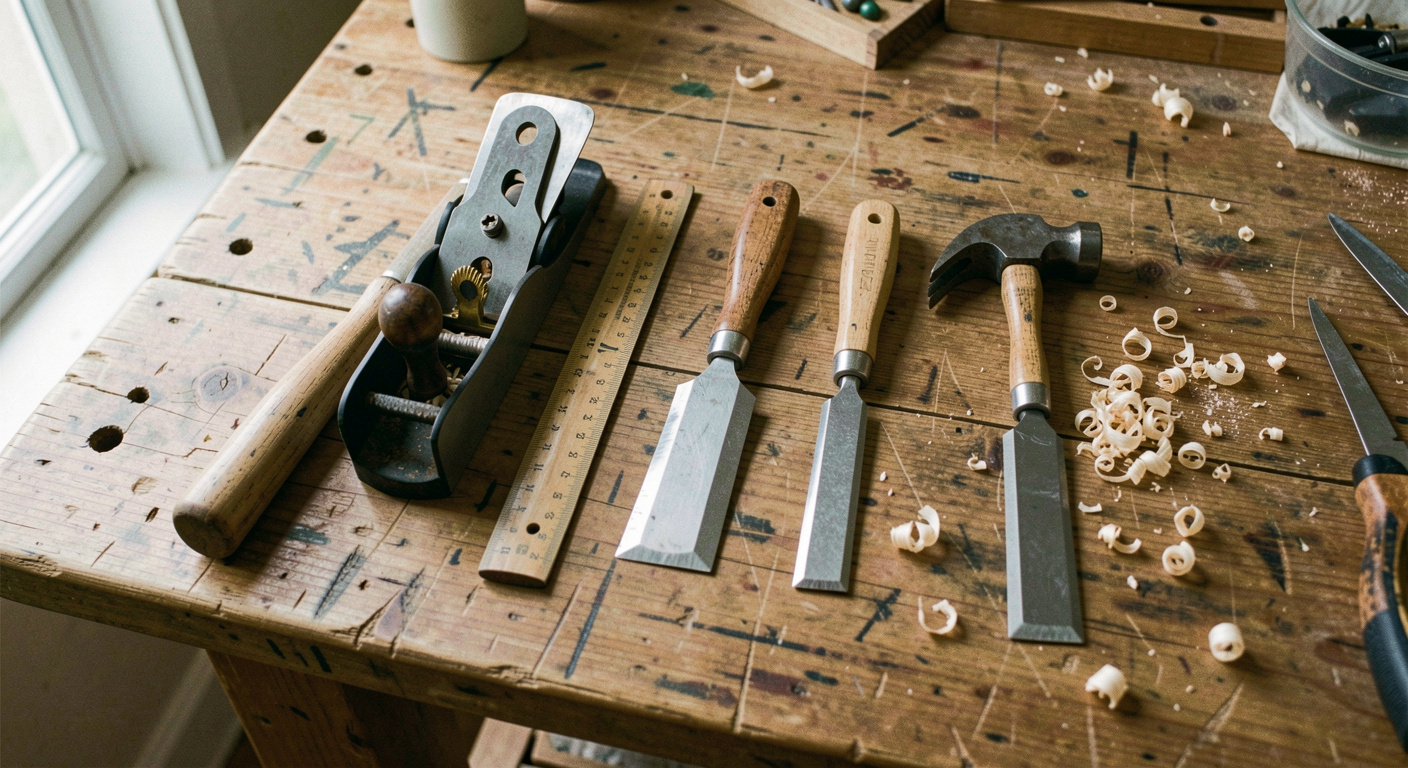
A smoothing plane, a claw hammer, a folding rule and three chisels laid in a row across a scarred timber bench top, shavings pushed to one side, morning light from a window at the left, view from above.
The four tools that do most of the work on this bench, laid out at the start of a session.

A hand tool is not finished when it is bought. A new plane arrives with a sole that is nearly flat and an iron sharpened to about the standard of a butter knife; an old one arrives with sixty years of somebody else's habits ground into it. Both need the same evening of work before they earn their place, and that work is what this section is mostly about. The entry on setting up a new block plane and the one on judging an old one at a stall describe the two ends of the same job.

The other half of the section is repair rather than setting up. Handles break, heads loosen, sockets rust and totes crack, and almost all of it is fixable at a bench with a vice and a spokeshave, for the price of a blank and an hour. Where a tool needs an edge before any of that is possible, the method sits in the sharpening section rather than being repeated here. Sizes are given in millimetres, with the imperial figure where a tool is still sold that way: a 20 oz hammer is a 20 oz hammer, and nobody asks for a 567 gram one.
Entries in this section

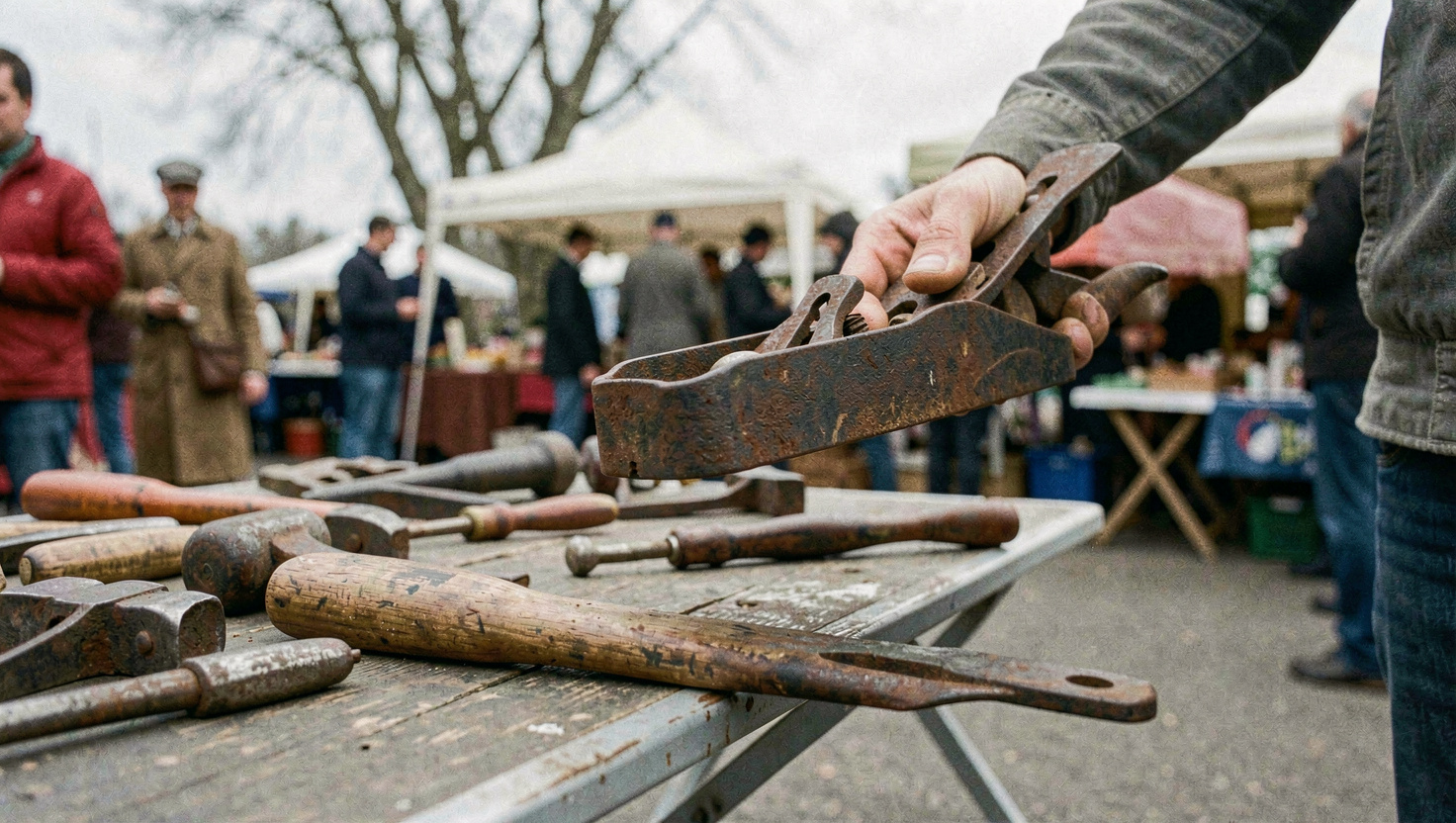
A rusty cast iron smoothing plane held in one hand above a folding table of secondhand tools at an outdoor market, overcast morning light, close view of the sole.

Hand tools

Buying an old hand plane at a car boot sale

What to check in the two minutes you get, in the order that finds the fatal faults first: cracks at the mouth and cheeks, the sole against a steel rule, then the iron. Rust turns out to be a price negotiation rather than a problem.

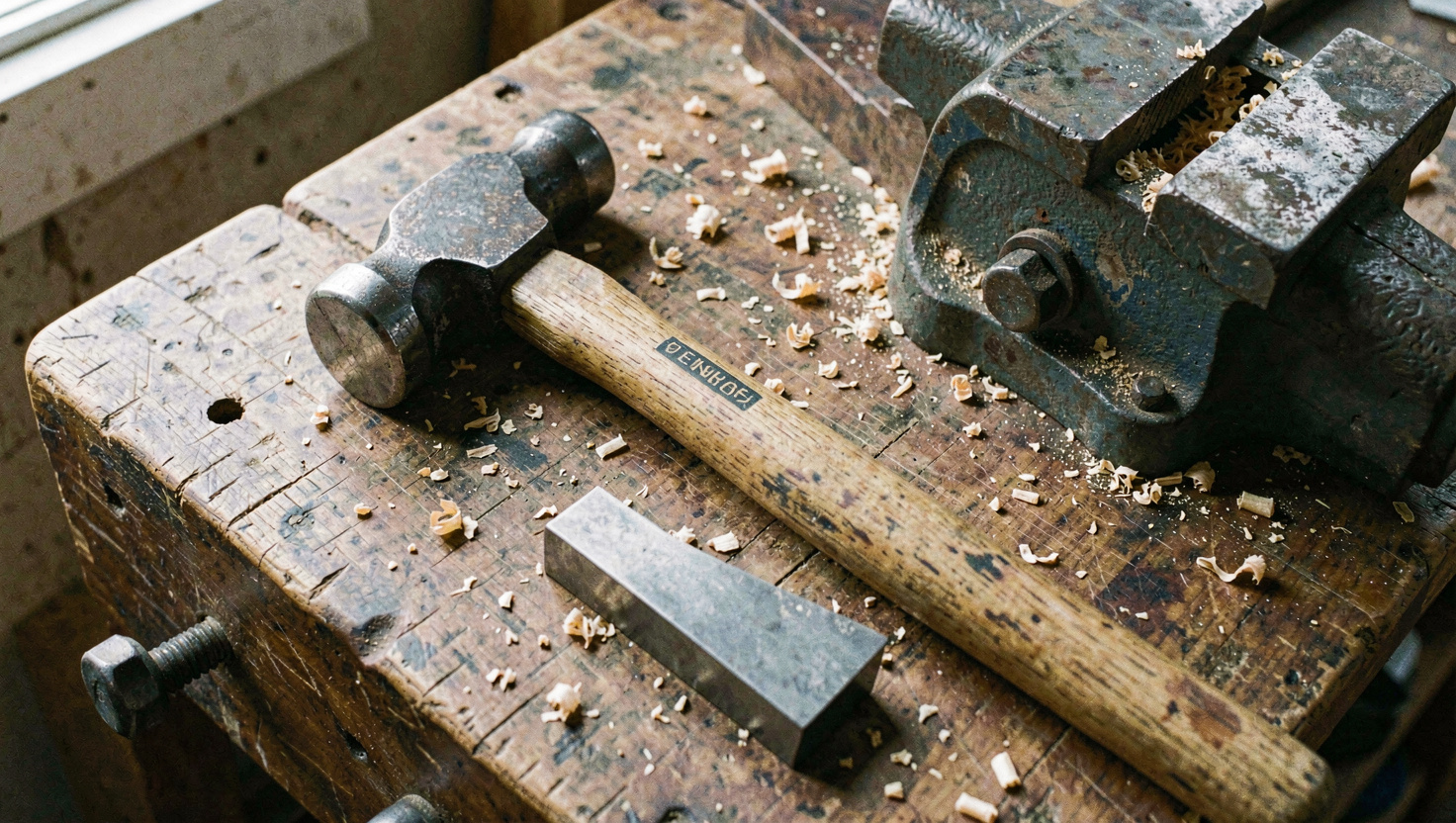
A claw hammer head, a fresh ash handle and two steel wedges laid on a workbench beside a vice, shavings scattered around, daylight from the side, close view from above.

Hand tools

Rehandling a hammer with an ash haft

Drilling and driving the old haft out of the eye, reading grain runout on a new blank, fitting the tongue with a spokeshave, and wedging the head so it stays where it is put.

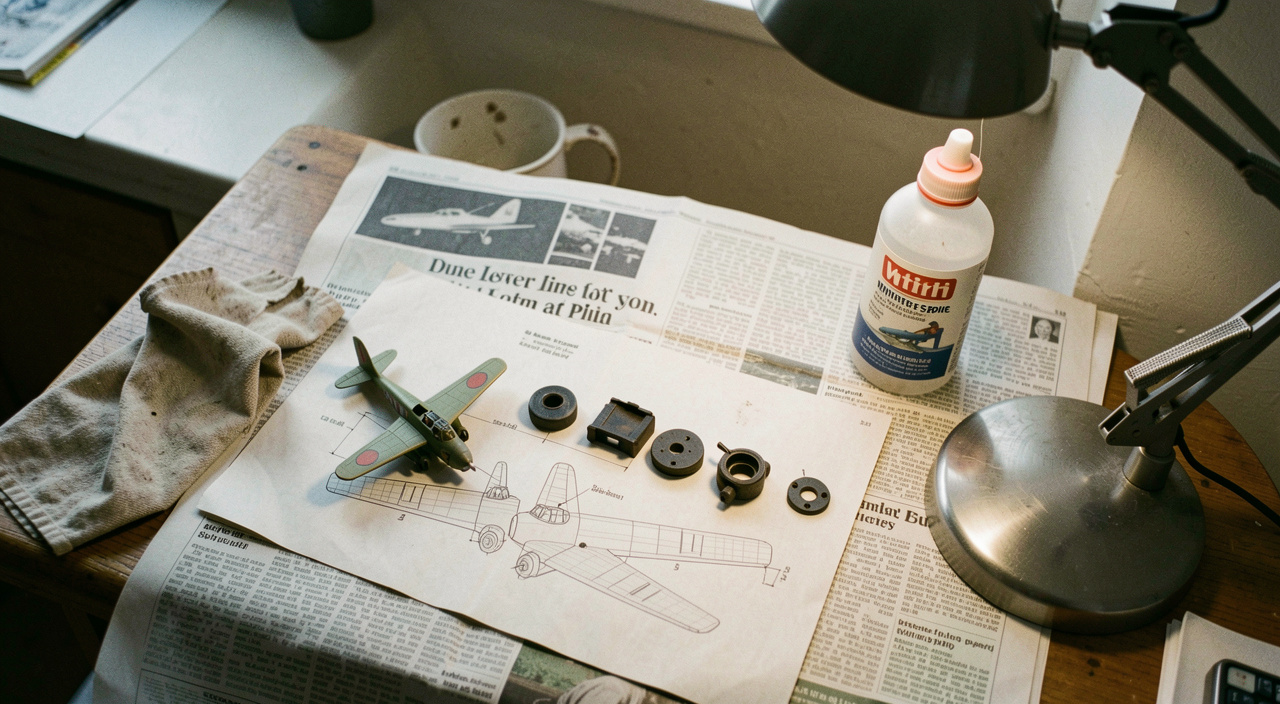
A small block plane taken apart on a sheet of clean newspaper with the body, iron, lever cap, adjuster and mouth plate laid in a row, a rag and a bottle of white spirit beside them, bench lamp light, view from above.

Hand tools

Setting up a new block plane out of the box

Forty minutes of stripping, lapping the sole under lever cap tension, flattening the back of the iron and setting the mouth to the shaving. The difference between a plane that cuts and one you reach for daily.

Every tool in this section stops working the moment its edge goes, and the edge goes far sooner than most people expect.

Sharpening section