Hand tools
Buying an old hand plane at a car boot sale
What to check in the two minutes you get: the sole, the frog, the lever cap and the cracked spots nobody points out. Rust is the least of the problems.
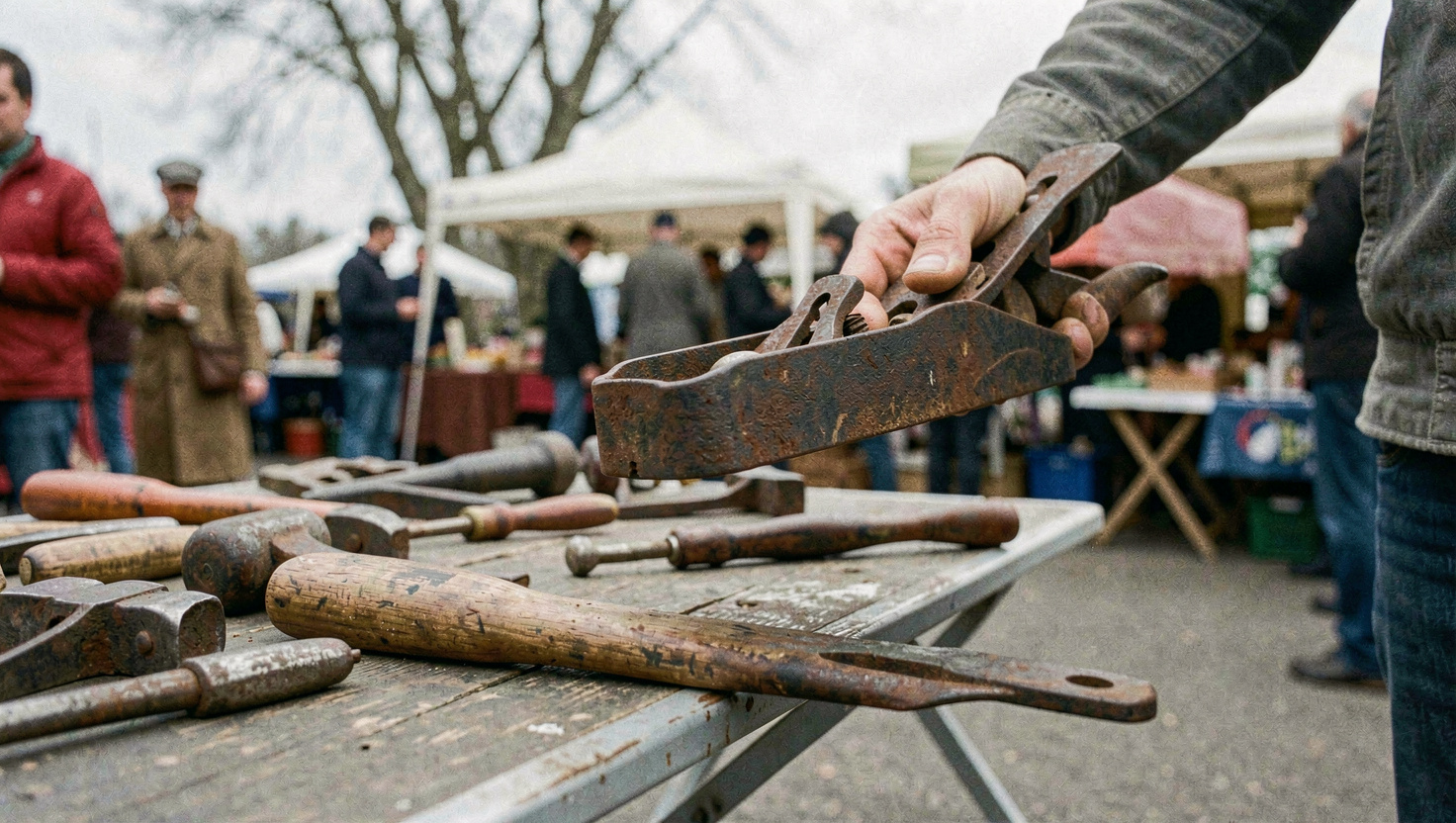
A car boot sale gives you about two minutes with a tool, in bad light, with somebody waiting. That is enough time to check a hand plane properly if you know the order to check things in, and it is exactly the situation in which people buy the wrong one. The good news is that the faults which matter are the ones you can find fastest, and rust, which is what everybody looks at first, is very nearly irrelevant.
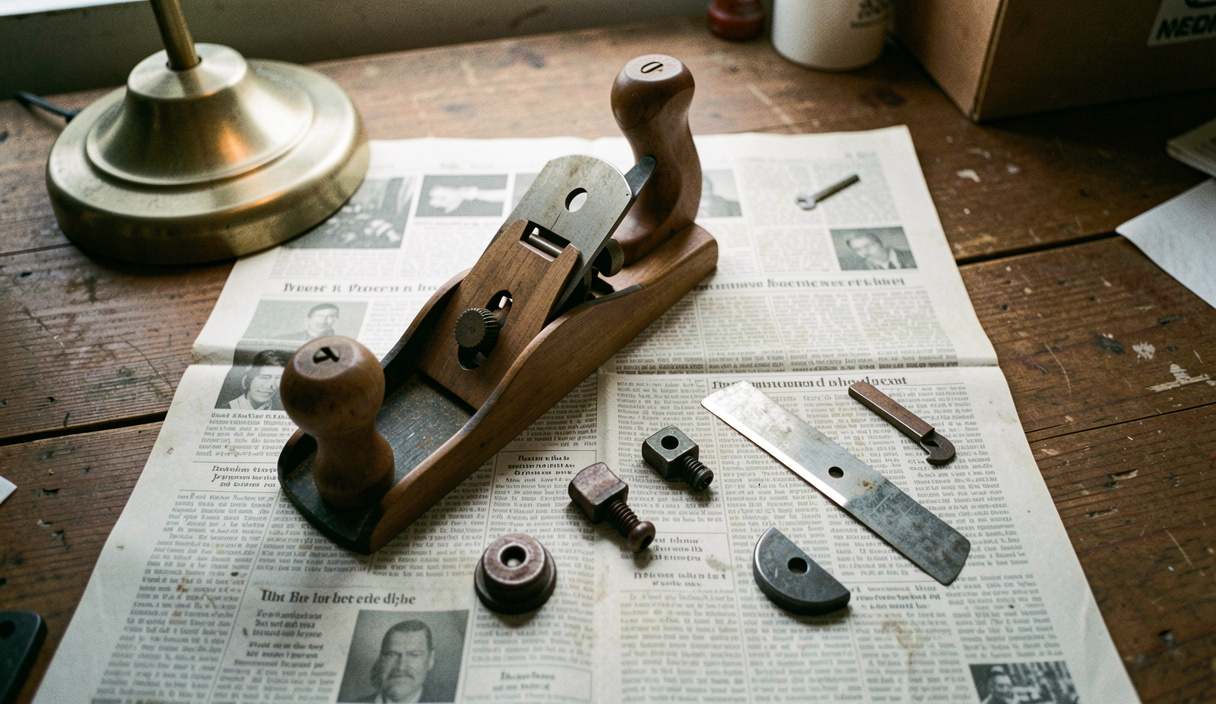
What follows is the order used on the plane in the photograph, a Bailey pattern number 4 smoother bought for less than the price of a replacement iron. It took ninety seconds to decide and an evening to put back into service.
First: is there a crack
A cracked casting is the only fault on a common bench plane that cannot be fixed for sensible money, so it is checked first. There are three places to look, and all three are places a dropped plane breaks.
- The mouth. Sight along the sole and look at the thin bridge of iron in front of the blade opening. A crack here runs across the sole and the plane is scrap.
- The cheeks, just behind the mouth where the sides are thinnest. Hold the plane up to the sky and look along each side.
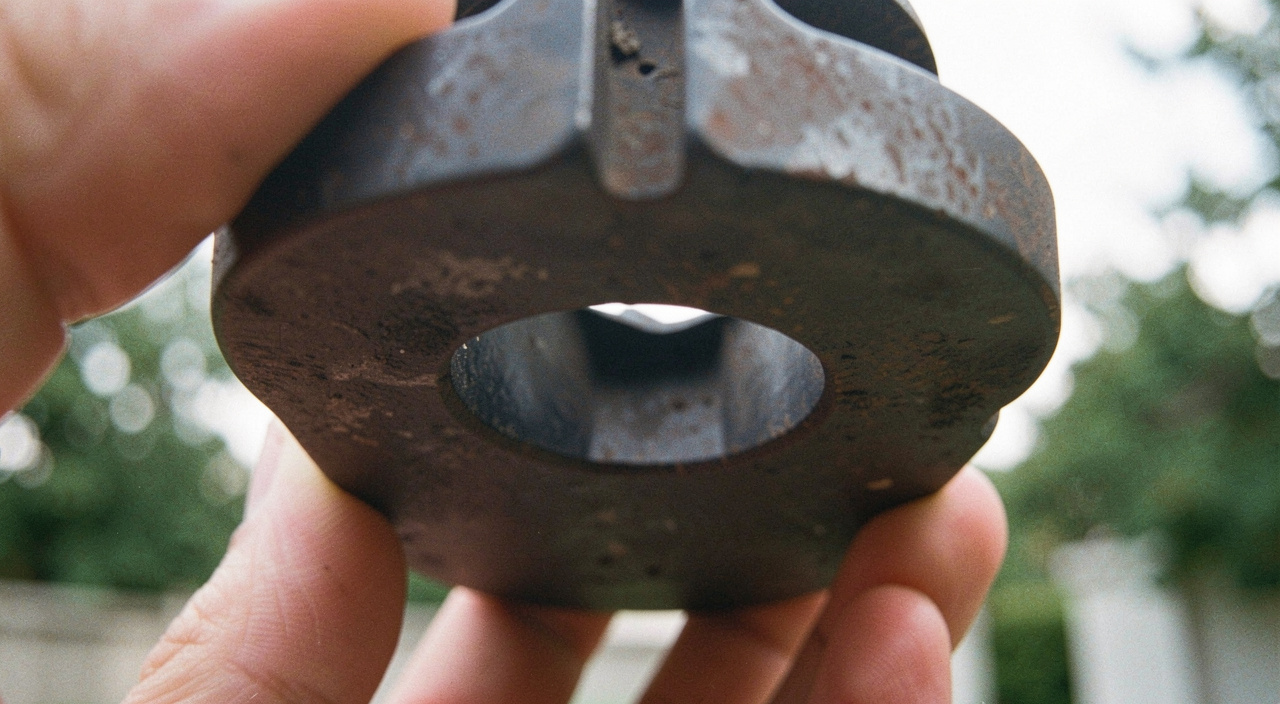
- The two ribs the frog sits on inside the body. Take the iron out, tip the plane over and look. A repair weld here shows as a grey bead.
A cracked plane still rings when you tap it, so the tapping test is not reliable. Looking is. Once those three places are clear, everything else on the tool is a matter of time rather than money.
Second: is the sole flat enough
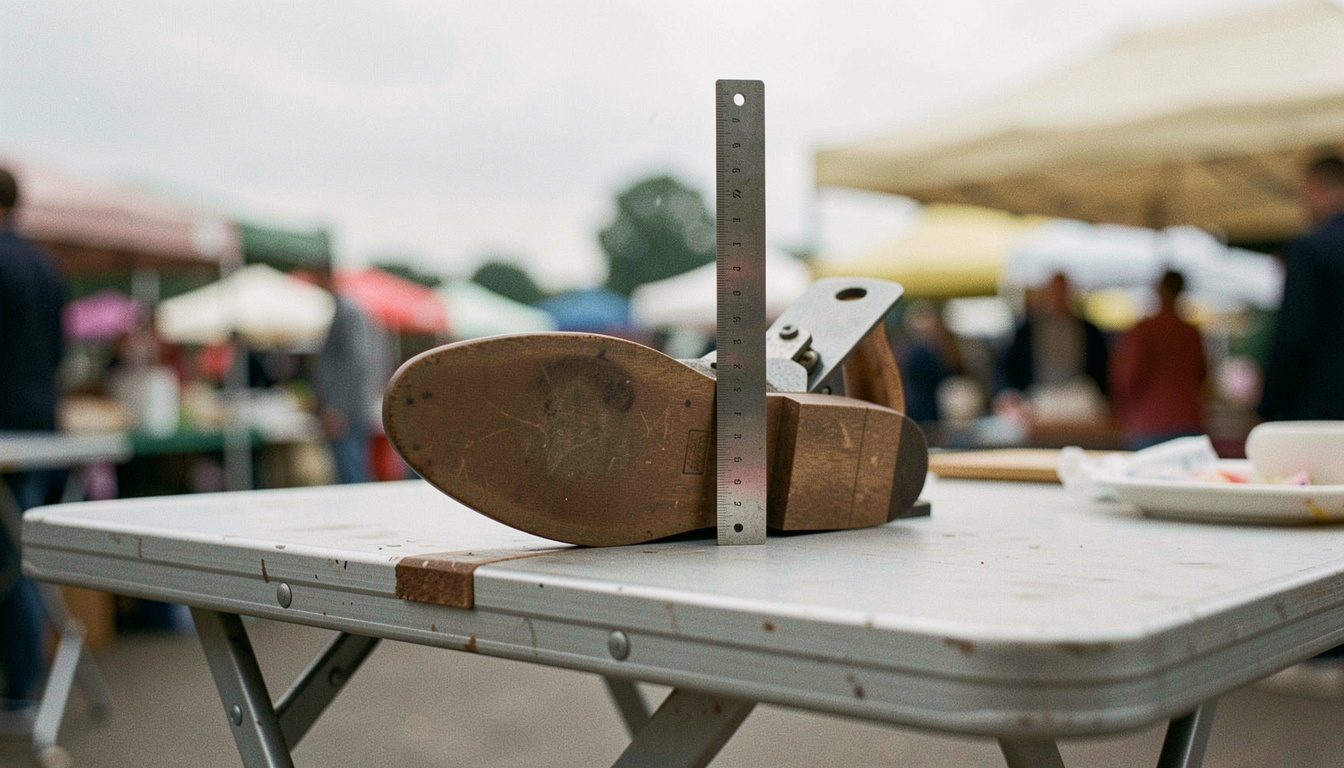
A sole does not need to be perfectly flat. It needs to be flat immediately in front of the mouth, at the toe and at the heel, because those are the three points that reference the work. A hollow in the middle is harmless. A sole that rocks on a diagonal is a long evening with abrasive paper.
Carry a short steel rule. Stand it on edge along the sole, down the middle and then diagonally corner to corner, and look for light underneath. At a market stall you will not have a reference surface, so the test is comparative: any daylight you can see under a 150 mm rule is more than you want, and daylight at the toe or right at the mouth matters far more than daylight halfway along.
Third: the parts that cost money to replace
| Part | What to check in ten seconds |
|---|---|
| Iron | How much is left above the slot. A blade worn back to within 25 mm of the slot is nearly finished |
| Cap iron | Its front edge must sit on the iron with no gap. A gap jams shavings every stroke |
| Lever cap | Present, with its screw. Missing lever caps are the expensive absence |
| Frog | Both bedding faces clean, adjuster screw turning, no missing pin |
| Depth adjuster | Turn it both ways. Some backlash is normal, a full turn of nothing is not |
| Tote and knob | Cracks are common and repairable; missing bolts are the nuisance |
Of those, the two worth walking away over are a missing lever cap and an iron worn out. The rest can be cleaned, adjusted or lived with. A cracked rear handle glues back together in twenty minutes and is stronger than it was, since the break is nearly always along the grain.
Rust is a price negotiation, not a fault
Surface rust on a sole comes off with abrasive paper and half an hour. Deep pitting on the back of the iron, in the first 30 mm behind the edge, is a different matter: those pits break through the edge as you sharpen and leave notches in every shaving. Look at the back of the iron, not at the body.
The evening afterwards
A plane bought this way needs four things and no more. Take it apart and clean everything with a wire brush and a rag; where the rust is heavy, white spirit and fine wire wool. Lap the sole on abrasive paper stuck to a flat surface, working from 120 grit up to 240, with the iron in place under tension but retracted, because a plane changes shape slightly when the lever cap is tightened.
Then flatten the back of the iron and grind the bevel. If the edge is chipped or badly rounded from years of freehand honing, the fast route is a grinder, and the risk is drawing the temper, which is why that job has its own entry with the cooling routine. If the edge is merely dull, two stones and ten minutes following the ordinary honing sequence will do it, since a plane iron and a chisel want exactly the same treatment.
Last, set the cap iron. Its front edge goes about 0.5 mm back from the cutting edge for general work, closer for difficult grain. Tighten it down and look along the joint against the light: no gap anywhere. Then set the frog so the mouth is a slot rather than a gape, fit the iron, and take a shaving from the edge of a board.
- Take a small steel rule and a rag to the sale. They are the only tools you need.
- Check for cracks, then the sole, then the iron. In that order, every time.
- Turn the depth adjuster both directions before you agree a price.
- Buy the plane with the good iron, not the one with the good paint.
The reason this is worth doing at all is that an old plane body is a better casting than most new ones at the same price, and it has finished moving. Sixty year old iron has done all the settling it is going to do, so once the sole is flat, it stays flat. That is the part you are buying. Everything else is an evening at a bench with a vice on it.
Read next on the bench
The other hand tool entries are listed in date order in the section index.
Back to Hand tools