Skip to the entries
The Repair Bench

Hand tools, materials and repairs that hold.

Section
Fasteners and hardware

Section

Fasteners and hardware

Screws, plugs, hinges and catches. Gauges, pilot holes, wall types and the reasons a fixing lets go, which are nearly always decided before anything is screwed to anything.

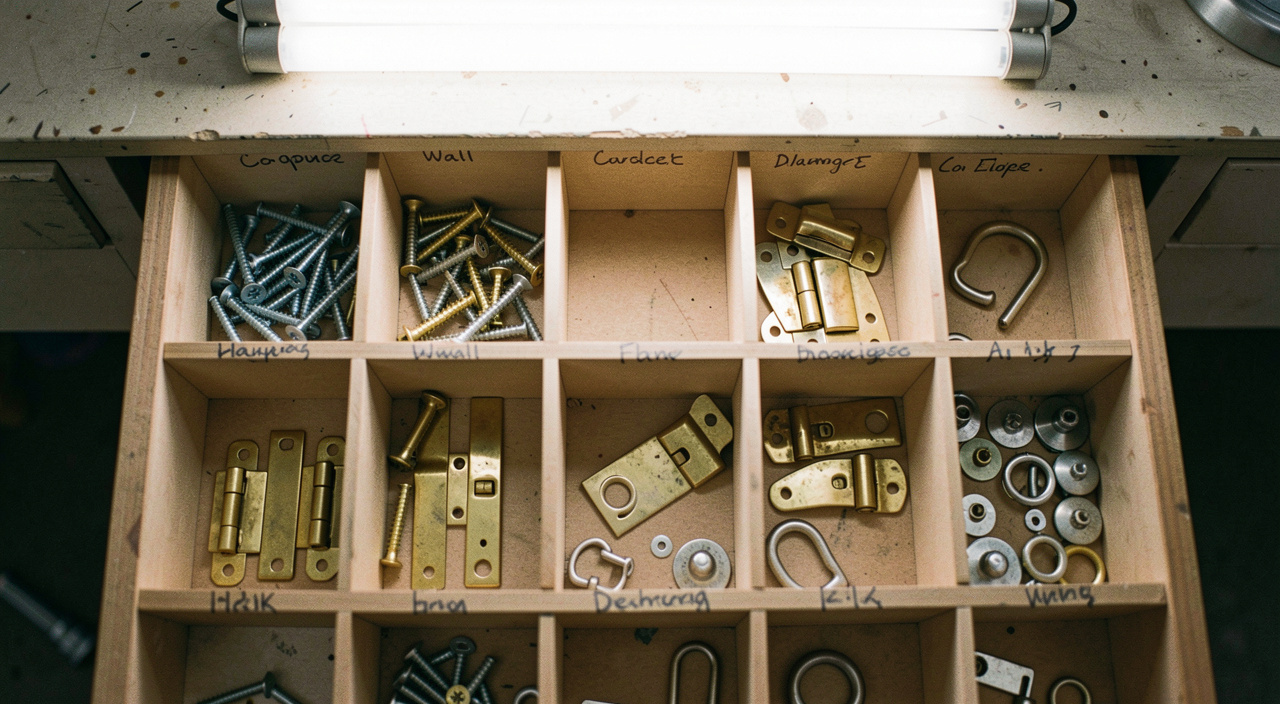
A shallow workshop drawer divided into compartments holding screws, wall plugs, brass hinges and small catches, each compartment labelled in pencil, striplight from above, view from directly overhead.
The hardware drawer, sorted by gauge rather than by job. Three sizes of screw and two of plug cover most of a house.

A fixing has three parts and they have to agree with each other: the hole, the plug and the screw. Get one of them wrong and the other two cannot compensate, which is why a shelf falls off a wall that would have carried five times the load. Working out what the wall is made of takes ten seconds and is the step that gets skipped, so the entry on wall plugs starts by reading the dust that comes out of the first hole.

In timber the questions are different but the discipline is the same. Gauge decides how much load a screw carries across its shank; length decides how much it carries along it; and the pilot hole decides whether the board splits. Those numbers are set out in the entry on gauge and length, with a table of the fixings a house actually asks for. Load figures quoted here are working figures rather than laboratory ones, and the difference between the two is roughly a factor of three, which is worth remembering every time a bracket goes up. Where the same screw is holding a repair while glue sets, the choice is covered in the finishes and glue section.
Entries in this section

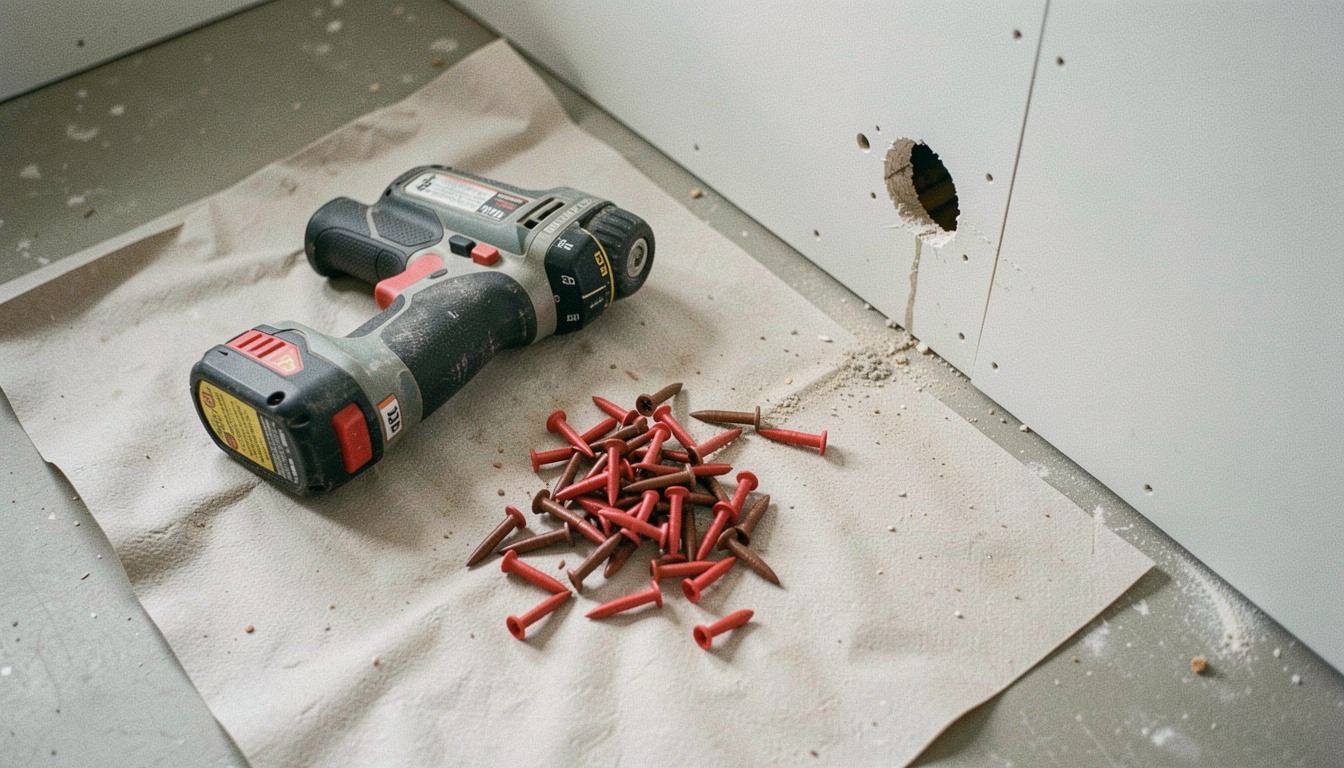
A handful of red and brown wall plugs spilled on a dust sheet next to a cordless drill and a freshly drilled hole in a plasterboard wall, bright indoor light, close view from above.

Fasteners and hardware

Wall plugs: the reason a fixing pulls out

Plasterboard, aerated block and old lime plaster each want a different plug. Identifying the wall from its dust, drilling the hole the plug actually wants, and choosing between three cavity fixings with honest load figures.

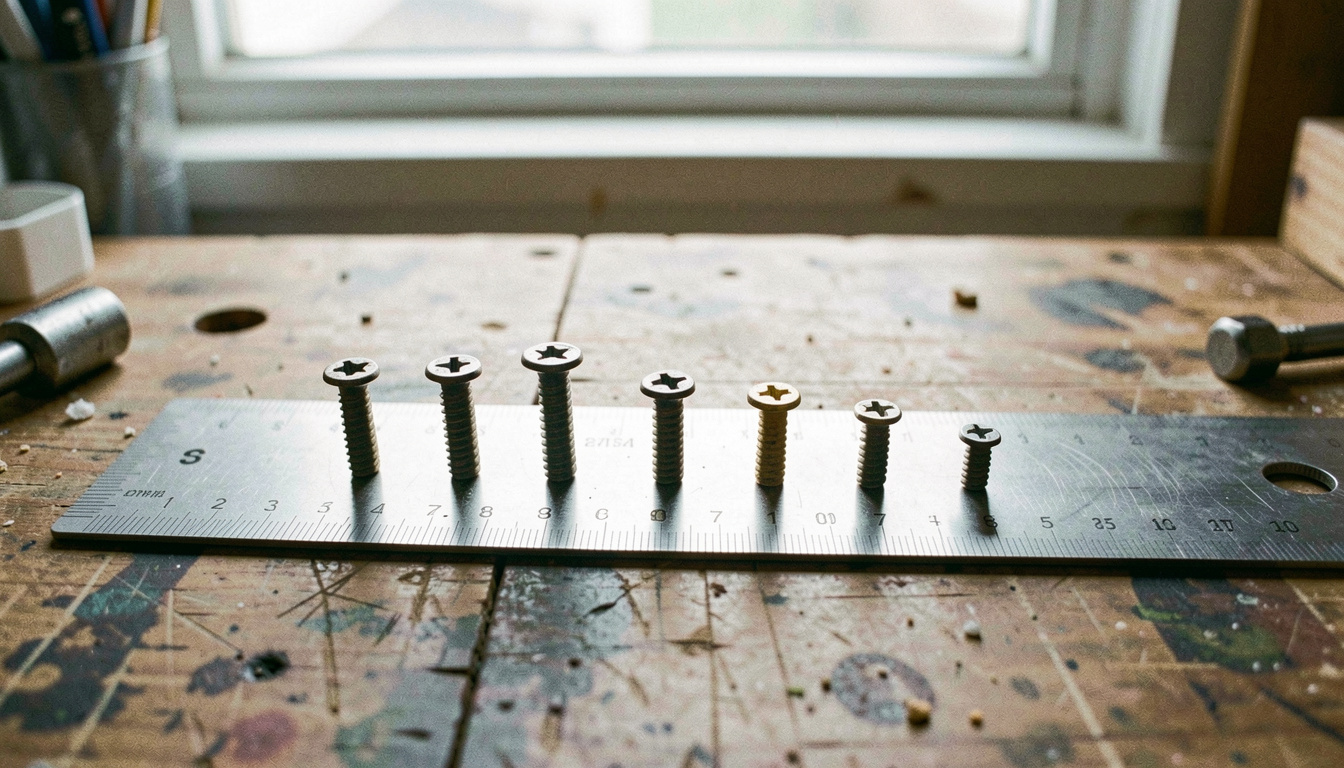
Eight wood screws of increasing size laid in a row across a steel rule on a workbench, their heads aligned, cool daylight from a window, close view from above.

Fasteners and hardware

Choosing screw gauge and length for a given board

The two thirds rule for length, gauge measured against board thickness, the pilot and clearance holes that stop a split, and the wax that keeps a brass screw from twisting off in oak.

Most of the fixings in this section end up holding something in a hallway, a kitchen or a bathroom rather than on a bench.

Around the house section