Skip to the entries
The Repair Bench

Hand tools, materials and repairs that hold.

Section
The workbench

Section

The workbench

The bench itself: its height, its top, its vice and the way the tools on it are stored. Written for shared garages, small sheds and the corner of a spare room rather than for a workshop.

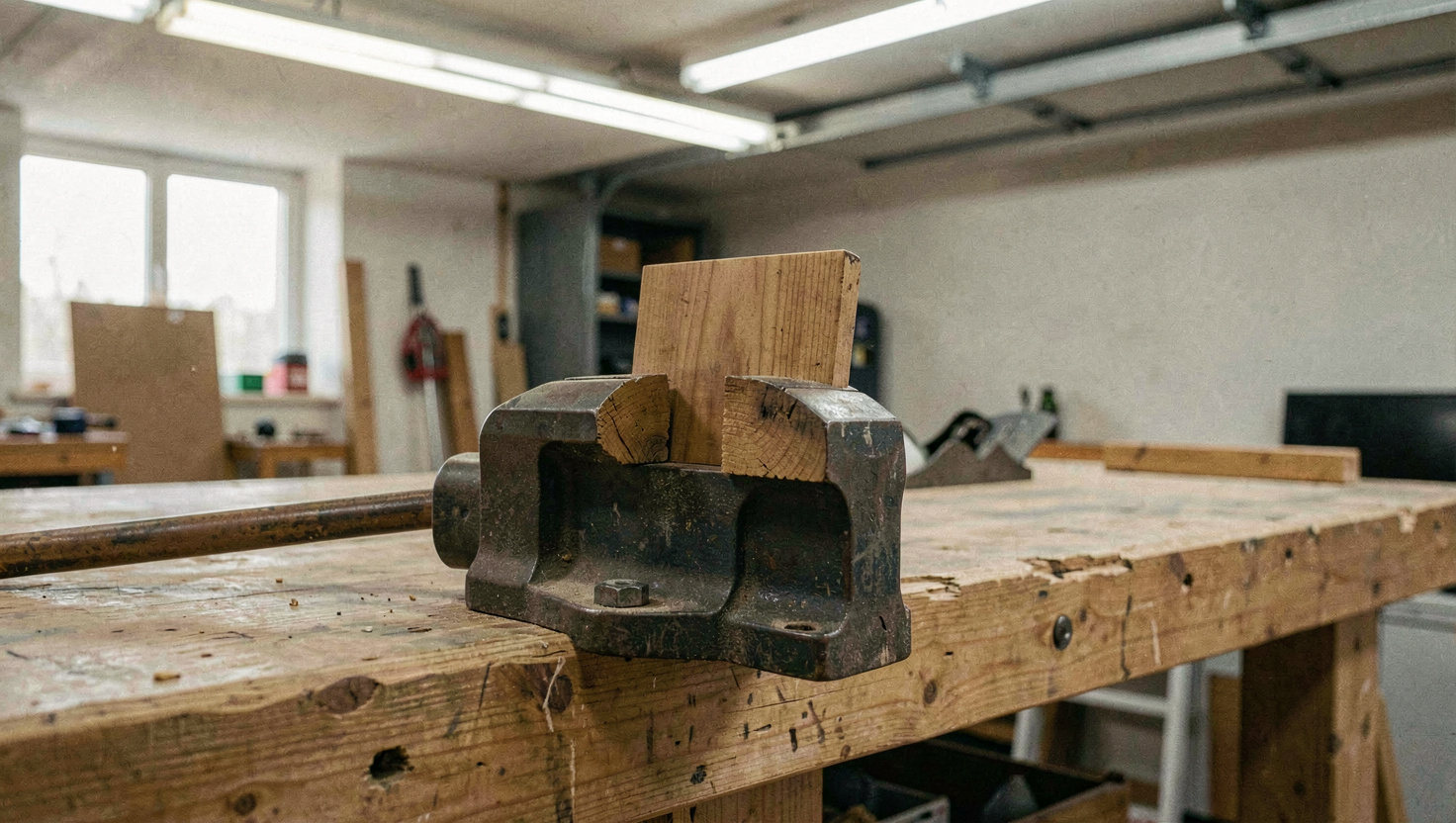
A steel vice bolted to the corner of a timber workbench with wooden jaw liners fitted, a board held upright in it and a plane resting on the bench top, garage striplight overhead, close view.
The vice at the left hand end with beech liners on the jaws, mounted flush with the front edge so a long board can hang against the bench face.

A bench is not furniture. It is a tool with two jobs: to hold work still, and to give a flat reference the work can be measured against. Everything else about it, the drawers, the shelf, the pegboard, is storage that happens to be attached. That is why the bench built here in July starts from a chalk line round an open car door rather than from a cutting list, and why the top is plywood rather than laminated beech: in an unheated garage a solid top cups, and a top that has cupped is no longer a reference for anything.

The second half of the section is about what happens to tools between jobs. Most of the sharpening a home bench does is caused by storage rather than by cutting, and a strip of softwood with slots in it will halve it, which is the argument in the entry on storing chisels. Heights are given for a person of average build and should be adjusted by standing at the bench with your arms hanging; measurements are millimetres throughout, and the rest of the conventions this notebook holds to are listed in about the bench.
Entries in this section

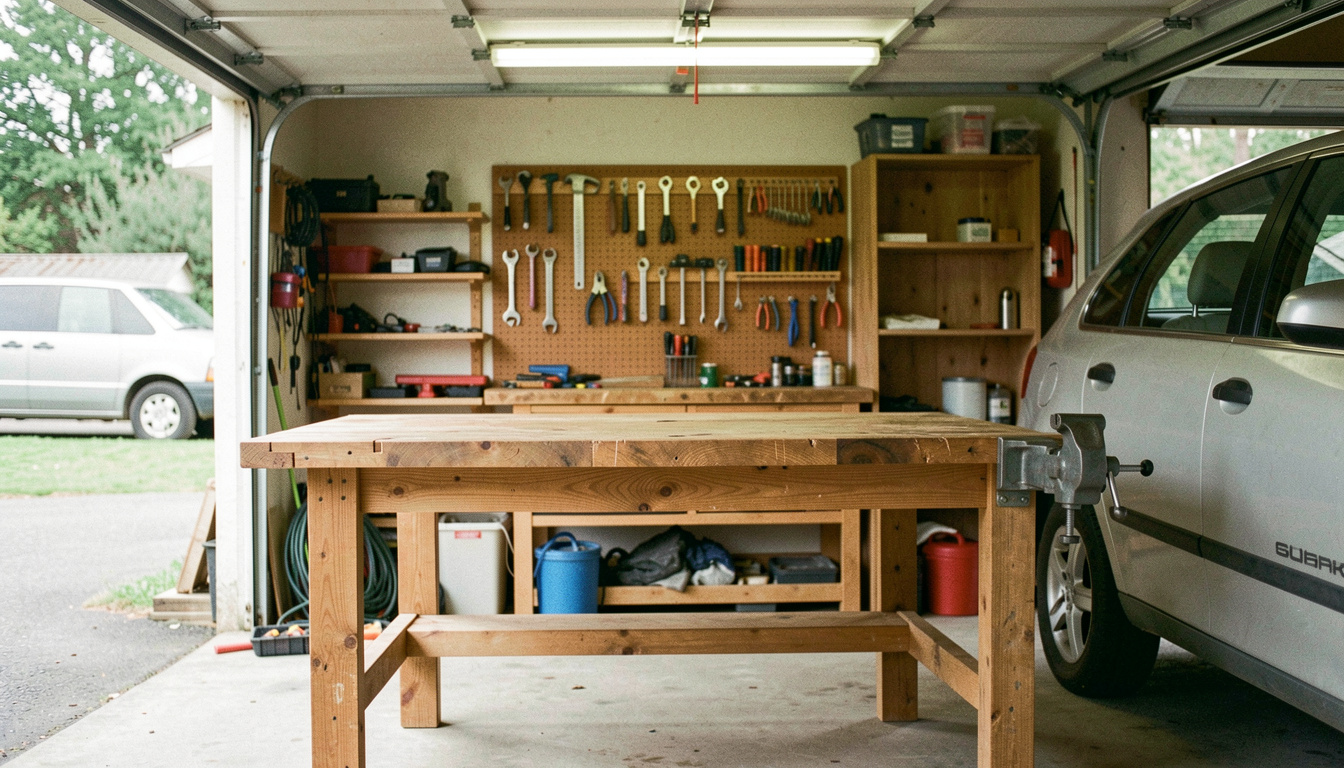
A sturdy timber workbench with a metal vice bolted to one end and hand tools hanging on a pegboard behind it, in a domestic garage beside a parked car, striplight overhead, wide view.

The workbench

A bench for a garage that still holds a car

Measuring the space with the car door fully open, a 36 mm birch ply top with a sacrificial hardboard skin, where the vice goes and why, a folding leaf that locks, and the three fixes for a bench that walks across the floor.

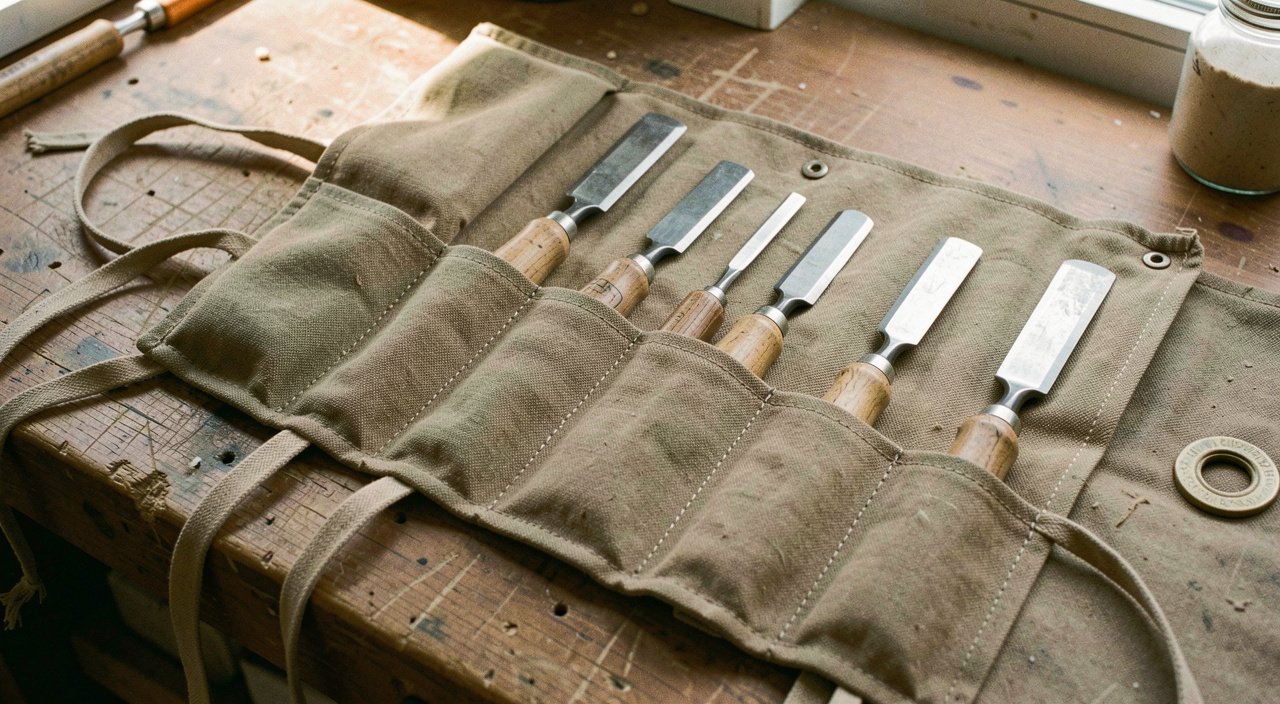
A canvas tool roll opened out flat on a workbench with six chisels lying in its stitched pockets, the ties hanging over the edge, warm side light from a window, close view from above.

The workbench

Storing chisels so the edges survive

The five things that damage an edge in storage, three arrangements that stop them, which guards are worth using and which trap moisture, and how to keep rust off steel in a garage that is never heated.

A bench is only as useful as the tools kept on it, and most of those arrive needing an evening of attention.

Hand tools section