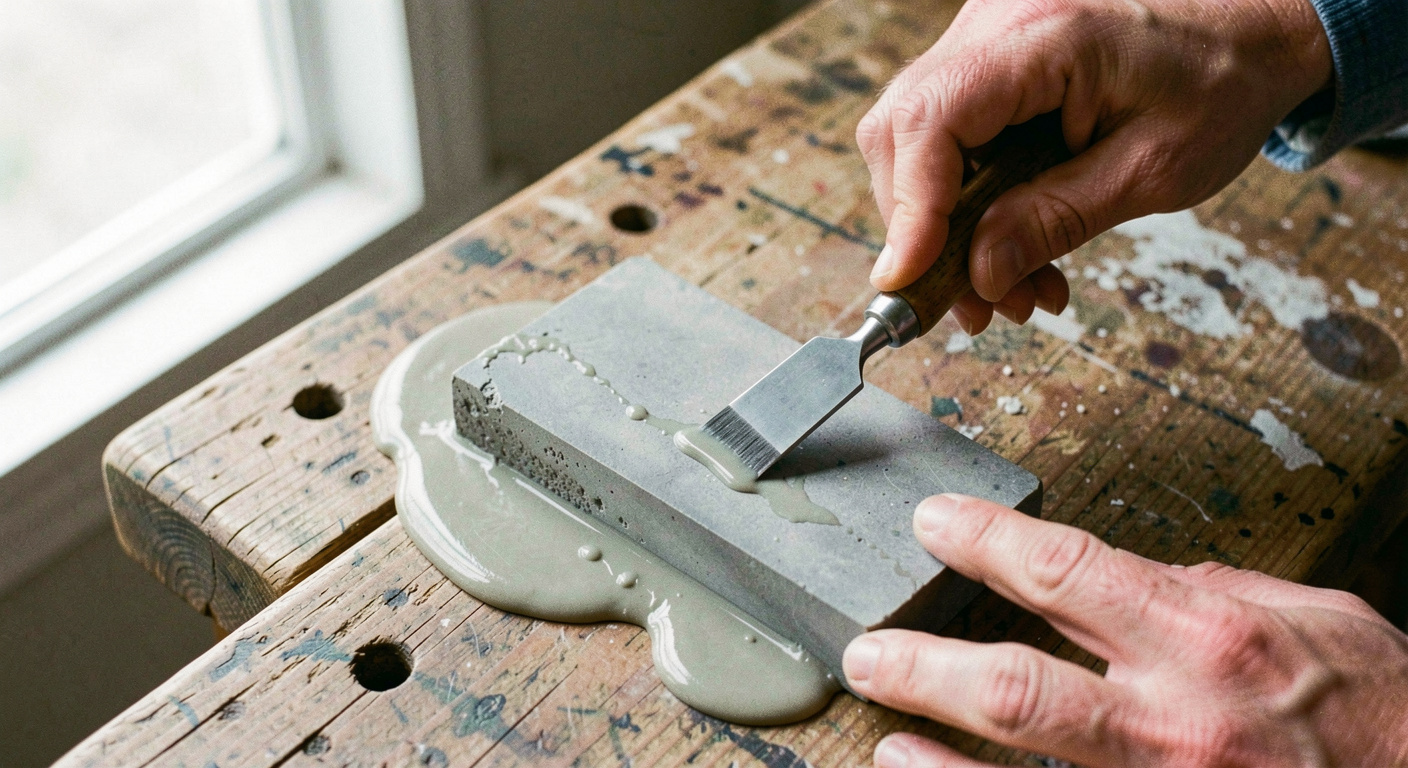
Sharpening a chisel on water stones
A 1000 grit stone, a 6000 grit stone and ten minutes at the sink. The sequence, the angle you can hold without a jig, and the two tests that tell you the burr has gone rather than moved to the other side.
Hand tools, materials and repairs that hold.
Section
Sharpening
Section
Everything on this bench that cuts has to be brought back to an edge, sooner or later. This section covers the stones, the angles and the small tests that tell you the job is done.
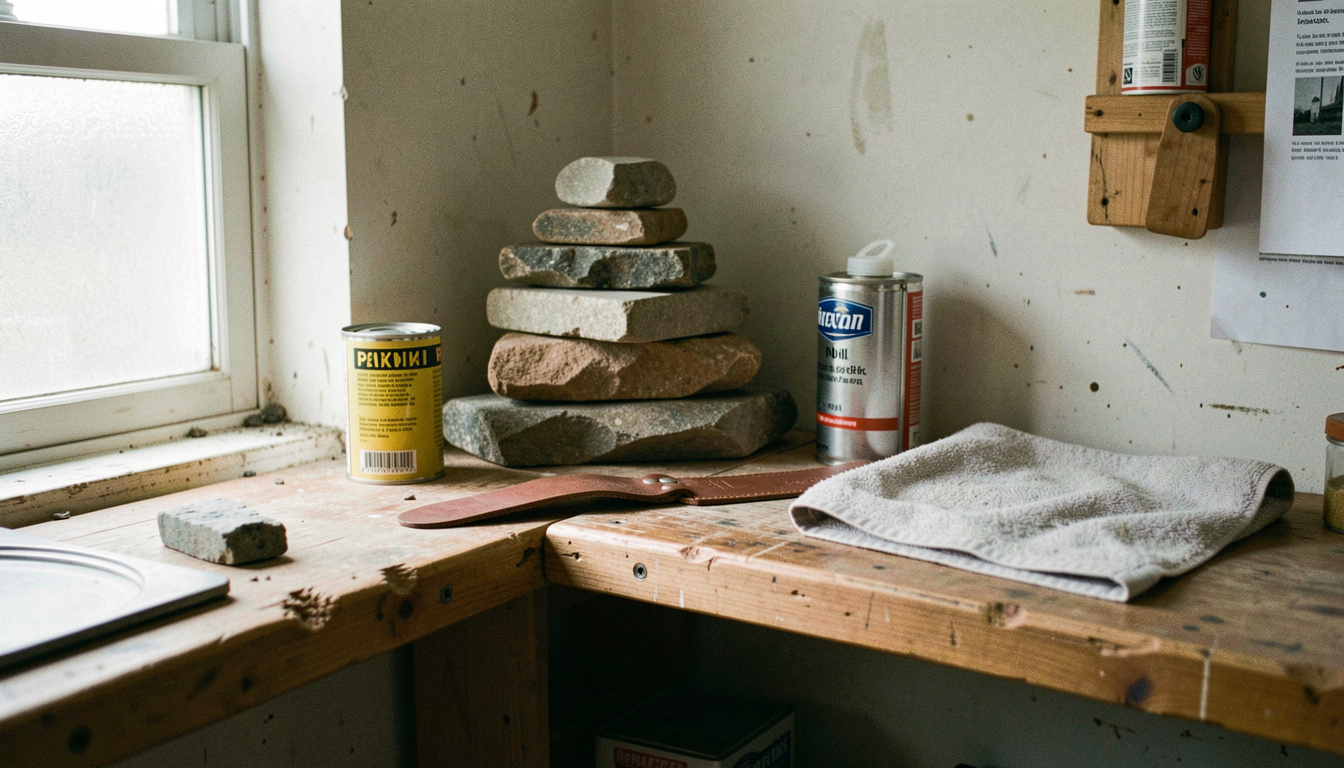
Sharpening is the one skill that changes every other job on the bench. A chisel that cuts cleanly makes a hinge recess look deliberate; a blunt one tears the fibres and leaves a recess that has to be filled. The same goes for a plane iron, a knife, a pair of secateurs and the teeth of a hand saw. Almost everything written here starts from that: the edge is not a detail at the end of the work, it is the thing that decides whether the work is worth doing at all.
The approach in this section is deliberately narrow. Two stones and a strop will sharpen nearly every tool a household owns, so the entries below concentrate on getting a lot out of a small kit rather than on comparing expensive ones. Where a piece of equipment does earn its place, the entry says exactly what it does that the cheaper route cannot, and what it costs in time as well as money. Angles are given in degrees, grits on the Japanese scale, and every method described has been used on a tool that went straight back into service afterwards.
Entries in this section
A 1000 grit stone, a 6000 grit stone and ten minutes at the sink. The sequence, the angle you can hold without a jig, and the two tests that tell you the burr has gone rather than moved to the other side.
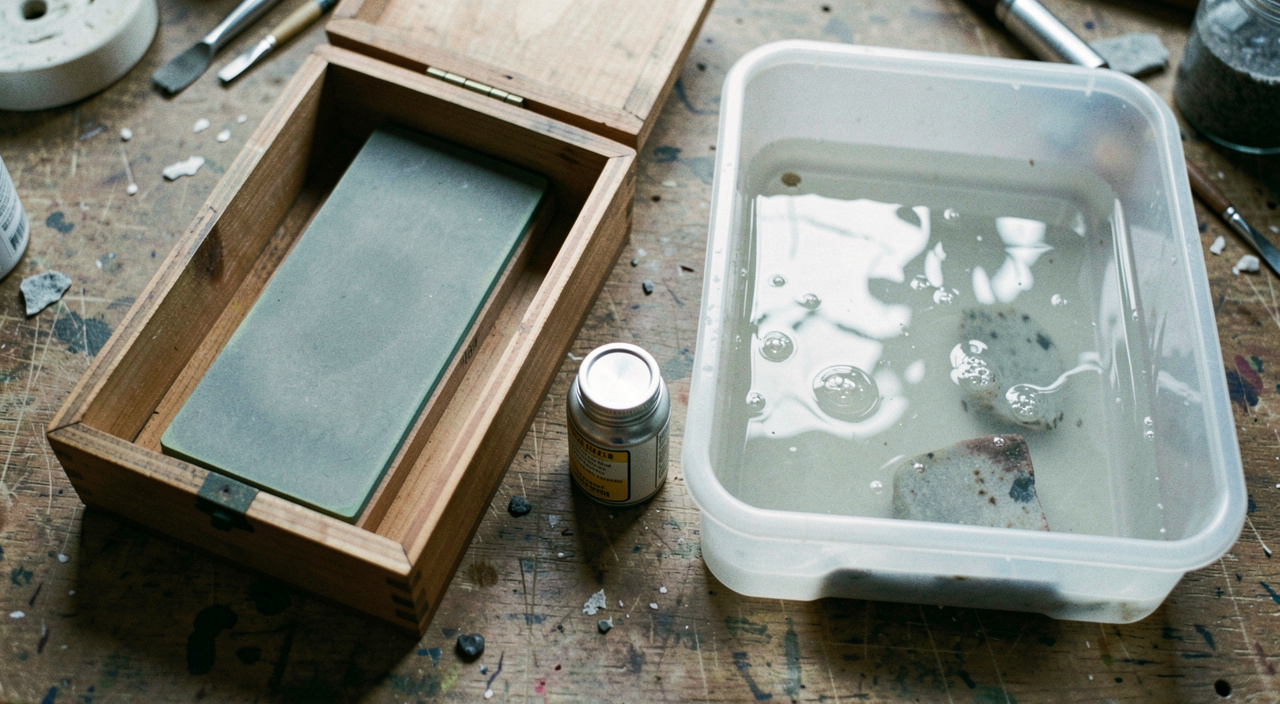
Speed, mess, storage and the price of the first set. The honest comparison for someone who sharpens four tools a month rather than forty, including what happens to each type of stone when it is left unused for a year.
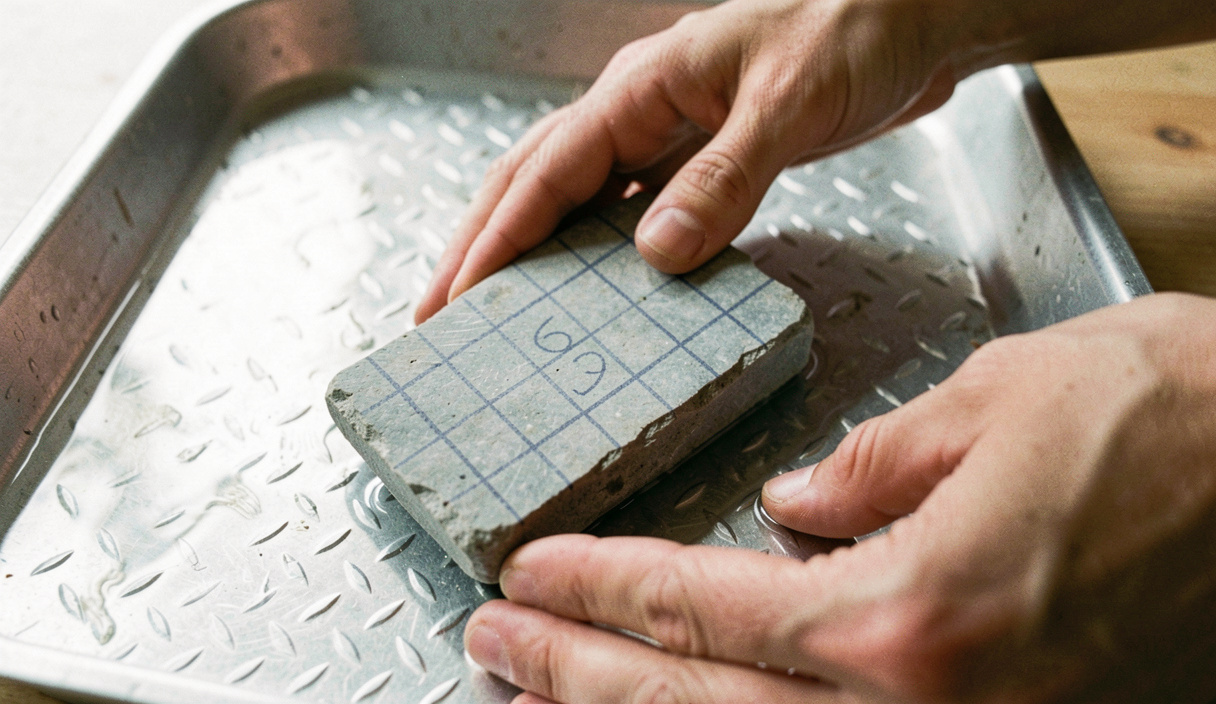
A hollow stone rounds every edge you put on it. Checking for flat with a pencil grid, and the three ways of taking the hollow back out, with the one that wears the stone least.
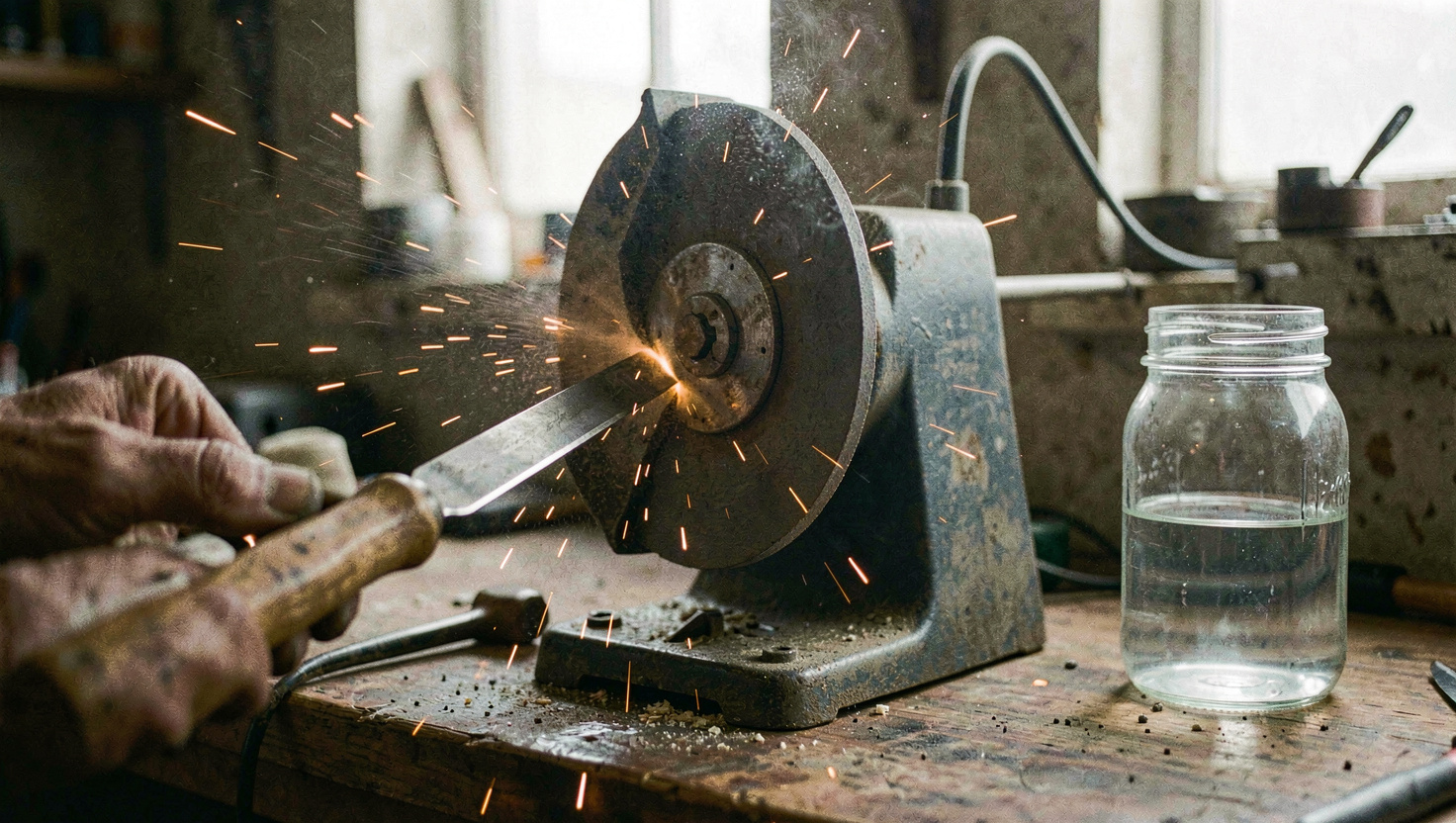
Blue at the tip means the temper has gone and the edge will not hold. Light passes, a jar of water at the elbow, and the signs to watch for on a chipped or badly rounded chisel.
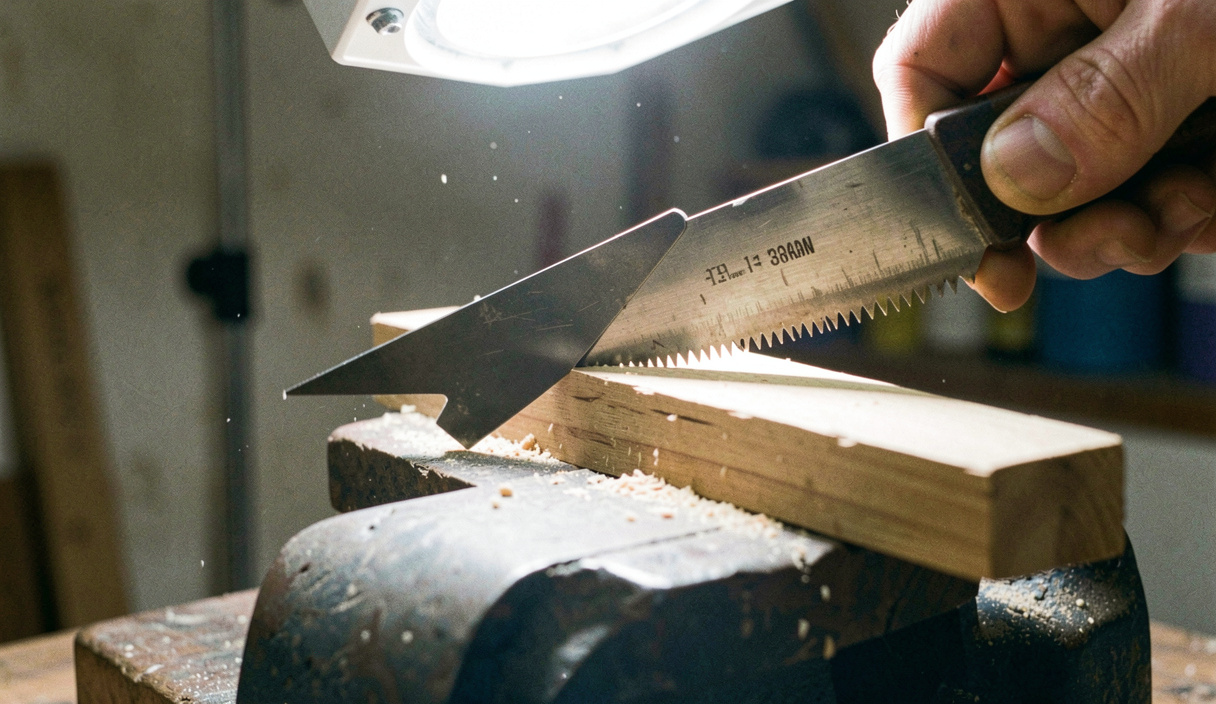
Jointing, shaping, setting and filing, in that order, with a triangular file and two scraps of plywood for a saw vice. Why a rip saw is the one to learn on.
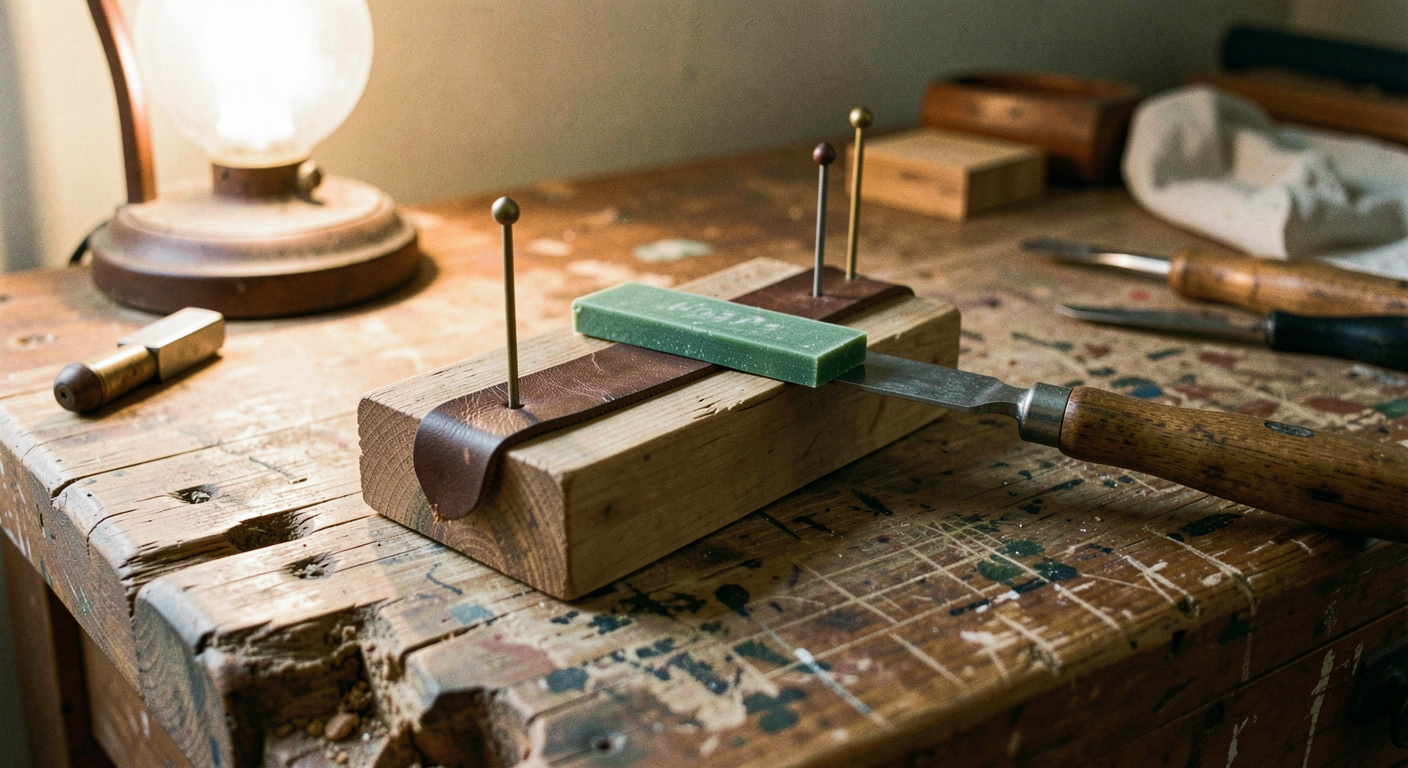
A strip of leather glued to a block, a bar of compound, and the direction that matters. What stropping removes, what it rounds over, and how many strokes is too many.
Sharpening runs into the other sections quickly: a plane needs its iron flat, and a chair repair needs a chisel that pares end grain without crushing it.
Hand tools section