Sharpening
Stropping, and what happens to the last burr
A strip of leather glued to a block, a bar of compound, and the direction that matters. What stropping removes, what it rounds over, and how many strokes is too many.
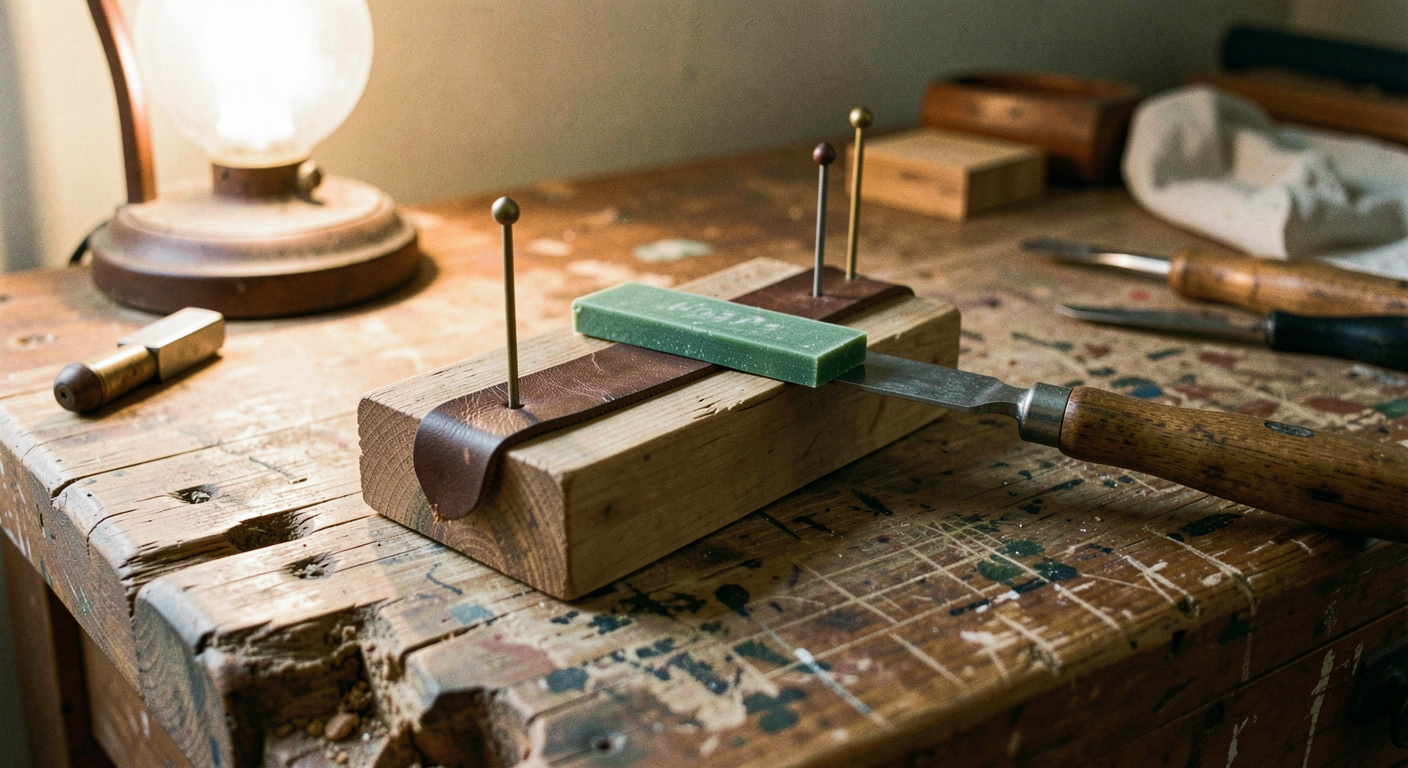
Every sharpened edge ends with a burr, a wire of steel bent over to one side, thinner than the edge itself and attached along its whole length. It feels sharp. It cuts, once or twice, and then it folds over and the tool goes dull far sooner than it should. Stropping is the operation that removes that wire rather than moving it from one side to the other, and it takes about twenty seconds.
What the burr actually is
When the bevel and the back of a tool meet, the last few microns of steel have nothing behind them to support them. Instead of being cut away they bend, and they bend away from the stone. Hone the bevel and the burr appears on the back; turn the tool over and hone the back and the burr flips to the bevel side. It can be chased back and forth indefinitely, getting thinner each time but never quite leaving.
Feeling for that wire across the full width of the edge is the reliable test that the two surfaces have actually met, which is why it appears as a checkpoint in the honing sequence. Raising it is the goal in the middle of the job. Removing it is the goal at the end.
A strop, and what goes on it
| Item | What it does here |
|---|---|
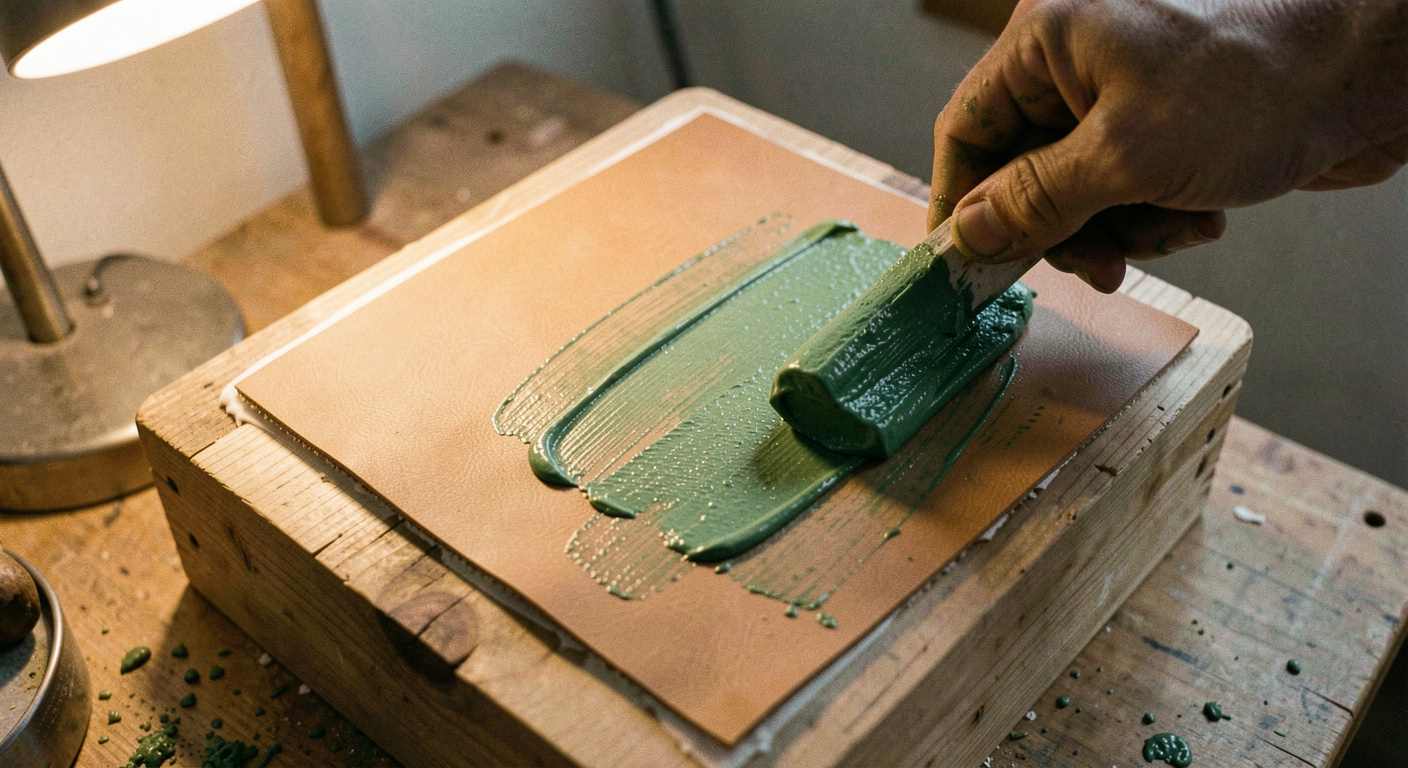
| Vegetable tanned leather, 3 mm | The carrier. Firm, not spongy, glued flesh side up to a block |
| Flat block of hardwood, 250 mm | Keeps the leather flat so the edge is not rounded over |
| Chromium oxide compound | The green bar. Around 0.5 micron, which is finer than any bench stone |
| A scrap of MDF, as an alternative | Harder than leather, rounds the edge less, takes the same compound |
| Offcut of pine end grain | The no equipment answer: draw the edge through it once and the burr comes off |
The leather is glued to the block rather than left loose, and this is not a detail. A hanging strop flexes under the tool and the leather rolls up around the edge, which rounds it. On a razor that is deliberate; on a chisel or a plane iron it undoes the flat bevel you have just worked for.
Direction, and the twenty seconds
The tool is always drawn backwards, edge trailing. Pushing an edge into leather cuts the strop and does nothing useful to the steel. Lay the bevel flat on the leather, press lightly, and pull the tool towards you along the length of the strop.
- Ten light passes on the bevel, tool drawn backwards, the bevel flat on the leather.
- Turn the tool over. Five passes on the back, dead flat, again drawn backwards.
- Alternate: three on the bevel, two on the back, then two and one, reducing the pressure each time.
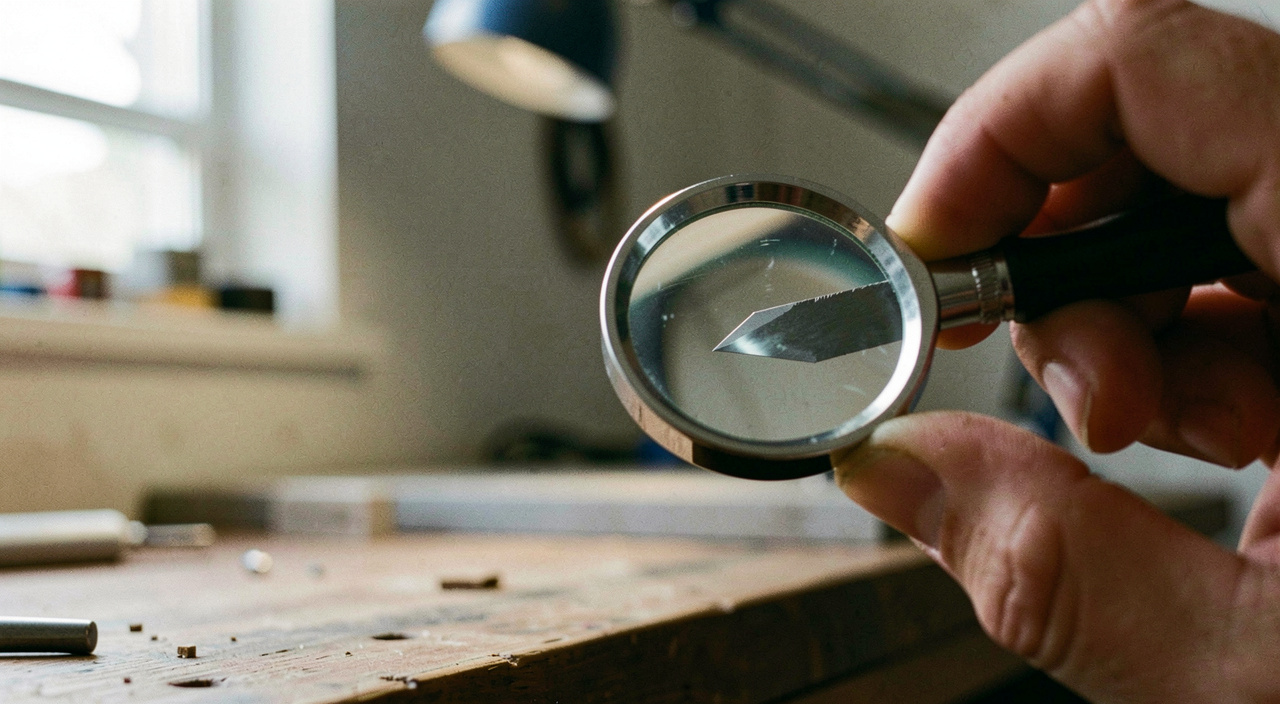
- Stop. Look at the edge against a window: no bright line anywhere along it means the burr has gone.
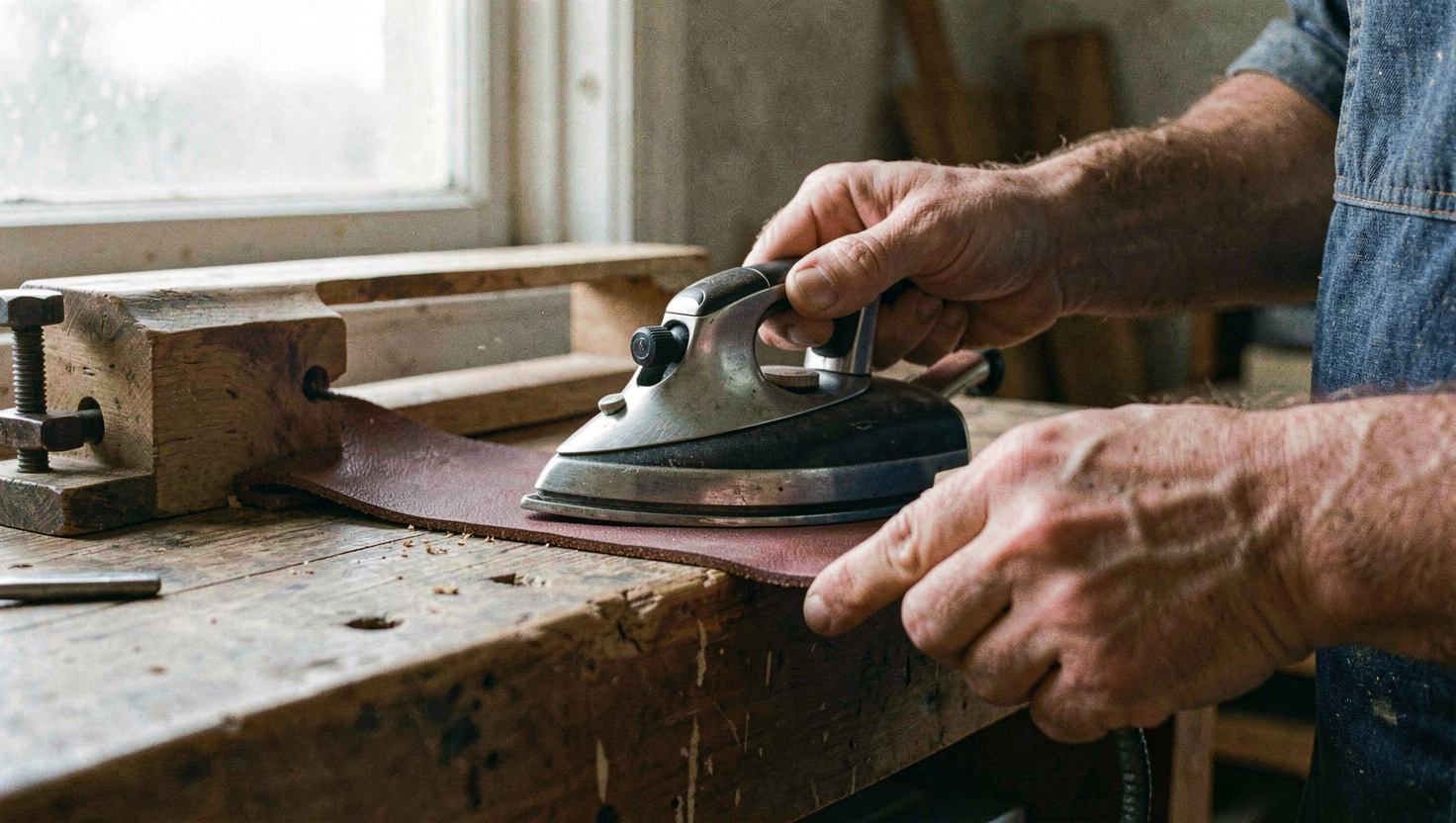
Pressure is the variable that matters. Heavy pressure on a leather strop compresses the surface so it swells up around the edge, which rounds the bevel exactly as a hanging strop would. The tool's own weight plus a fingertip is enough.
How many strokes is too many
Past about thirty passes on leather, a bevel starts to visibly round at the tip. The edge keeps feeling sharper because the very apex is being polished, and it keeps getting weaker because the angle behind it is increasing. If twenty passes have not removed the burr, the burr is too thick and the tool needs to go back to a stone.
What stropping cannot do
A strop polishes, it does not shape. It cannot take out a chip, it cannot change a bevel angle, and it cannot rescue an edge that has been rounded over by fifty honings. Those all need abrasive and, past a certain point, a grinder.
It also cannot substitute for a fine stone indefinitely. On a bench that uses a 1000 grit stone and a strop, the edge gets slightly less refined each time, because the strop removes almost no metal and the coarse scratches from the medium stone are still there under the polish. Every fourth or fifth sharpening, the tool wants a proper fine stone before it goes to leather. That trade off is one of the things that separates the two stone systems in practice.
The no equipment version
If there is no strop on the bench, draw the edge once through the end grain of a softwood offcut. The fibres grip the wire and pull it off cleanly, and the edge is left as sharp as the last stone made it. It costs nothing, works on chisels, plane irons and knives, and is the reason there is always a pine offcut lying near the stones here.
- Always draw backwards, edge trailing, on any strop.
- Glue the leather down. A loose or hanging strop rounds a bench tool.
- Light pressure. If the leather is visibly deflecting, you are rounding the edge.
- Keep the strop covered. Grit landing on a charged strop scores everything it touches afterwards.
A strop is the cheapest thing on the sharpening shelf and the one that changes the feel of a tool most immediately. It is also the easiest to overuse. Twenty seconds at the end of a honing, and then put it away.
Read next on the bench
The whole run of sharpening entries sits in date order in the section index.
Back to Sharpening