Sharpening
Oilstones or water stones, and what changes
Speed, mess, storage and the price of the first set. The honest comparison for someone who sharpens four tools a month rather than forty.
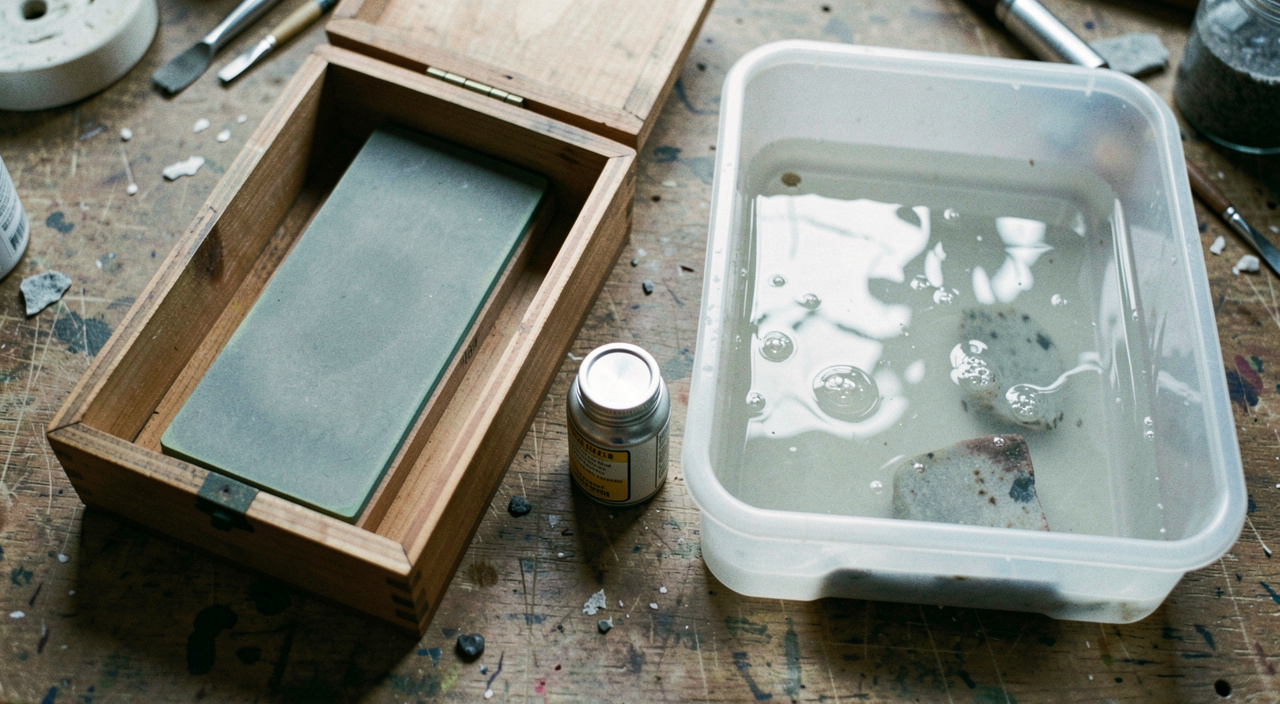
The choice between oilstones and water stones is presented as a technical question and it is really a domestic one. Both will put a working edge on a chisel. What differs is the time it takes, the mess it makes in the room where you sharpen, what the stones need in storage, and how much the first set costs. Someone who sharpens four tools a month has very different priorities from a joiner who sharpens forty, and most of the advice in circulation was written by the second sort of person.
What each type actually is
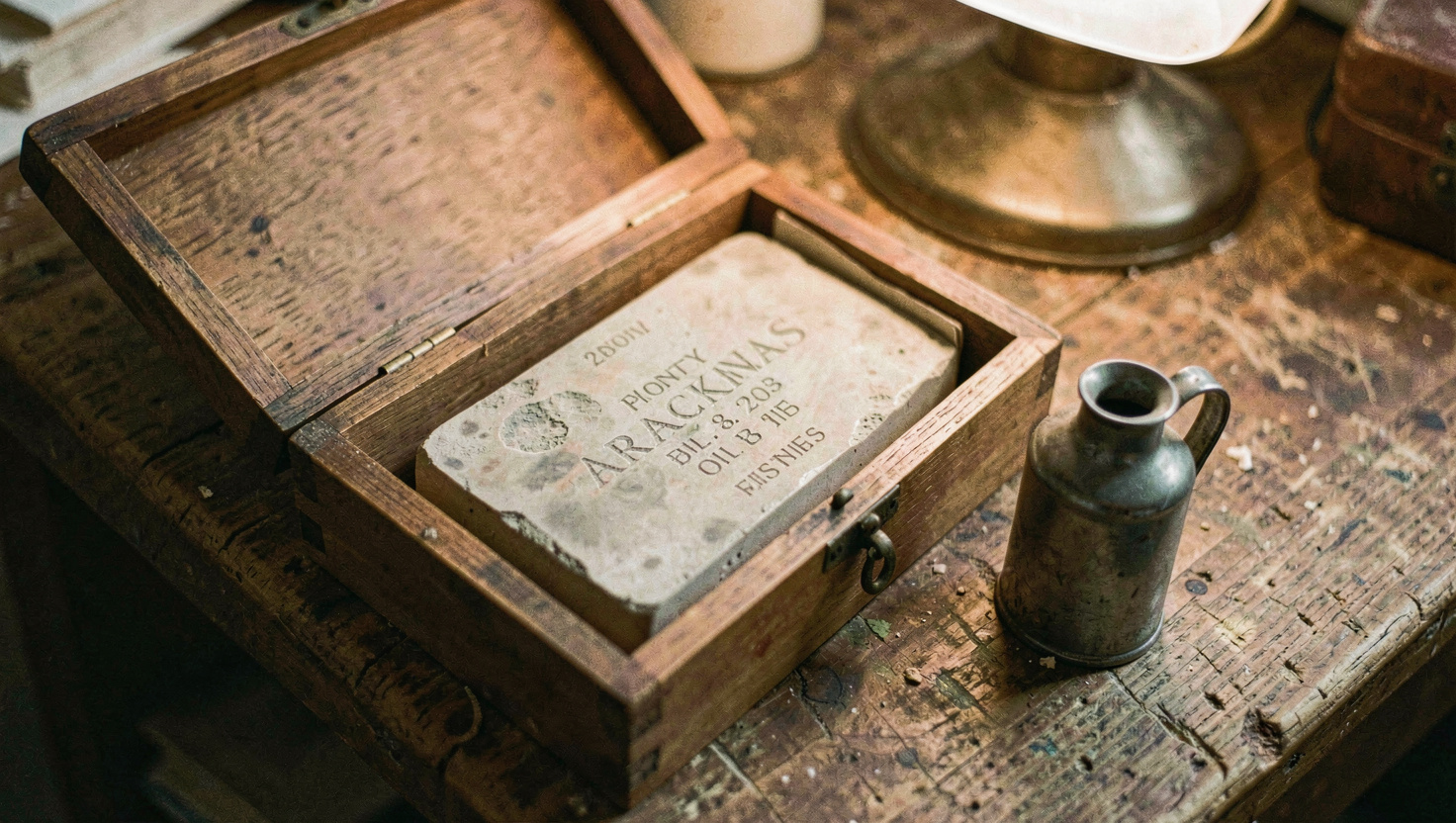
An oilstone is a hard block, either quarried novaculite from Arkansas or a manufactured aluminium oxide block of the kind usually sold in a combination grade. The abrasive is locked in place. Oil floats the swarf, the metal particles cut off the tool, so it does not clog the surface. The stone barely wears.
A water stone is deliberately soft. Its abrasive is bonded so that the grains break away as you work, exposing fresh sharp grit underneath, and the grey slurry that appears on the surface is itself part of the cutting action. That is why it cuts faster than an oilstone of the same nominal grade, and also why it goes hollow and needs flattening on a regular schedule.
| Question | Oilstone | Water stone |
|---|---|---|
| Speed on a dull chisel | Steady | Roughly twice as fast |
| Flattening | Once in years | Every few sessions |
| Mess | Oil that stains cloth | Grey water, wipes off |
| Storage | Boxed on a shelf | Drained, then dried |
| A shed below freezing | No effect | Cracks if left wet |
| First outlay | One stone, one can | Two stones and a flat plate |
None of those lines is close. The water stone route cuts faster and finishes finer, and it asks for a sink, a flat reference and a habit. The oilstone route asks for nothing at all and gives up perhaps a third of the speed. That is the whole trade, and which side of it you want depends entirely on how often the stones come out.
Where each one is clearly better
Water stones win whenever there is metal to remove. Bringing the back of a new chisel flat, taking the chips out of an edge that met a nail, reshaping a plane iron whose corners have been rounded by years of freehand honing: on a 1000 grit water stone these are jobs of minutes. On an oilstone of the same grade they are jobs of a quarter of an hour, and the usual result is that people give up and reach for a grinder they do not really need.
Oilstones win on everything to do with keeping the kit rather than using it. There is nothing to soak, nothing to flatten before you start, no tray of water to tip out, and no consequence at all to leaving the stone untouched for a year. In a garage that goes below freezing, an oilstone is the only sensible answer. They also suit a bench that is used for other things: a water stone has to come to a sink or a bowl, an oilstone works where it sits.
- Sharpening a kitchen knife on the way past: oilstone, because there is no set up.
- Flattening the back of a new chisel: water stone, by a wide margin.
- Sharpening in a cold shed in January: oilstone, no argument.
- Getting a plane iron to a polished 6000 grit finish: water stone, or a long time on a translucent Arkansas.
The honest cost of the first set
Priced as a system rather than as single items, the two routes are closer than they look. An oilstone route is a combination stone, a can of honing oil and a wooden box, and it is complete. A water stone route is a 1000 grit stone, a 6000 grit stone, something to keep them flat, and a tray. The second set will sharpen better and faster; it also asks for about ten minutes of maintenance a month that the first set does not.
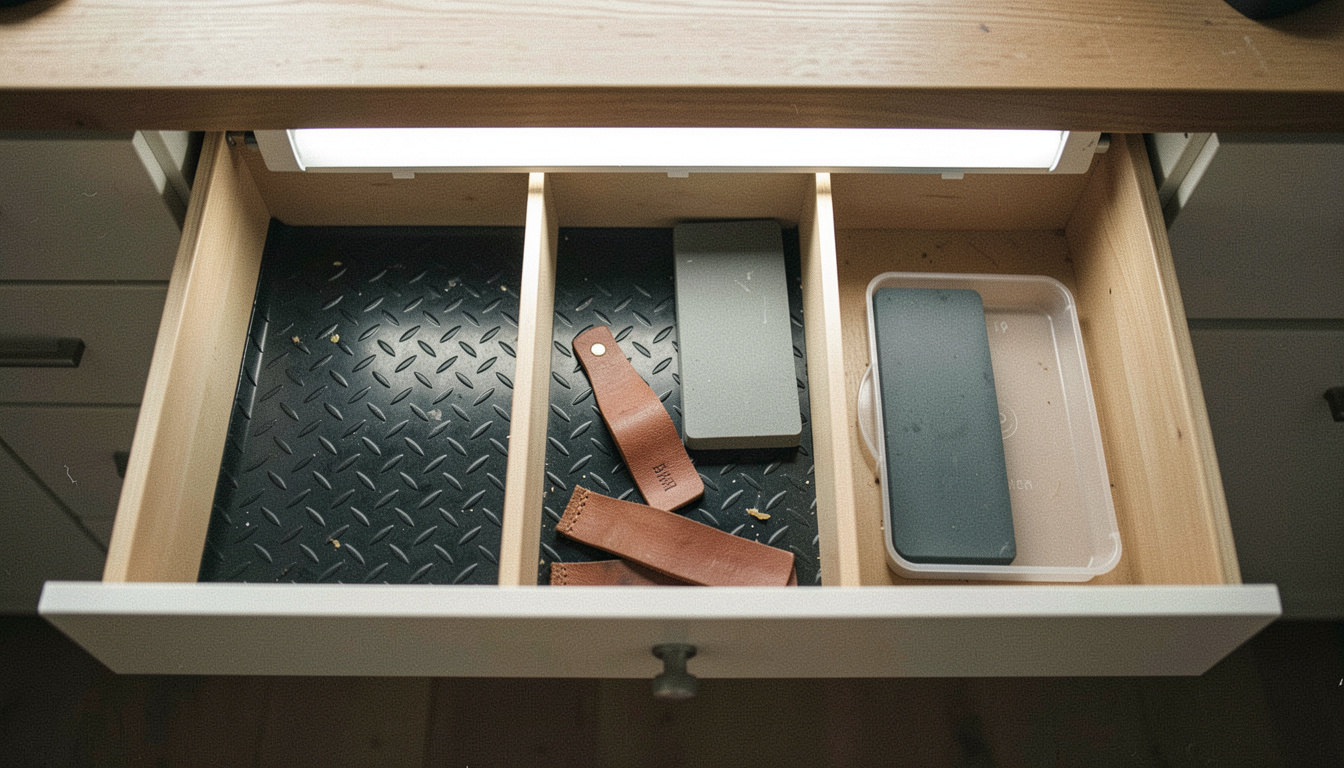
There is a third arrangement that suits a household bench better than either purist answer, and it is what ended up in the drawer here: a coarse diamond plate for heavy metal removal and flattening, one 1000 grit water stone for the working edge, and a leather strop with a bar of compound instead of a fine stone. It is faster than an oilstone set, cheaper than a full water stone set, and the diamond plate never needs flattening itself.
The mistake that ruins a water stone
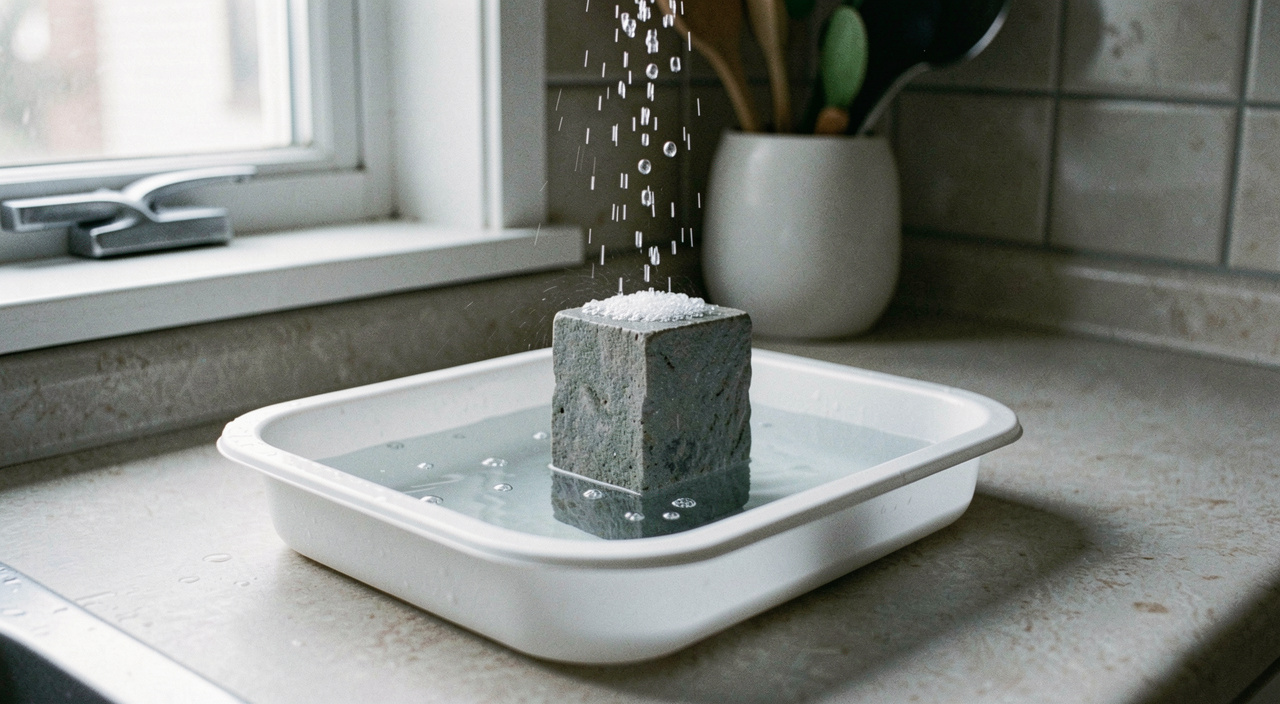
Leaving a soft water stone standing permanently in its tray of water. It softens the binder, grows a smell within a fortnight, and in an unheated space it will crack the first time the water in its pores freezes. Soak it, use it, then stand it on edge to drain and let it dry before it goes back on the shelf.
What happens after a year in the drawer
This is the part nobody mentions, and for a bench that gets used in bursts it matters more than cutting speed. An oilstone taken out after a year needs a wipe and a drop of fresh oil. A water stone taken out after a year is usually fine too, but if it was put away damp it may have a mildew mark, and if it was stored somewhere cold it may have a crack running in from one corner that will not show until it comes apart under pressure.
The oil in an oilstone does eventually gum up if the stone is used dry or wiped rarely. The fix is straightforward: warm the stone, wipe the surface with white spirit on a rag, and scrub it with a stiff brush until the pores clear. A stone that has been glazed for years will cut like new afterwards.
Neither type of stone is a mistake. The mistake is buying the fast, hungry system and then discovering that it wants a sink, a flat reference and a schedule, when what was actually needed was something that could sit in a drawer and sharpen a chisel twice a month. Match the stone to the frequency, not to the reviews, and the edge will look after itself.
Read next on the bench
The whole run of sharpening entries sits in date order in the section index.
Back to Sharpening