Sharpening
Flattening a water stone, and how often
A hollow stone rounds every edge you put on it. Checking for flat with a pencil grid, and the three ways of taking the hollow back out.
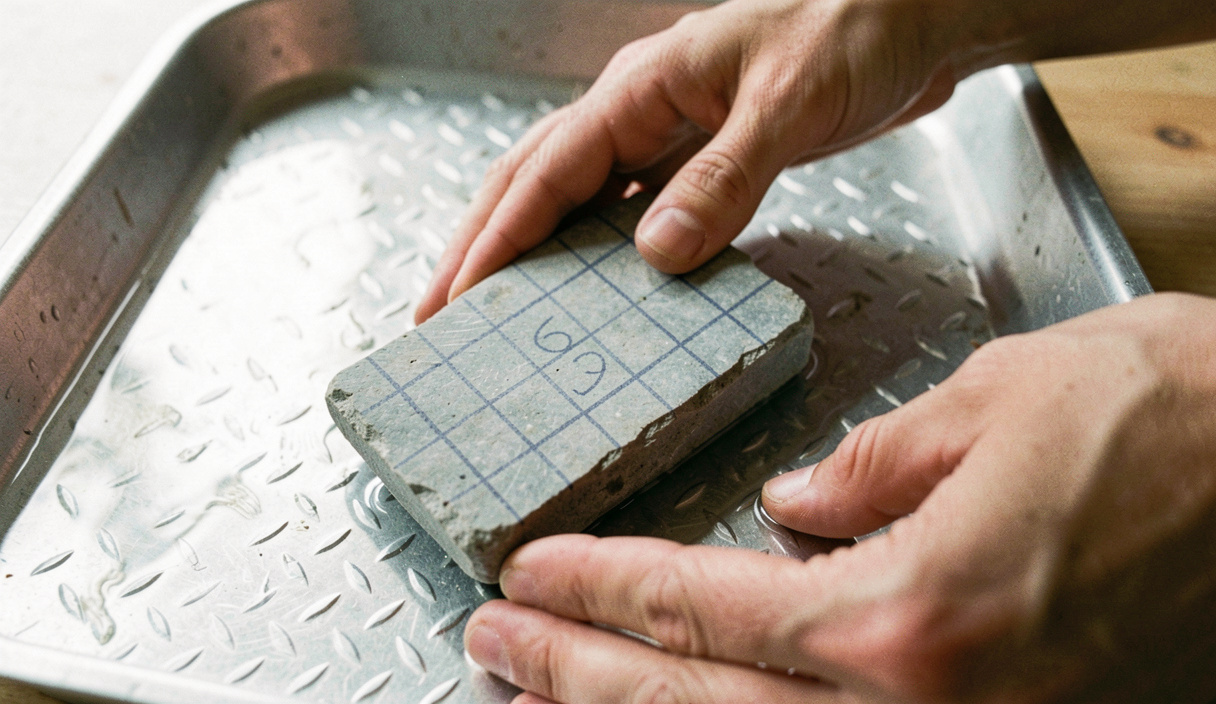
Every stroke you take on a water stone removes a little of the stone as well as a little of the steel, and it removes it from the middle, because that is where the pressure is. After half a dozen sharpening sessions the stone is dished. A dished stone grinds a curve into the bevel and rounds the corners of a plane iron, and the maddening part is that the edge feels sharp in the hand and then leaves tracks in the work.
Flattening is therefore not maintenance you do occasionally. On a soft 1000 grit stone it belongs at the start of every session, and it takes under a minute once the routine is set up.
The pencil grid test
Draw a grid across the face of the stone in soft pencil, lines about 15 mm apart in both directions, so the whole surface is covered in squares. Then rub the stone on your flattening surface for ten seconds and look.
- Pencil gone everywhere: the stone was flat, or is now.
- Pencil left only in the middle: the stone is dished, which is the normal wear pattern.
- Pencil left at the ends: the stone is crowned, which happens when it has been flattened badly with pressure at the centre.
- Pencil left along one edge: the stone is twisted, and needs more work with the pressure moved to the high corners.
Keep rubbing and checking until the pencil is gone from every square. The whole test costs a pencil line and tells you more than any straightedge, because it shows where the high spots are rather than just that they exist.
Three ways to take the hollow out
| Method | What it costs, and what it gives |
|---|---|
| Coarse diamond plate | The fastest and the tidiest. A 400 grit plate flattens a 1000 grit stone in about thirty seconds |
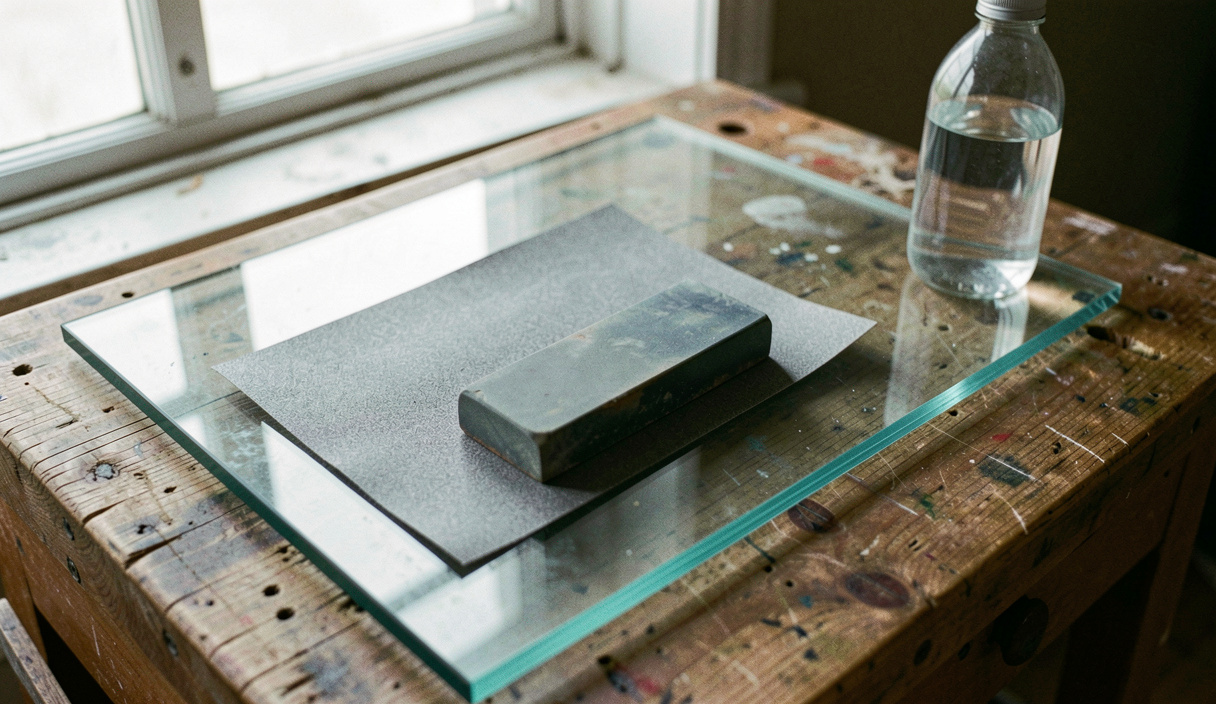
| Wet and dry paper on float glass | Cheapest. 120 grit paper, glass or a granite offcut, and the paper wears out fast |
| Two stones rubbed together | Free, and it makes both stones flatter than either was. Slow, and no use if both are dished the same way |
| A concrete paving slab | Works, contaminates the stone with grit from the slab. Not on a fine stone |
The diamond plate is the one worth buying if you are going to buy anything. It flattens every stone in the drawer, it never needs flattening itself, and it doubles as the coarse step for reshaping an edge, which means it earns its place twice. That combination is part of why the choice between stone systems is less clear cut than it looks.
Technique, in the two minutes it takes to learn
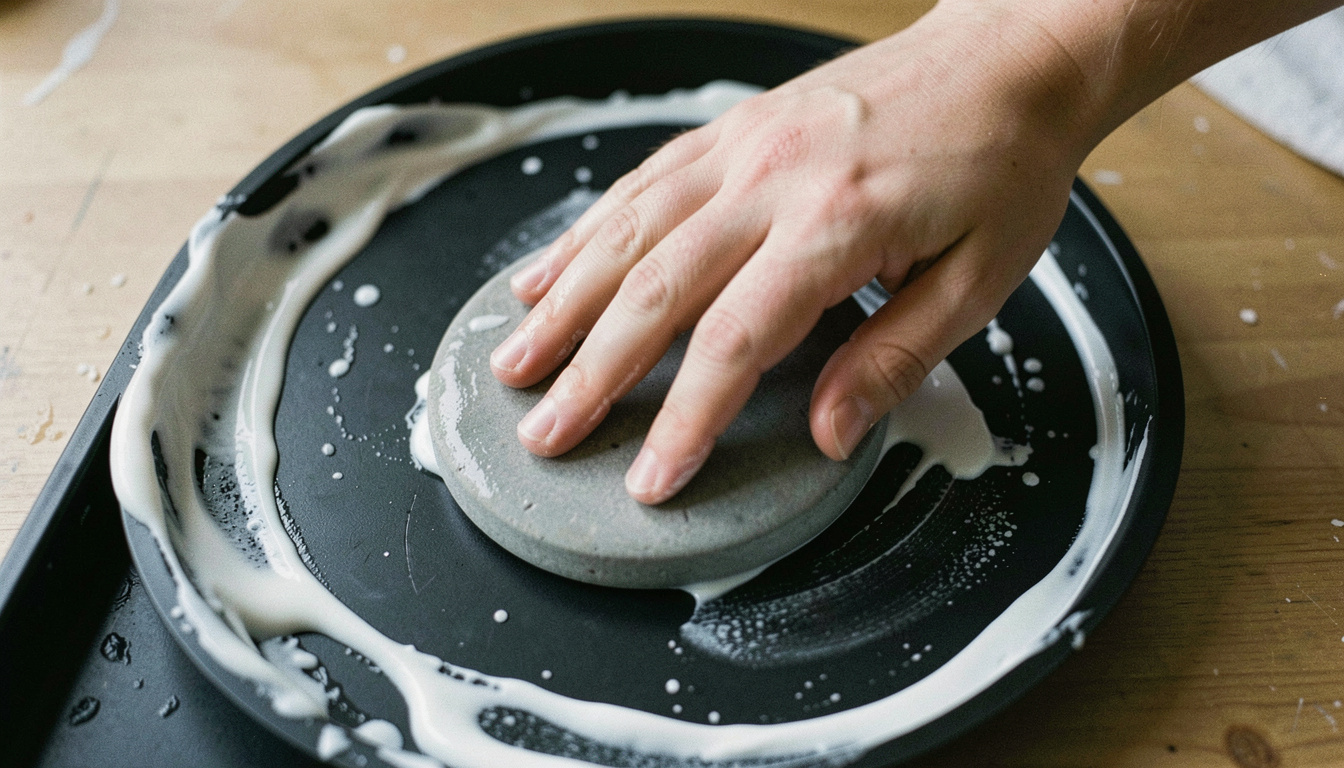
Work under running water or in a tray, because the slurry is the abrasive that has been removed and leaving it on the plate slows everything down. Move the stone in a figure of eight, not back and forth in a straight line, and rotate it end for end every few strokes. Both habits exist for the same reason: any repeated path wears its own groove.
Press over the whole face with a flat hand rather than with fingertips at the centre. This is the single most common mistake, and it turns a dished stone into a crowned one, which is worse: a crowned stone contacts the tool only at the middle of the bevel and is very hard to correct.
Finish by breaking the arrises. Run the diamond plate at 45 degrees along each of the four top edges of the stone to take a small chamfer off. Sharp edges on a soft stone chip within a week, and the chips end up under the tool as loose grit that scratches a polished back.
How often, honestly
A soft 1000 grit stone: every session, and again halfway through if you are flattening the back of a new chisel. A 6000 grit stone: every three or four sessions, because it removes far less metal and wears more slowly. A hard oilstone: check it once a year and it will usually pass.
What flat is worth
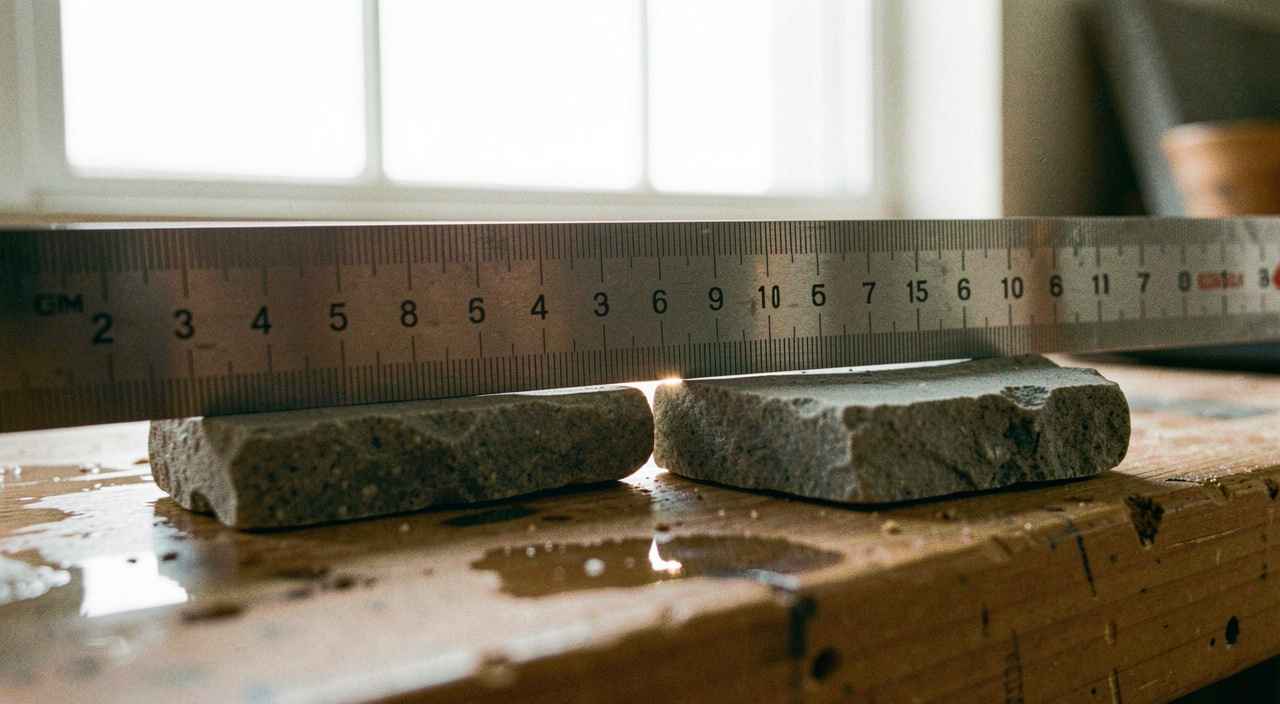
A hollow of half a millimetre over a 200 mm stone sounds trivial and is not. It means the bevel is being ground to a shallow curve, and a curved bevel meets the flat back of the tool at a slightly different angle across its width, which is why one corner of a plane iron takes a shaving and the other does not. It also means the back of the chisel, laid flat to remove the burr, is having its edge rounded over by the same hollow.
The whole ten minute honing sequence assumes the stones under it are flat. Skip the flattening and every step after it is compromised, which is why it belongs at the front of the routine rather than on a list of things to do when there is time.
- Pencil grid before the first stroke of every session.
- Figure of eight, whole hand, rotate the stone end for end.
- Chamfer the four top edges after flattening, every time.
- Never flatten a fine stone on anything that has touched a coarse one without rinsing both.
Read next on the bench
The whole run of sharpening entries sits in date order in the section index.
Back to Sharpening