Skip to the entries
The Repair Bench

Hand tools, materials and repairs that hold.

Section
Wood repairs

Section

Wood repairs

Loose joints, split panels, worn runners and chairs that rack. Nearly every fault in this section is wear or seasonal movement rather than breakage, and both want a different repair from the one they usually get.

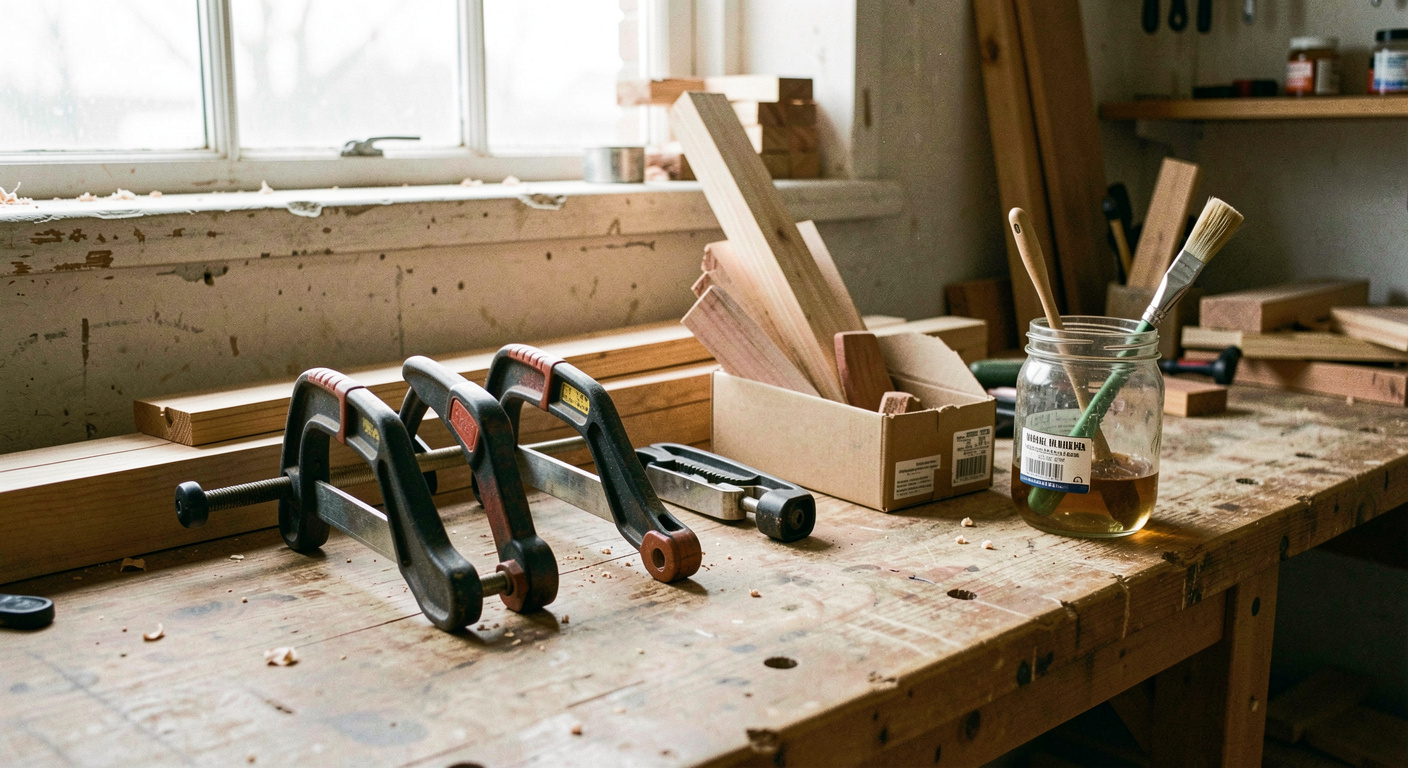
Four sash clamps, a band clamp and a box of hardwood offcuts standing against the end of a workbench with a glue brush in a jar, afternoon light through a workshop window, wide view.
The clamps and the offcut box. Almost every repair in this section is made from a piece of the same timber as the thing being repaired.

Solid timber moves. A panel 900 mm wide can change by two or three millimetres across its width between a humid August and a February with the heating on, and a piece of furniture that stops it moving will split instead. That single fact explains most of what is in this section: why a table top cracks, why a chair joint works loose, and why a runner glued along its whole length takes a carcase side with it. The entry on filling a split without hiding it starts by measuring the same split a fortnight apart, because that measurement decides everything else.

The method here is always the same shape. Find out what has actually failed rather than what is visible, take the repair back to clean bare wood, put solid timber where material has been lost, and choose an adhesive on whether the joint will ever need to come apart again. That last decision has its own entry in the finishes and glue section. Clamping pressure is given in terms of what closes a joint line, never in figures nobody can measure at a domestic bench, and every repair described here has gone back into daily use in a house.
Entries in this section

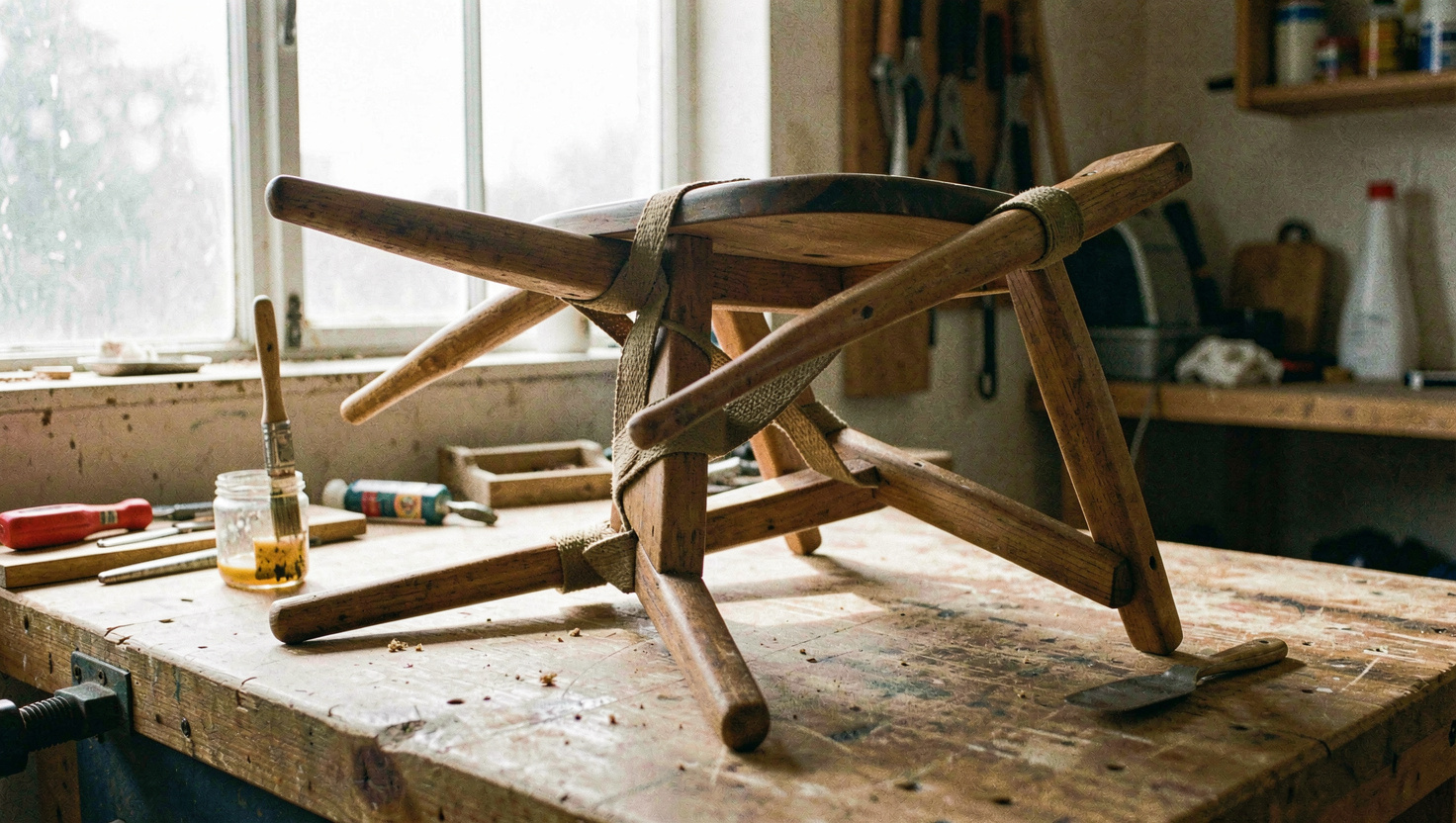
A wooden dining chair upside down on a workbench with a webbing clamp around its legs and a glue brush resting in a jar, warm afternoon light through a workshop window, three quarter view.

Wood repairs

Regluing a chair that racks side to side

Why injecting glue into a loose joint always fails, and the sequence that does not: knocked apart, scraped back to bare wood, dry fitted, then pulled square with a tourniquet of cord rather than a screw clamp.

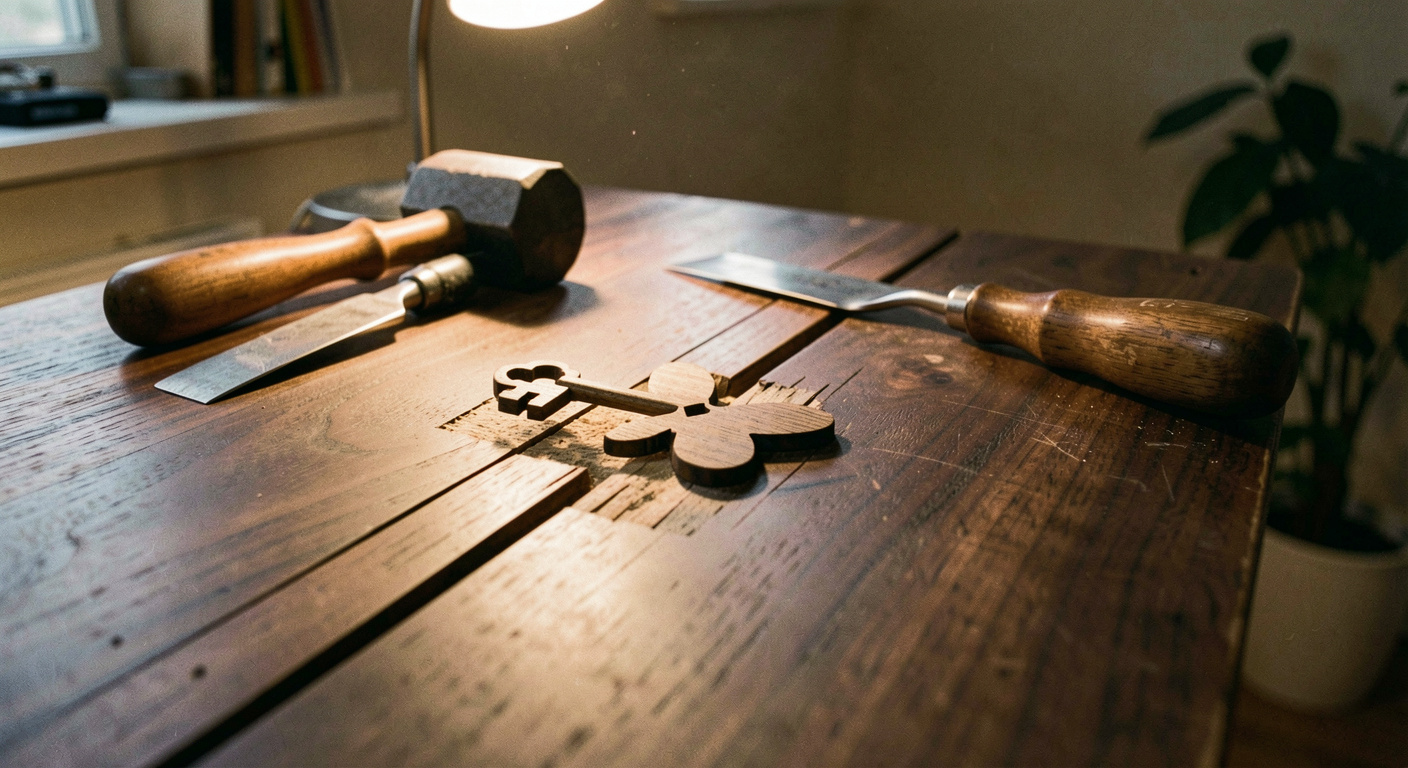
A dark walnut table top with a long split across the grain and a small wooden butterfly key set into it, a chisel and mallet beside the repair, warm lamp light, close view.

Wood repairs

Filling a split in a table top without hiding it

Measure the split twice, a fortnight apart, before choosing between sawdust and glue, a matched timber strip and a butterfly key. And free the top from its fixings first, or the repair reopens next winter.

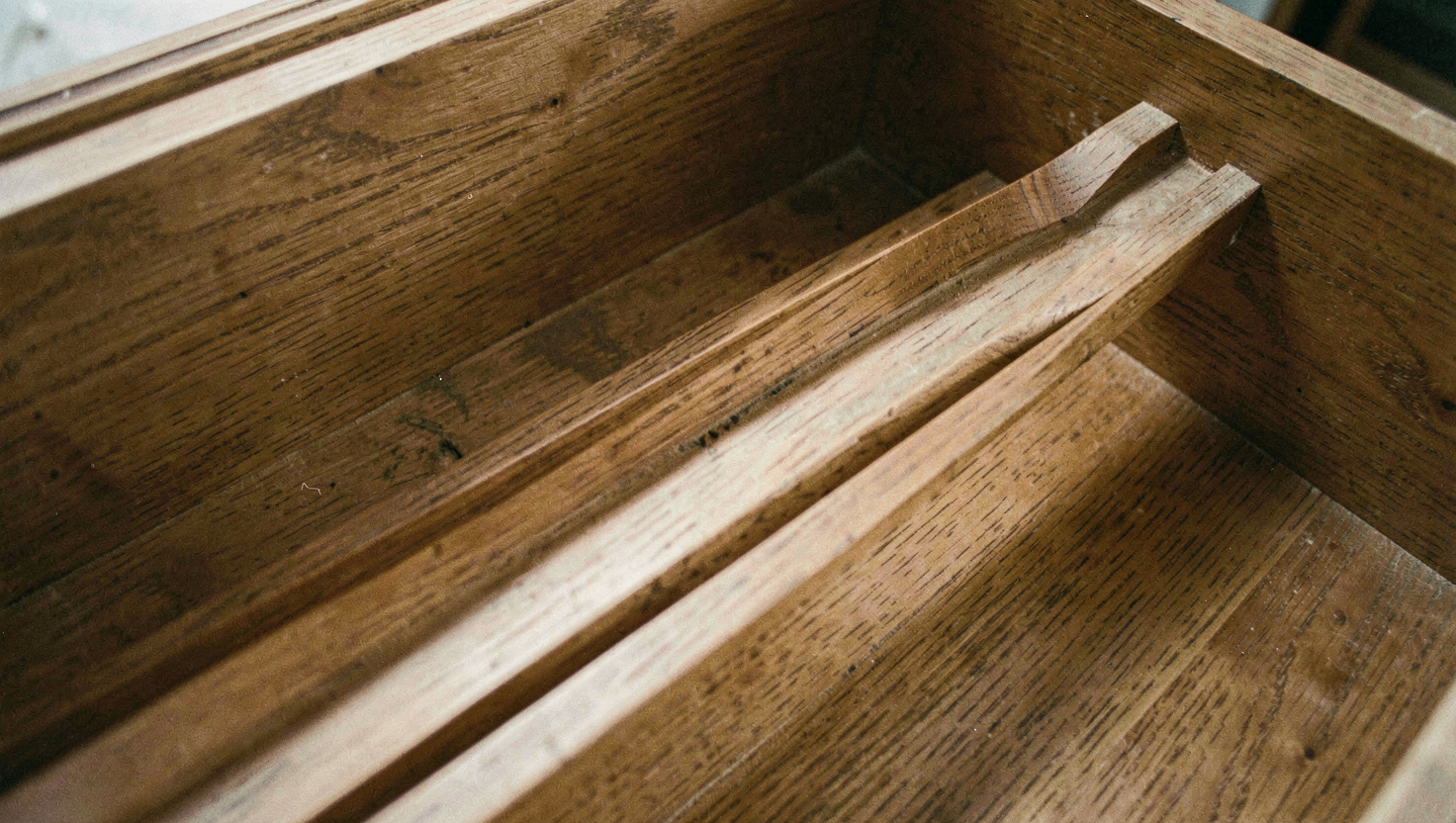
The inside of an oak chest of drawers carcase with a timber runner rail worn into a deep groove along its middle, a torch beam picking out the hollow, close view into the carcase.

Wood repairs

Replacing a worn drawer runner

A drawer that drops at the front has worn rather than broken. Measuring the hollow, planing back and gluing on fresh timber, and fitting a runner glued only at the front so the carcase side can still move.

Every repair here is finished over sooner or later, and the finish shows what was done underneath it.

Finishes and glue section