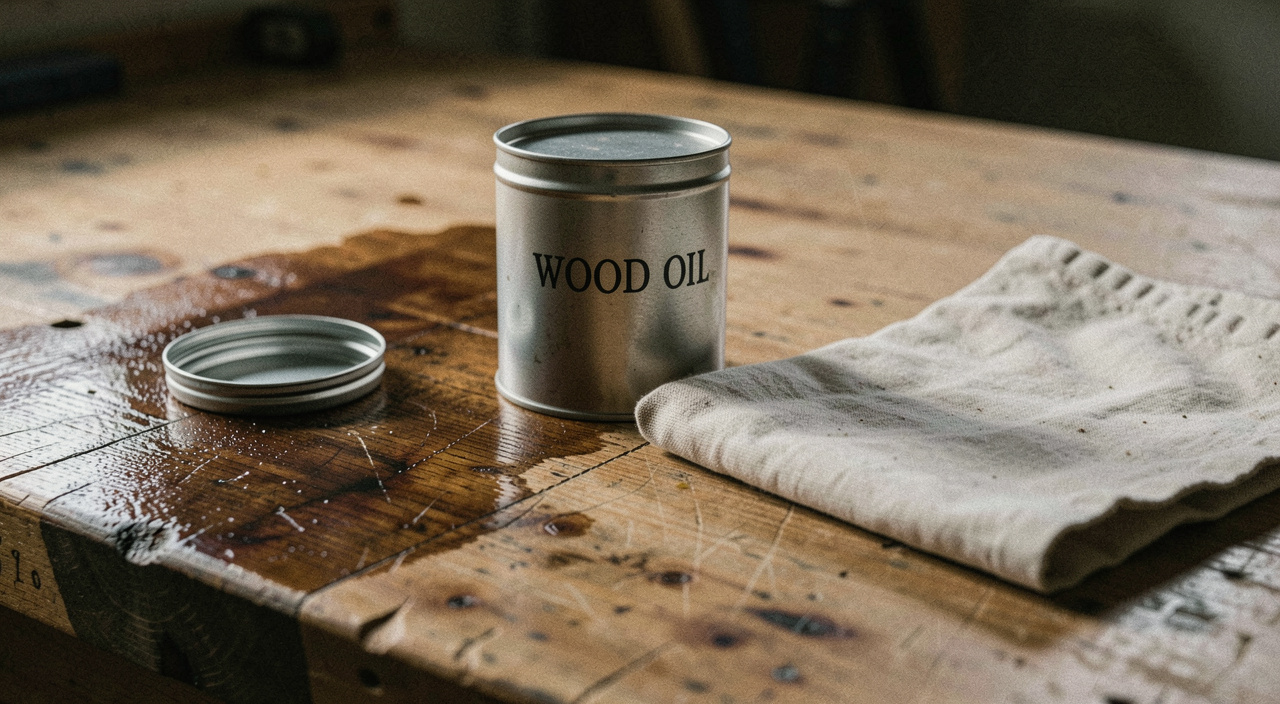
Danish oil, tung oil, and what actually cures
Drying and curing are not the same thing. Reading the tin, working out how many coats an oak worktop takes, rescuing a surface that stayed tacky, and why an oily rag has to be spread out flat.
Hand tools, materials and repairs that hold.
Section
Finishes and glue
Section
Oils, waxes and the adhesives that go underneath them. What each one does to a surface, how long it really takes to cure, and the conditions in which it quietly fails.
Finishes and adhesives are the two materials on the bench where the label tells you least. A tin marked oil may be a drying oil that hardens inside the wood or a blend that is a third solvent; a bottle marked wood glue may be reversible in twenty years or permanent for good. Both distinctions decide the job, and neither is on the front of the container. The entry on what actually cures is mostly about reading the back label, and the one on which joint gets which glue compares three bottles on open time rather than on strength, because all three are stronger than the timber.
Two rules run through the whole section. The first is that curing is chemistry, so it slows down when a room gets cold: an oil coat that is touch dry in a day in July can stay tacky for a fortnight in an unheated November garage. The second is that everything applied here shows what is underneath it, so a joint that was not scraped clean or a repair that was sanded across two timbers becomes more visible under a finish, not less. That is why so much of the work in the wood repairs section is about the state of the surface before anything is opened.
Entries in this section
Drying and curing are not the same thing. Reading the tin, working out how many coats an oak worktop takes, rescuing a surface that stayed tacky, and why an oily rag has to be spread out flat.
Open times measured on real test joints, what polyurethane foam is actually worth in a gap, when squeeze out should be wiped and when it should be left to go rubbery, and how to tell a bottle has gone off.
The joints these adhesives hold together are made and repaired next door, where the fit of the joint decides more than the choice of bottle.
Wood repairs section