Fasteners and hardware
Wall plugs: the reason a fixing pulls out
Plasterboard, aerated block and old lime plaster each want a different plug. Matching the hole, the plug and the screw, and the load a fixing can honestly carry.
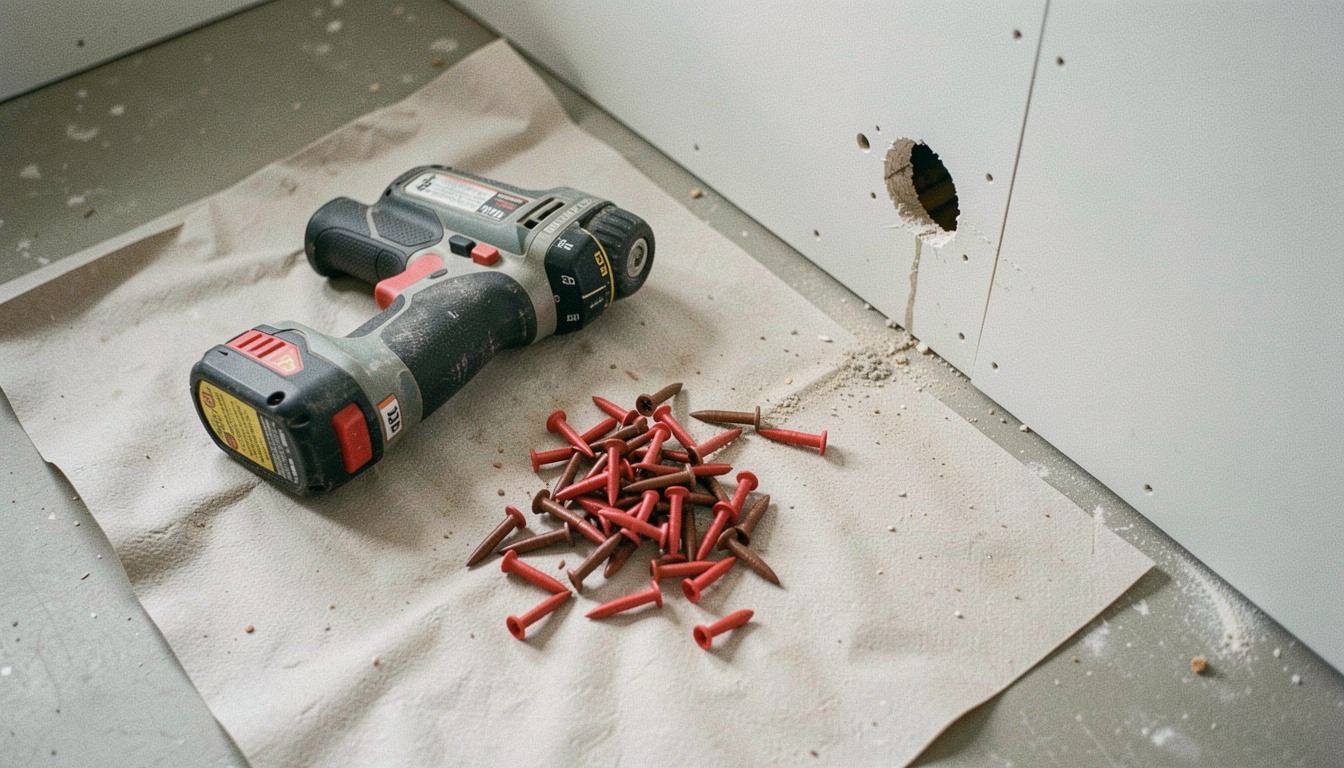
A fixing that pulls out of a wall almost never fails because the screw broke. It fails because the plug was the wrong sort for that wall, or because the hole was drilled a size too big, or because the screw was too short to expand the plug along its whole length. Three faults, all decided before the shelf ever went up, and all of them avoidable in the ten seconds it takes to work out what the wall is made of.
Find out what you are drilling into
Almost every fixing problem in a British house comes down to four wall types, and you can tell them apart by the dust. Drill a shallow hole on hammer, or on rotation only, and look at what comes out.
| What the dust looks like | What the wall is, and what it wants |
|---|---|
| White, soft, drill sinks suddenly after 12 mm | Plasterboard on studs. A cavity fixing, or find the timber |
| Grey and gritty, hard going | Concrete or dense block. A standard nylon plug, hammer drill |
| Pale grey and very light, drill goes in fast | Aerated block. A dedicated aerated block plug, no hammer action |
| Red or orange, dust then sudden ease | Brick with a void, or old lime plaster over brick. Drill deeper and use a longer plug |
The two that catch people out are the last two. Aerated block, the pale lightweight stuff used in inner leaves since the 1970s, crumbles around an ordinary nylon plug and gives a fixing that feels solid and lets go under load a week later. Old lime plaster can be 25 mm thick, so a 40 mm plug set through it is only gripping 15 mm of brick.
The hole is the fixing
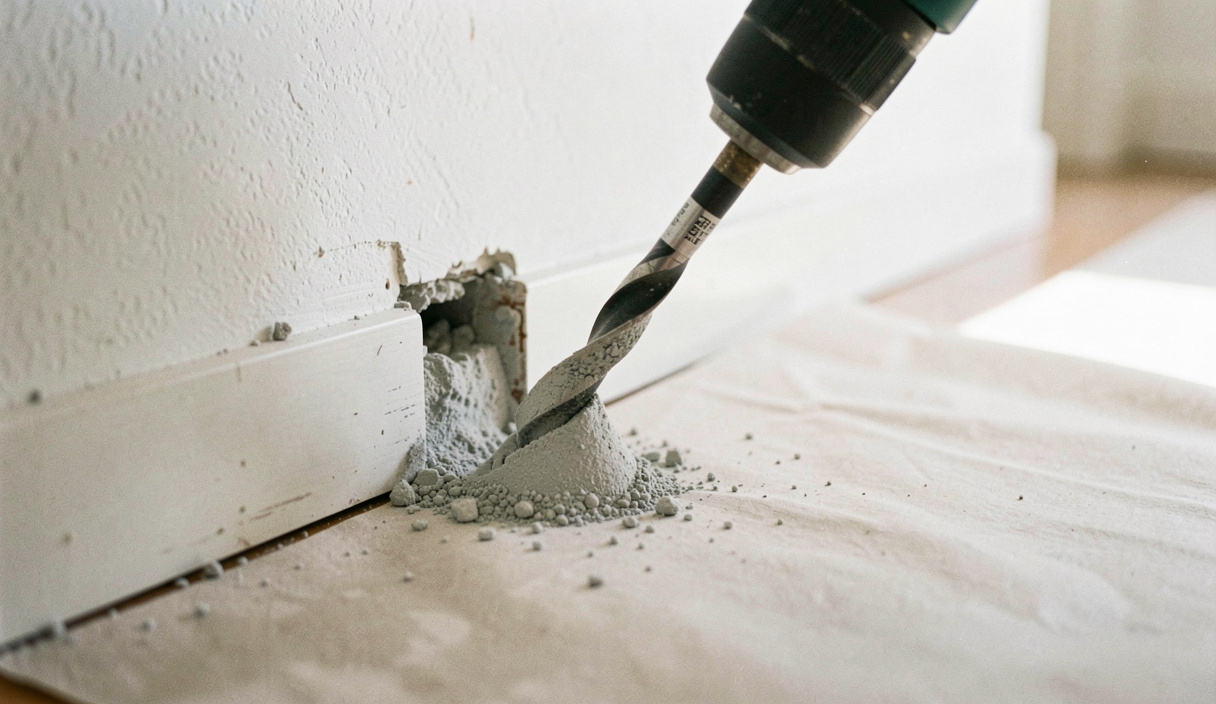
A wall plug works by being squeezed between the screw and the sides of the hole. Everything that reduces that squeeze reduces the load the fixing will carry, and there are only three ways to get it wrong.
- Drilling oversize. A 6 mm plug wants a 6 mm hole. A worn bit, or a bit wobbled around while withdrawing it, cuts closer to 6.5 mm, and that half millimetre is most of the grip.
- Drilling too shallow. The plug must go in until its collar is level with the surface, and the hole must be at least 10 mm deeper than the plug so the dust has somewhere to go.
- Leaving the dust in. A hole full of dust holds the plug proud, and a proud plug spins when the screw goes in. Vacuum it or blow it out.
Hold the drill square to the wall and pull it straight out without waving it. If a hole does end up oversize, the recovery is to go up a plug size and redrill, not to pack the hole with matchsticks or filler. Filler has no useful compressive strength and will crumble the first time the shelf is loaded.
The screw has to reach past the plug
A plug expands only where the screw thread is inside it. A 30 mm screw in a 30 mm plug, with 18 mm of that length taken up by the bracket and the plasterboard, expands the first third of the plug and nothing else. Add the thickness of whatever you are fixing to the plug length, then add another 5 mm, and buy that screw.
Plasterboard is a different problem entirely
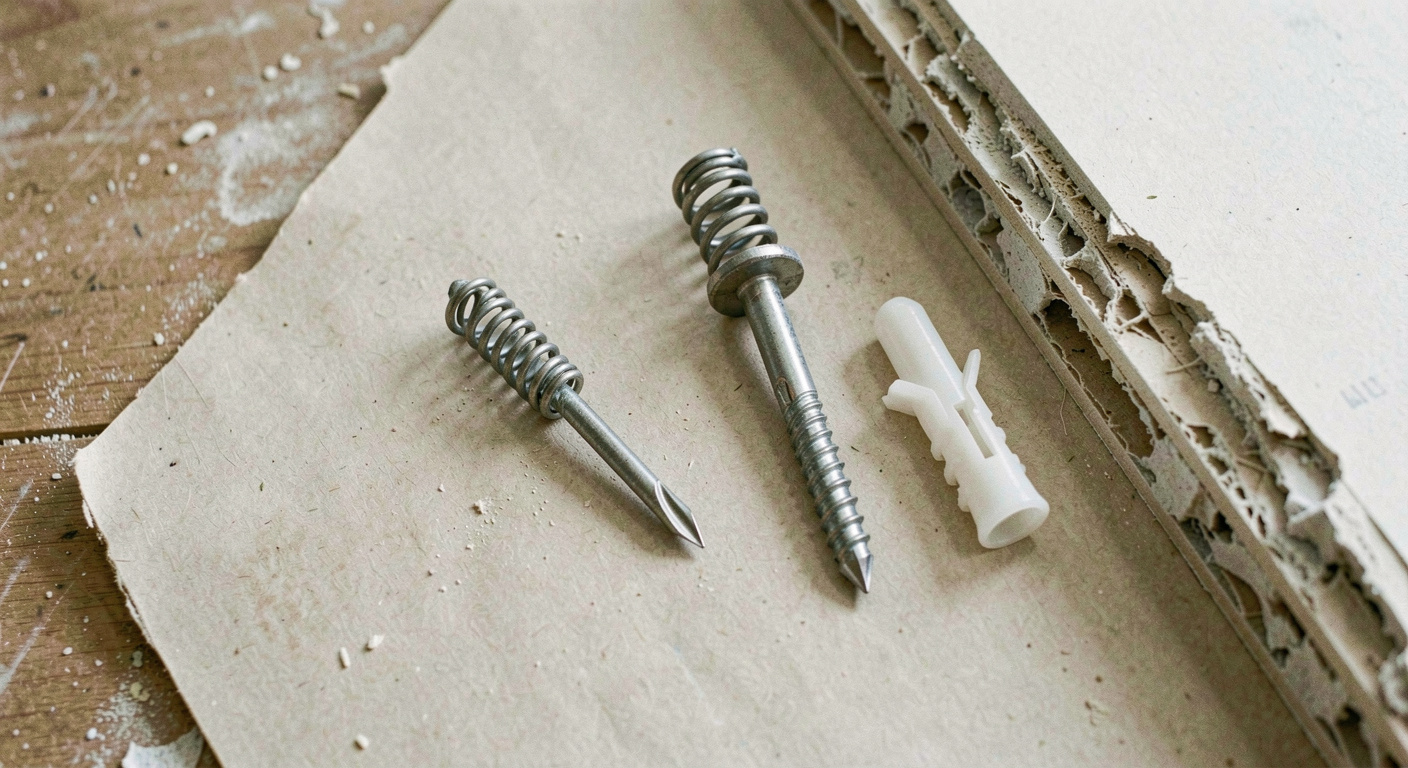
Nothing expands usefully in a 12.5 mm sheet of gypsum. There is no grip to be had, so the fixing has to work by spreading load on the back face of the board instead. That is what a spring toggle, a gravity toggle or a metal self drilling anchor does, and the differences between them are about how much load each can carry and whether you can get one out again.
- Plastic self drilling anchors: light picture frames, up to about 5 kg. Easy, and they tear out under any real load.
- Metal self drilling anchors: shelves and small cabinets, roughly 15 kg on a 12.5 mm board.
- Spring toggles: the strongest cavity fixing, 25 kg and upwards, but the toggle drops into the cavity if the screw is ever removed.
- Anything heavy: find the stud. A stud will take more than the board ever will, and a 5 mm by 60 mm screw straight into timber beats every cavity fixing sold.
Finding the stud is worth the two minutes. Studs are usually at 400 or 600 mm centres, they are almost always beside a socket or a light switch, and tapping along the wall changes note over one. A detector helps; a 1.5 mm bit and three exploratory holes hidden behind where the bracket will sit helps more.
Load is not just weight
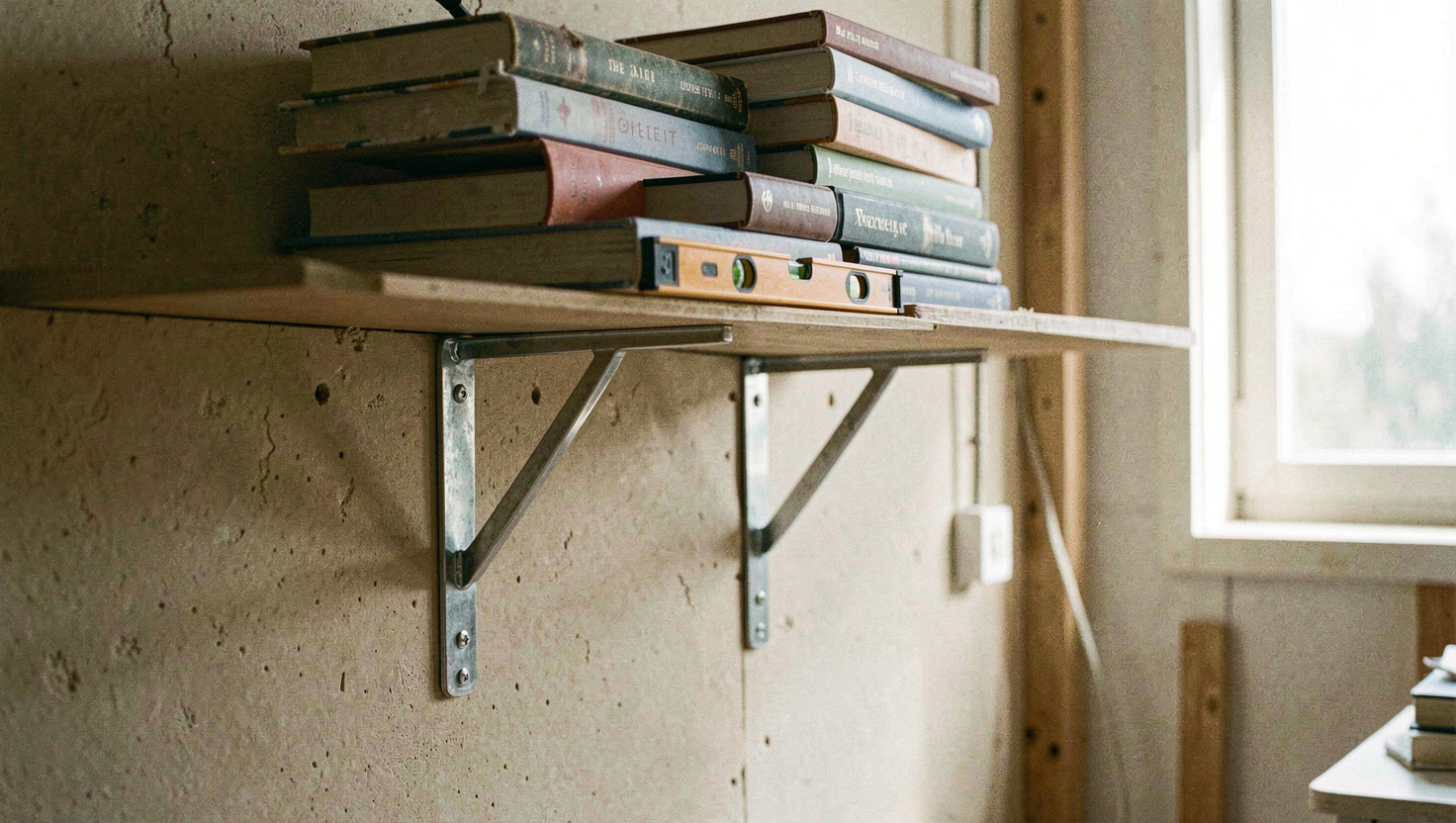
A bracket carries its load at a distance from the wall, and that distance turns a downward weight into an outward pull on the top fixing. A shelf 300 mm deep, loaded at the front edge, pulls on the top screws with several times the force a straight hanging weight would. This is why bookshelves come off walls and pictures do not.
Two practical consequences. First, always fix a bracket at top and bottom, and put the stronger fixing at the top. Second, the manufacturer's stated load for a plug is a pull out figure measured straight along the screw in a laboratory wall, so treat a third of it as the working figure in a real one.
The two minute check before you drill
Every hole in a wall is a small risk. Cables run vertically and horizontally from sockets and switches, and pipes run wherever the plumber found convenient. Before drilling, look at what is directly above and below the spot, use a detector on both settings, and if you are within 150 mm of a socket, move.
The rest of it is the material choice, and that is a small stock to keep. A box of 6 mm nylon plugs, a box of 8 mm, a handful of metal cavity anchors and a couple of spring toggles will handle nearly everything a house asks for. The screw that goes into them matters just as much, and gauge is the thing people get wrong second most often after wall type.
Read next on the bench
The other fasteners and hardware entries are listed in date order in the section index.
Back to Fasteners and hardware