Around the house
A dripping tap, washer by washer
Turning the water off at the right place, getting the headgear out without rounding the nut, and choosing between a rubber washer and a ceramic cartridge.
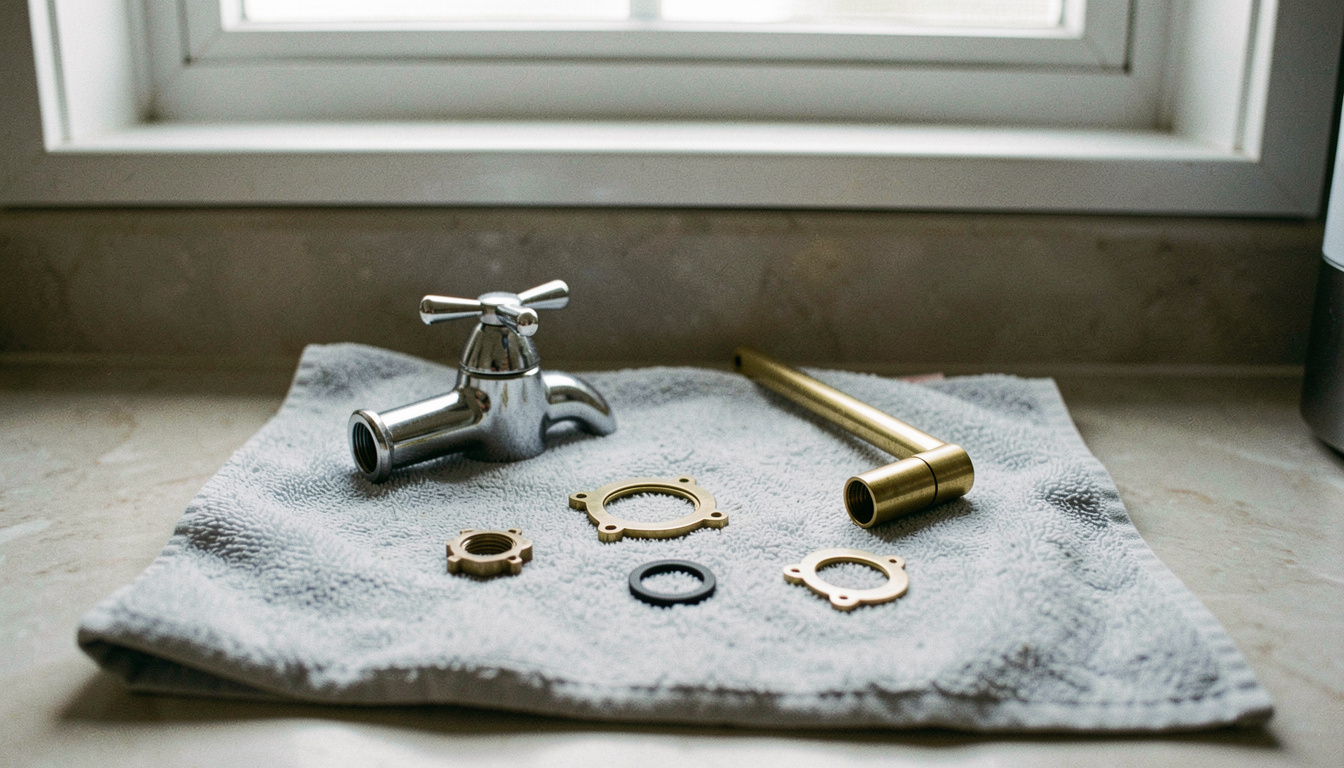
A tap that drips once every two seconds loses somewhere around fifteen litres a day, which is enough to be worth an evening but not enough to make anybody hurry. The repair is one of the few plumbing jobs that needs no soldering, no special tools beyond an adjustable spanner, and no ability to put things back under pressure quickly. What it does need is the right answer to one question asked first: is this a traditional tap with a rubber washer, or a quarter turn tap with a ceramic cartridge.
Telling the two apart in five seconds
Turn the tap on and off. If the handle goes round two or three full turns and gets stiffer as it closes, it is a rising spindle or a non rising spindle tap with a rubber washer at the bottom. If it goes a quarter turn from off to fully open and stops dead, it has a ceramic disc cartridge inside and there is no washer to replace: the cartridge is the part.
A third case is a monobloc mixer with a single lever. Those are cartridge taps too, usually with a 35 mm or 40 mm cartridge held by a grub screw under the lever. The strip down is different but the diagnosis is the same: a drip from the spout is the cartridge, water weeping from around the base is a worn O ring.
Turning the water off in the right place
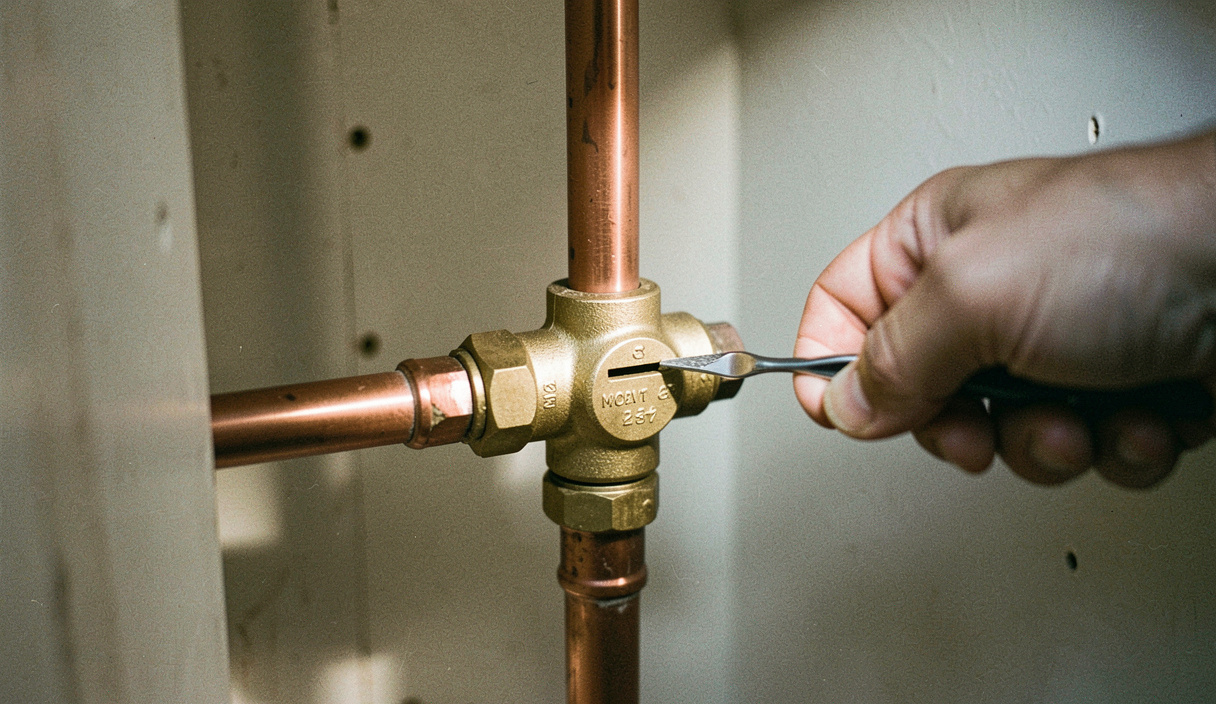
Look under the sink first. Most taps fitted since the 1990s have a small isolating valve on the supply pipe, a brass fitting with a screwdriver slot in it. A quarter turn so the slot lies across the pipe closes it, and you have shut off exactly one tap rather than the house.
- If there is an isolating valve, turn it and open the tap to prove it. Water should stop within a couple of seconds.
- If there is none, find the stop tap, usually under the kitchen sink or where the main enters the house, and close it. Then open the lowest cold tap in the house to drain the rising main.
- For hot taps in a tank fed system, close the gate valve on the cylinder outlet, or tie up the ball valve in the loft tank and drain from the lowest hot tap.
- Put the plug in the basin before you start. Every small brass part that is going to fall will fall towards the waste.
Getting the headgear out without rounding the nut
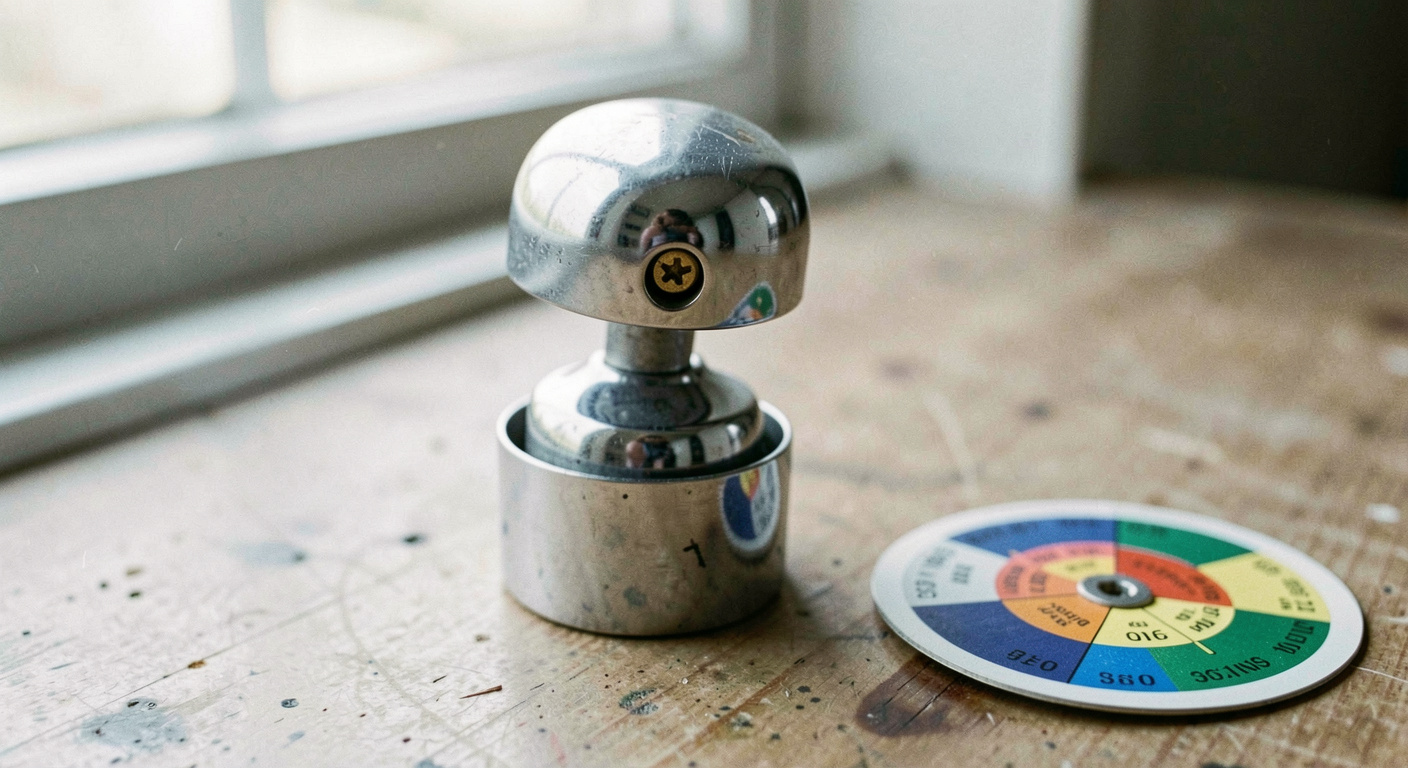
The handle comes off first. On a traditional tap the fixing screw is usually hidden under the coloured hot or cold disc, which prises out with a small screwdriver, or under a screwed cap that lifts off when the handle is opened fully. Some capstan handles have a grub screw in the side instead.
Underneath is the headgear nut, and this is where the job goes wrong. It is brass, it may have been done up hard forty years ago, and an adjustable spanner that is not wound down tight will round the corners off in one pull. Use a proper spanner if you have one in the size, hold the tap body still with your other hand so the whole assembly is not twisted in the sink, and pull steadily rather than jerking.
If it will not move
Penetrating oil and twenty minutes will free most seized headgear nuts. What will not help is a longer lever: the risk is not the nut, it is twisting the tap body and breaking the seal where it passes through the sink, and that turns an evening job into a new tap. Support the body, apply oil, wait, try again.
The washer, the jumper and the seat
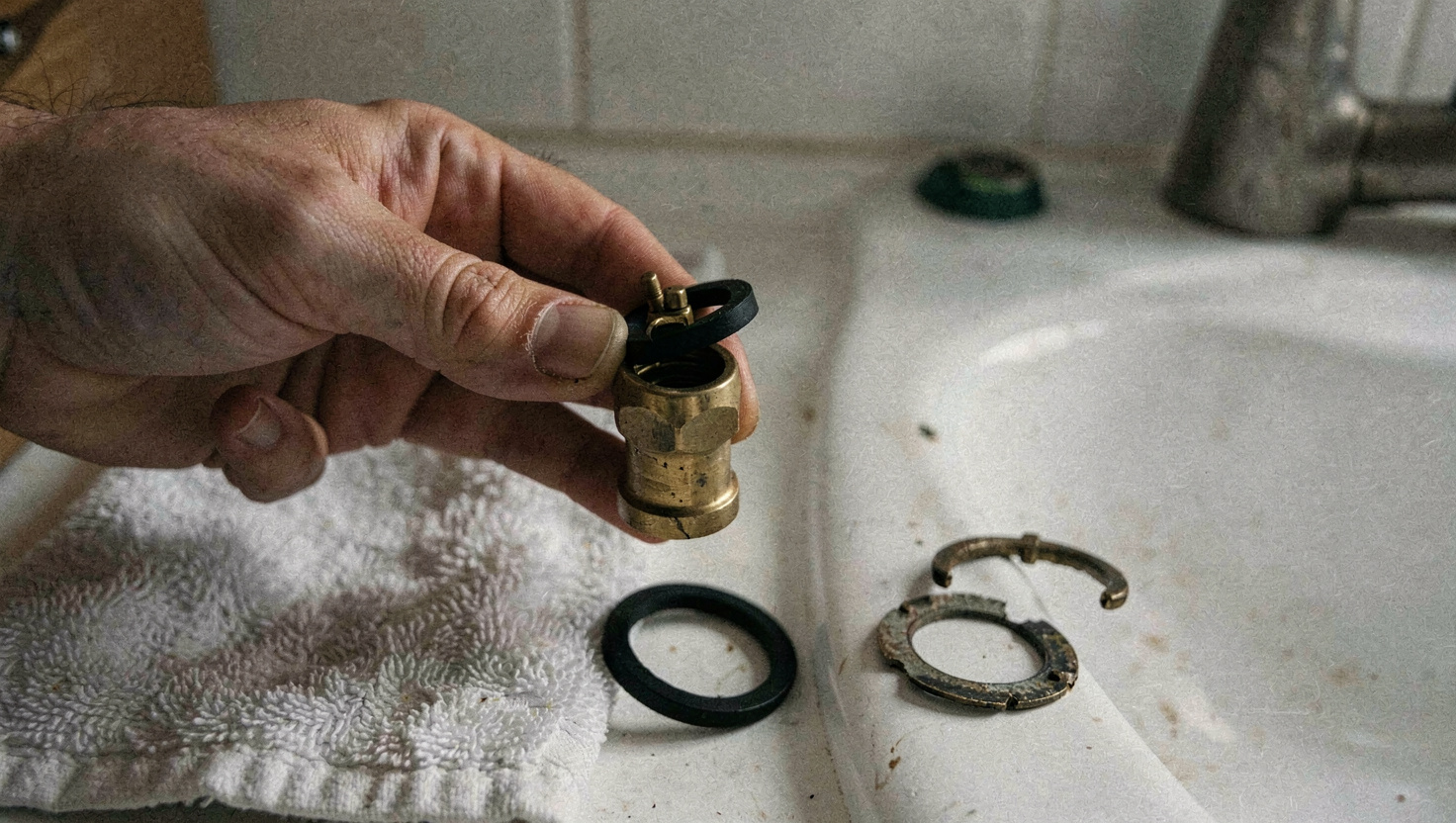
| Part | What it does, and how it fails |
|---|---|
| Rubber washer | Seals against the seat. Goes hard, cracks or takes a permanent groove |
| Jumper | The brass disc the washer sits on. Sometimes captive, sometimes loose in the body |
| Seat | The machined brass ring in the tap body. Pits and scores over decades |
| O ring on the spindle | Stops water weeping up past the handle rather than out of the spout |
| Fibre washer under the headgear | Seals the headgear to the body. Replace it while you are in there |
Washers come in half inch and three quarter inch for basin and bath taps respectively, and a mixed bag costs very little. Take the old one with you or measure it: a washer one size down will seal for a fortnight and then start passing water at the edges.
If the new washer drips straight away, the seat is worn. Run a fingertip round it: it should feel like a smooth ring. Scoring or pitting means either a seat reforming tool, which cuts the brass flat again in about a minute, or a nylon seat and washer set that simply pushes in over the damaged seat. The second is cheaper and works on every tap that is not so far gone the thread is damaged.
Putting it back
Wrap two or three turns of PTFE tape round the headgear thread in the direction the nut tightens, put the fibre washer back on, and do the nut up firmly rather than violently. A brass thread in a brass body strips easily and there is nothing to be gained by leaning on it: the seal is the fibre washer, not the tension.
Open the isolating valve slowly, a quarter turn at a time, with the tap closed. Then open the tap and let it run for thirty seconds to clear any grit that fell into the seat. Close it with the pressure of two fingers only. If it still weeps at that pressure, the washer is not seated or the seat needs the treatment above; if it needs a hard shut, the washer is a size too small.
- Plug in the basin, towel on the worktop, torch to hand before anything comes apart.
- Photograph the assembly as it comes off. Jumpers go back one way round.
- Buy a mixed washer pack and a roll of PTFE tape and keep them in the household toolbox.
- Never close a repaired tap hard. If it needs force, something is wrong under it.
Cartridge taps follow the same shape of job with a different part. The cartridge unscrews or lifts out complete, it is matched by diameter and by the number of splines on its spindle, and it is not repairable: ceramic discs either seal or they do not. Take the old one to the merchant rather than guessing.
A drip is the smallest of the faults a house produces, and the same evening habit fixes most of them: stop the supply properly, take one thing apart at a time, replace the part that has worn rather than the assembly around it. The door that has started catching on its frame answers to exactly the same approach, and so does most of what is in the household section.
Read next on the bench
The other household entries are listed in date order in the section index.
Back to Around the house