Around the house
A door that binds in August and swings in February
Where a door actually rubs, how to find the spot with a strip of paper, and why planing it during a wet week is the mistake everyone makes once.
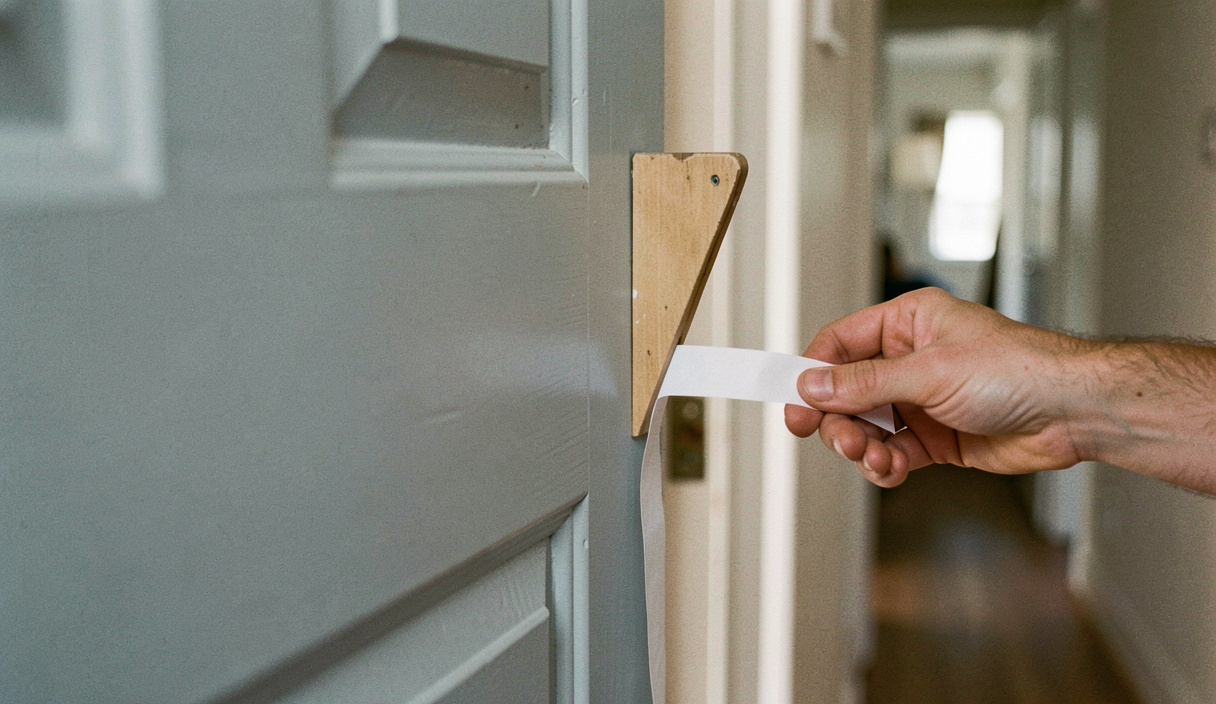
An internal door that catches on its frame in August and swings freely in February is telling you two things at once: that the door has absorbed moisture and grown, and that the gap it was hung with was too tight to begin with. The mistake almost everybody makes, once, is to plane it during the wet month. Come the dry one there is a five millimetre gap along one edge and no way of putting it back.
A softwood door 760 mm wide can gain close to two millimetres across its width between a dry February and a humid August. That is the entire clearance a door is normally hung with.
Find where it actually rubs
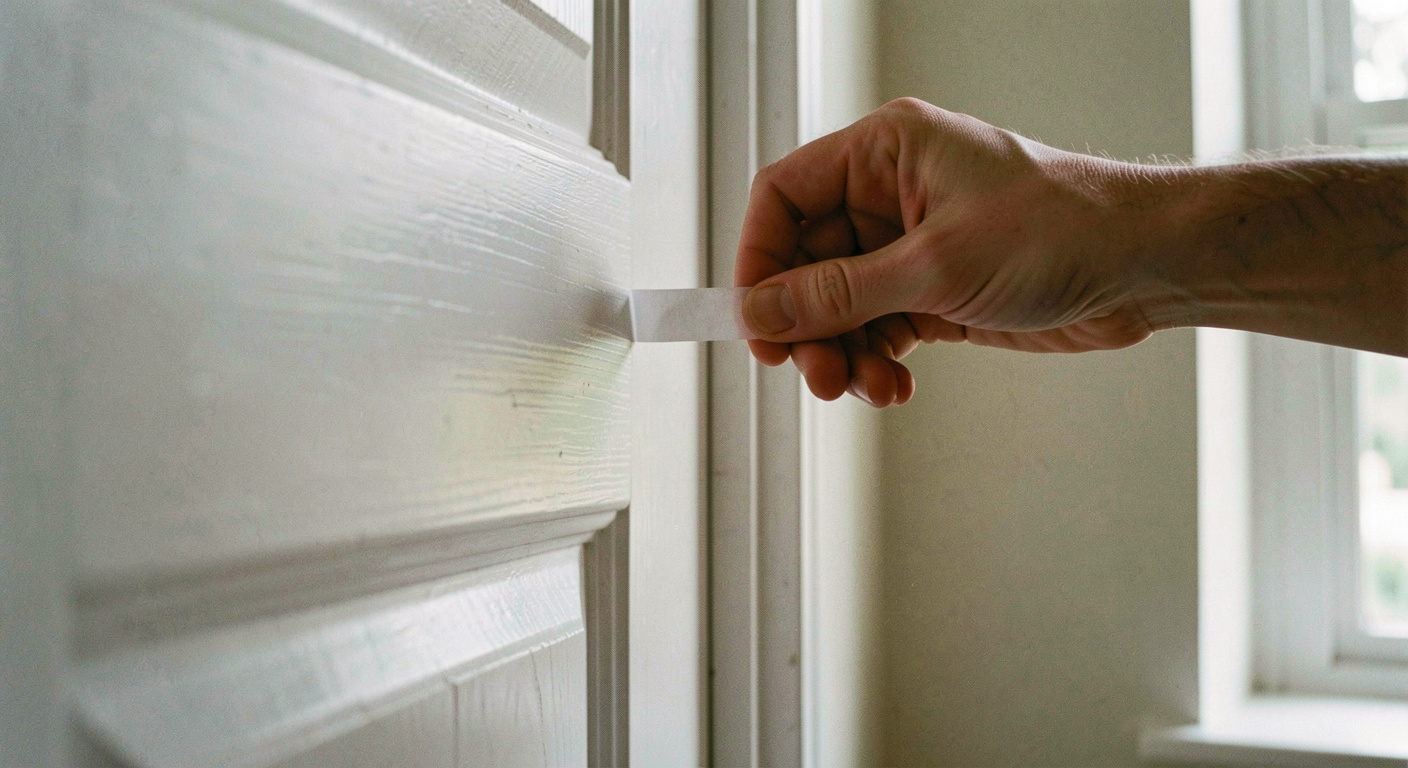
The rub is rarely where it feels. Take a strip of paper about 30 mm wide, close the door on it, and pull. Where the paper slides out freely there is clearance; where it grips or tears there is contact. Work round the whole door at intervals of about 150 mm and mark the tight spots in pencil on the door edge.
Read the pattern before doing anything about it. It usually falls into one of four cases, and only one of them is solved by removing wood.
| Where it is tight | What is actually wrong |
|---|---|
| All along the latch edge, evenly | Genuine seasonal growth. Plane, in the dry season |
| Top of the latch edge only | The door has dropped. Hinge screws or a worn top hinge |
| Bottom of the latch edge only | The door leans out at the top: the top hinge is recessed too deep |
| Along the hinge edge | The hinges are set too shallow, or paint has built up in the recess |
| Only near the latch, and it clicks | The striking plate has moved, not the door |
Two of those five are hinge problems and one is a latch problem. Removing wood from the door solves none of them and makes all of them permanent.
The fixes that are not planing
Start with the screws. Hinge screws in a softwood frame pull loose over decades, and a top hinge with two loose screws lets the whole door drop a couple of millimetres, which shows up as binding at the top of the latch edge and a gap at the bottom.
- Open the door, support the free edge on a wedge, and try each hinge screw. Any that turns without gripping is the problem.
- Drive a 45 mm screw into that hole instead of the original 25 mm one, so it reaches through the frame lining into the stud behind. This is the single most effective door repair there is.
- If there is nothing behind to reach, plug the hole: glue a length of dowel or two or three slivers of hardwood in, let it set, and redrill a pilot hole.
- Never use a fatter screw in the same hole. It splits the frame and the head stands proud of the hinge leaf, which stops the door closing at all.
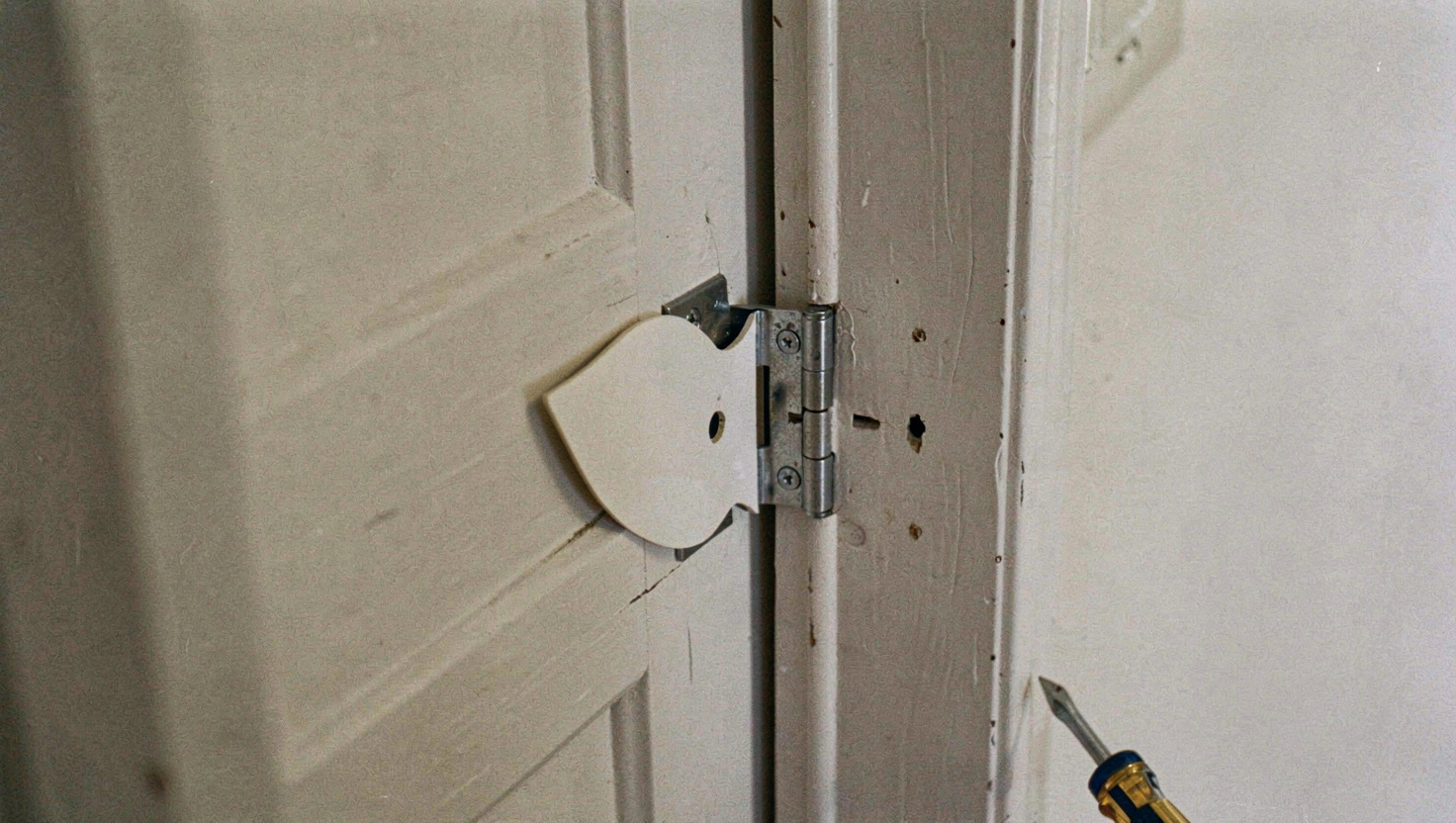
Next, the depth of the recesses. A hinge that sits too deep pulls the door towards that edge and pushes the opposite edge into the frame. The fix is a shim: cut a piece of thick card or thin plywood to the shape of the hinge leaf, drop it into the recess behind the hinge, and refit. A single 1 mm card behind the top hinge moves the bottom of the latch edge by three or four millimetres, which is usually more than enough.
Paint is a dimension
Six coats of gloss on a door edge and six more on the frame add up to well over a millimetre of material. On a door that has been repainted every decade since it was hung, scraping the edge and the stop back to bare timber is often the whole repair, and it costs nothing but an hour.
If it does need planing, do it in February
When the paper test shows an even bind along the whole latch edge and the hinges are sound, the door has genuinely grown. Plane it, but plane it during the dry part of the year, and take off less than you think.
- Aim for a 3 mm gap on the latch edge and 2 mm on the hinge edge. That is enough to absorb a wet August.
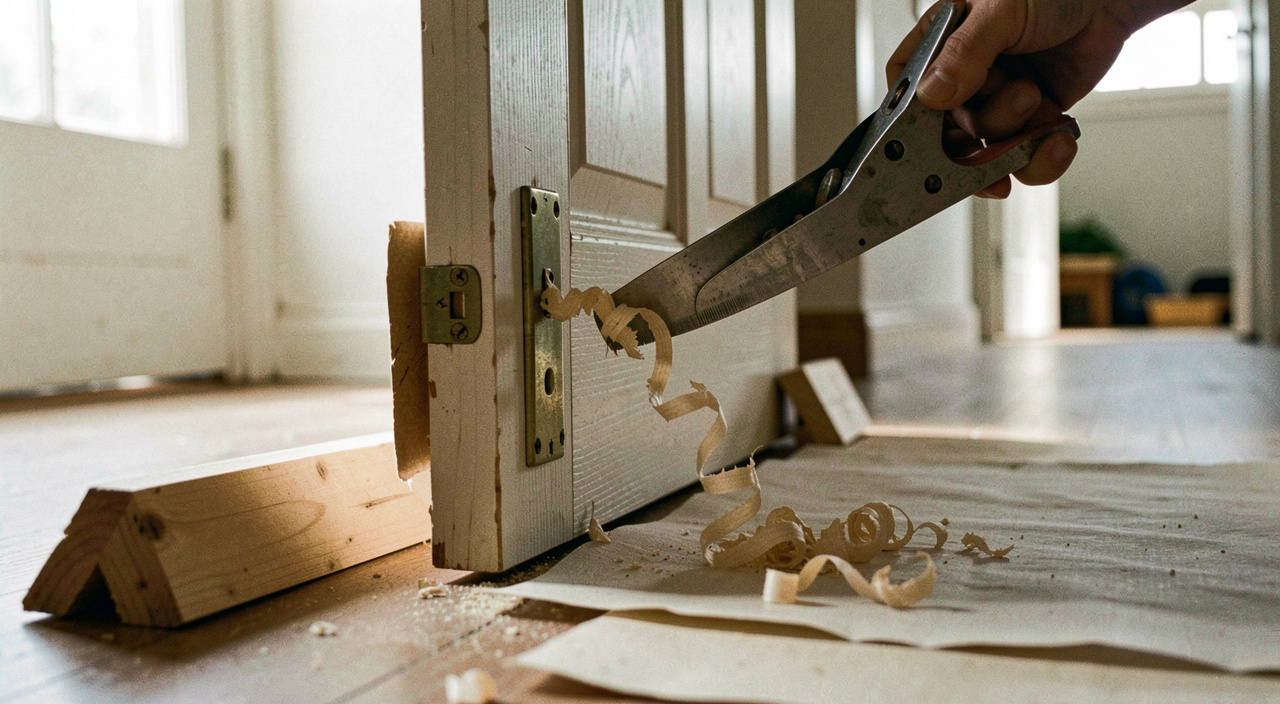
- Take the door off, lay it on edge and hold it in a vice or between two wedges against a wall. Planing a hung door is how gouges happen.
- Plane from each end towards the middle, so the plane is never running off the corner and breaking it out.
- Keep the edge square to the face. A door edge planed out of square catches at one corner and looks wrong when it is open.
- Repaint or seal the planed edge the same day. Bare timber on a door edge absorbs moisture faster than anything else on the door.
That last point is the one that gets skipped and the reason doors bind again. The top and bottom edges of an internal door are very often bare, and they are the main route by which the door takes up moisture from the air. Sealing all four edges is worth more than another millimetre of clearance.
The latch, and the last two millimetres
If the door closes but has to be pushed at the last moment, the striking plate is out of alignment rather than the door being too big. Close the door slowly and watch where the latch bolt meets the plate: a smear of lipstick or a dab of pencil on the bolt will mark the plate exactly.
Moving a striking plate by two millimetres means unscrewing it, plugging the old holes, and either filing the plate opening or resetting it. Filing is quicker and usually enough. Deepen the mortice behind the plate at the same time if the bolt is bottoming out.
The plane used for the edge wants a sharp iron and a fine set, and on a painted door the paint will dull it within a few strokes. Ten minutes on the stones before you start is the difference between a clean edge and a torn one. If the hinge screws turned out to be the problem, the gauge and length of the replacements matters more than the brand.
Read next on the bench
The other household entries are listed in date order in the section index.
Back to Around the house